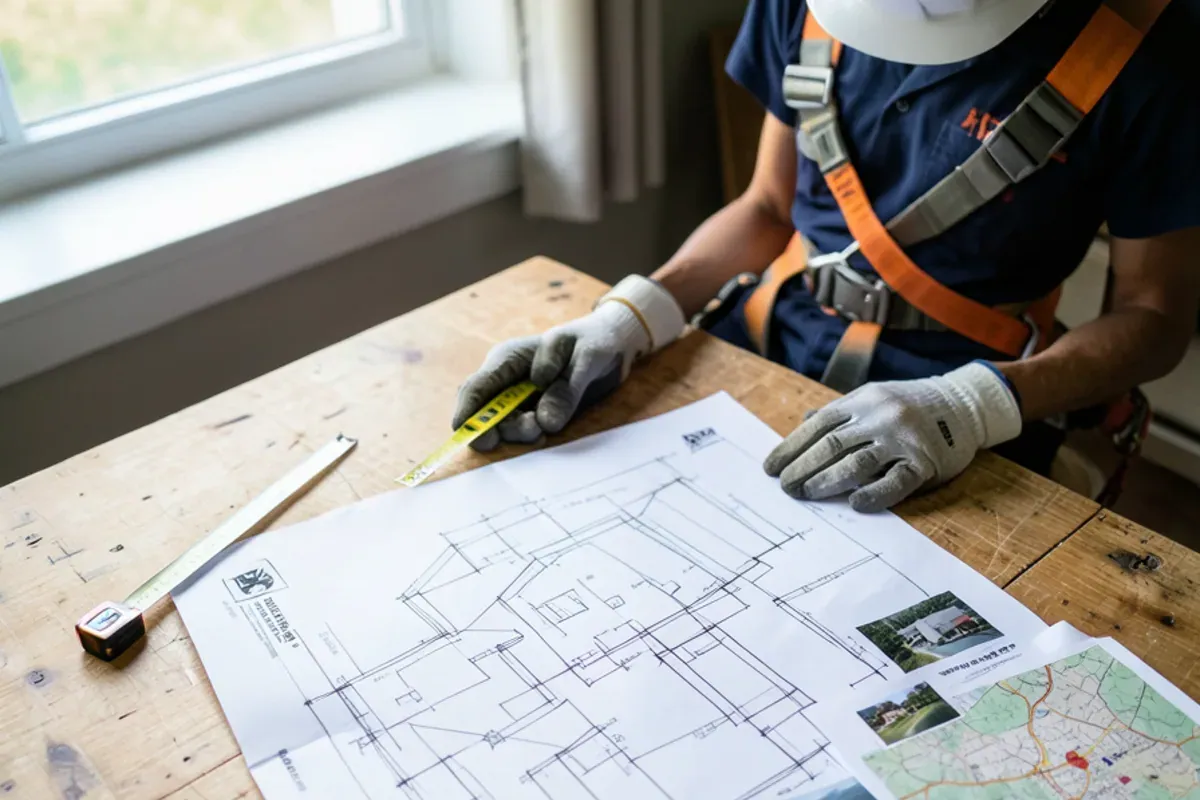
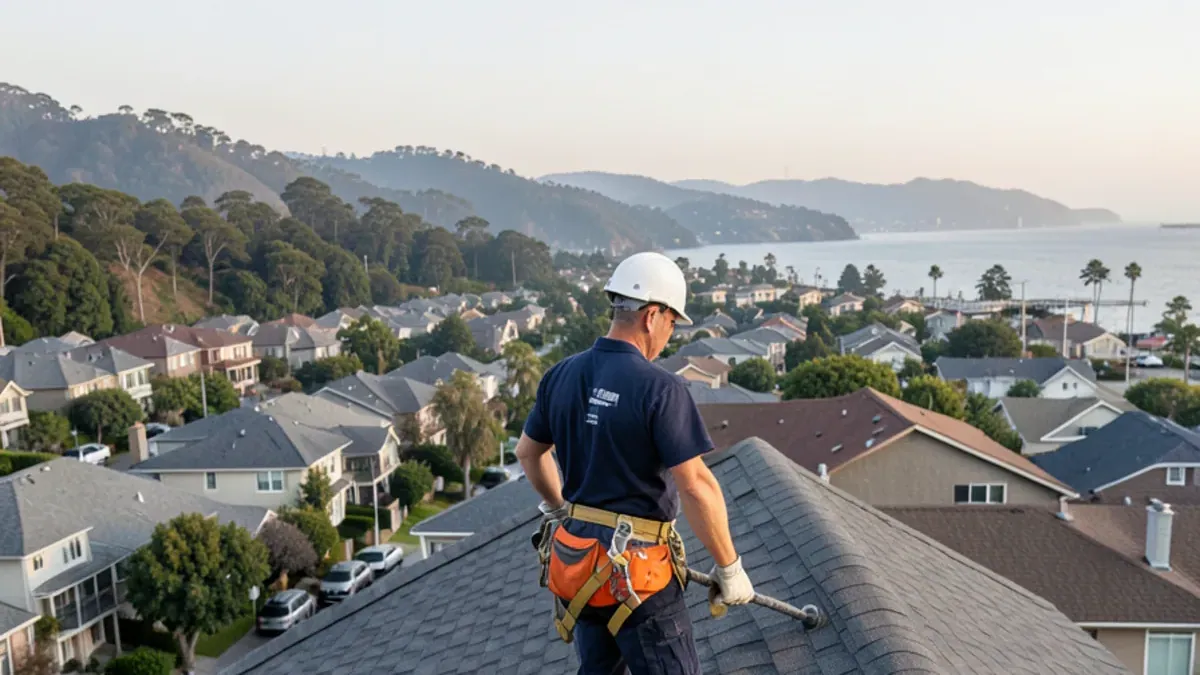
From shoreline flats to Tri-Valley heat: why county roofs differ
The Alameda County shore is flat, mild and old. Alameda, Oakland and San Leandro have large blocks of homes from the 1920s through the 1950s, and many of those roofs have been covered once or twice already. Layer count and rotted decking are the usual surprises, and a tear-off is more common than people expect.
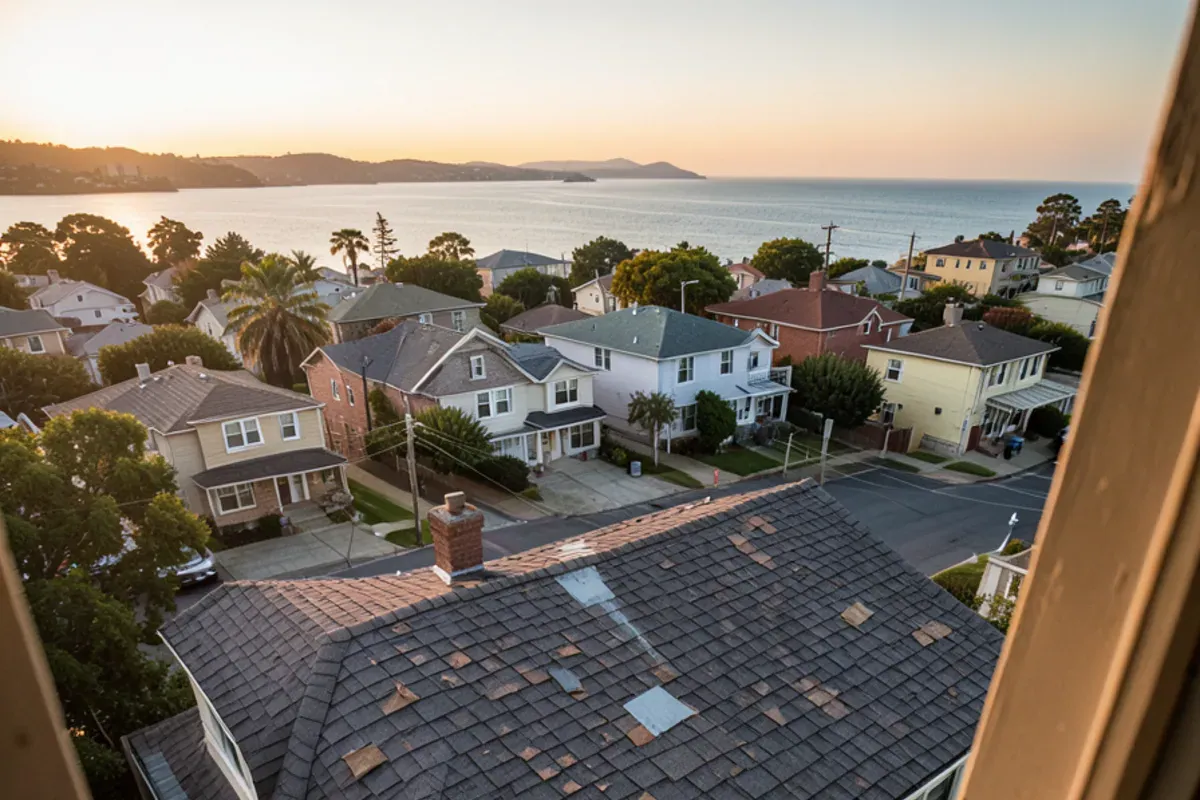
The hills change the job. Above Oakland, Berkeley and Castro Valley, steep lots, trees and fire-hazard zones decide what material goes on and how a crew reaches the roof. Pages for Oakland, Berkeley and Castro Valley cover those details.
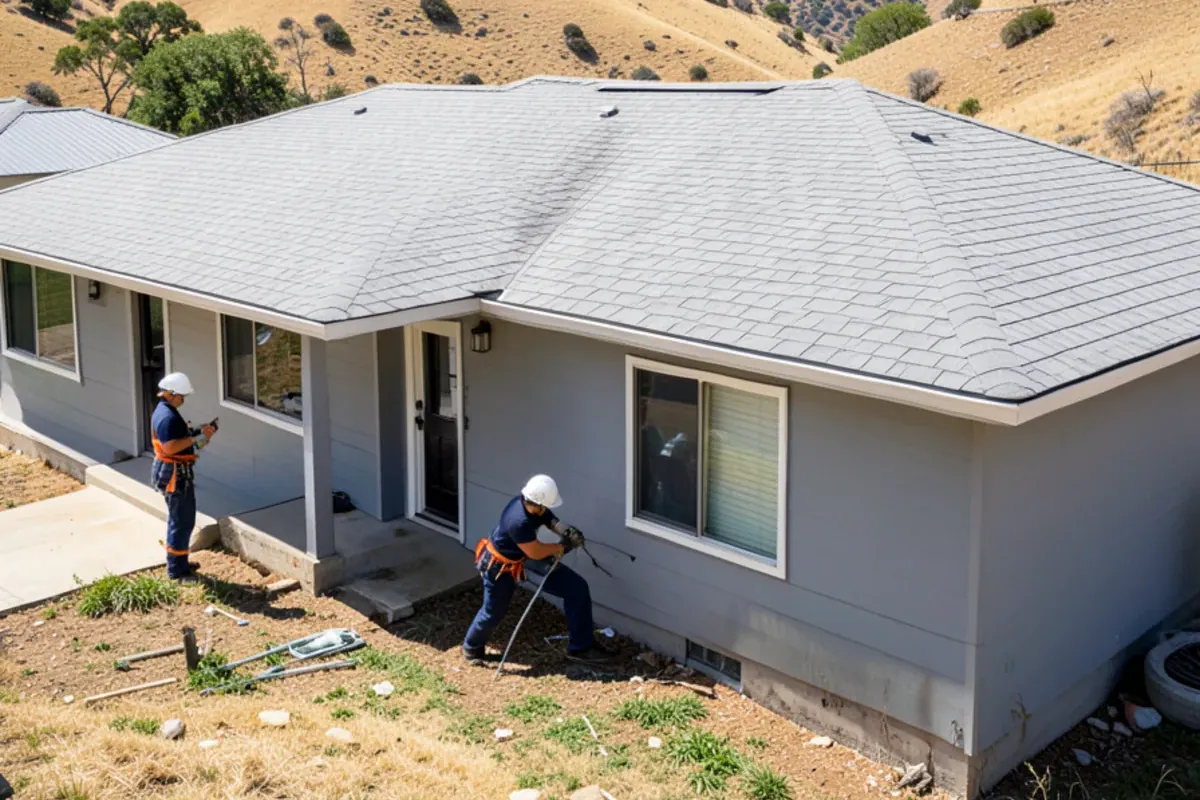
Inland, the Tri-Valley is hotter. Livermore's July highs average roughly 88 to 89 degrees according to NOAA-based climate data, and that sun cooks asphalt and attic air. Ventilation and color deserve a real conversation there, and Livermore, Pleasanton and Dublin each have their own page.
Between the two sits the Hayward Fault. It runs under the old city hall in downtown Hayward, which is why chimney bases and flashing get a close look in Hayward and along the fault zone.
Roofing services we offer across Alameda County
- Roof Repair
Repairs make sense on a younger roof with one failed spot, and the same fix looks different on a flatland tract and on a steep hill lot.
- Roof Replacement
A full replacement is a county-wide question of layers, decking and permit office, and the answer changes with the city.
- Storm Damage Roofing
Winter storms hit the bay shore and the hills differently, and tree and wind damage are the usual county-wide causes.
- Emergency Roof Repair
A leak does not wait for a permit, so temporary protection comes first anywhere in the county and the permanent fix follows.
- Cool Roofs
Livermore's July highs near 88 to 89 degrees make roof color and attic air a real choice inland, while Alameda sits in Climate Zone 3 and treats a cool roof as optional.
- Roof Inspection
Shoreline tracts, hill lots and valley ranches each fail in different places, so an inspection before the October rains finds the flashing, vent or ridge fault that fits your part of the county.
Who signs off: a city permit desk or Alameda County?
Fourteen incorporated cities each run their own building department, so a reroof in Hayward and one in Berkeley go to different offices with different forms. The unincorporated communities are the exception. Roofs in Ashland, Castro Valley, Cherryland, Fairview, San Lorenzo and Sunol go to the Alameda County Building Department, and county planning staff work from a Permit Center at 399 Elmhurst Street in Hayward.
A third-party Alameda County permit guide says roof work over about 200 square feet generally needs a permit, though fees conflict between sources and we quote none. Ask the office for your address. The estimate states who pulls the permit, and you should confirm that against the office's own answer.
Cities that touch each other can sit on opposite sides of this line. Castro Valley and Hayward share a border but not a permit desk. San Lorenzo, Ashland and Cherryland all answer to the county.
How a visit works from the Webster St base
Booking runs through the office, and Wayne or Pedro often does the first inspection. Steep or multi-section roofs get aerial photos so the written quote can be detailed. An Alameda customer reported a visit scheduled within hours of a call, but that is a past event, not a promise for every address in the county.
Drive times from Webster St, as rough estimates with bridge and freeway traffic ignored:
- Oakland: about 12 minutes
- Berkeley: about 18 minutes
- San Leandro: about 24 minutes
- Hayward: about 31 minutes
- Castro Valley: about 35 minutes
Texts and emails with photos follow the job, and a site supervisor walks the finished roof with you.
Coverage across the county
We hold 4.9 stars from 60 Google reviews, and you can read them on the reviews page. Each city page here gives the estimated drive from Webster St and what the roofs there tend to be, so start with yours.