
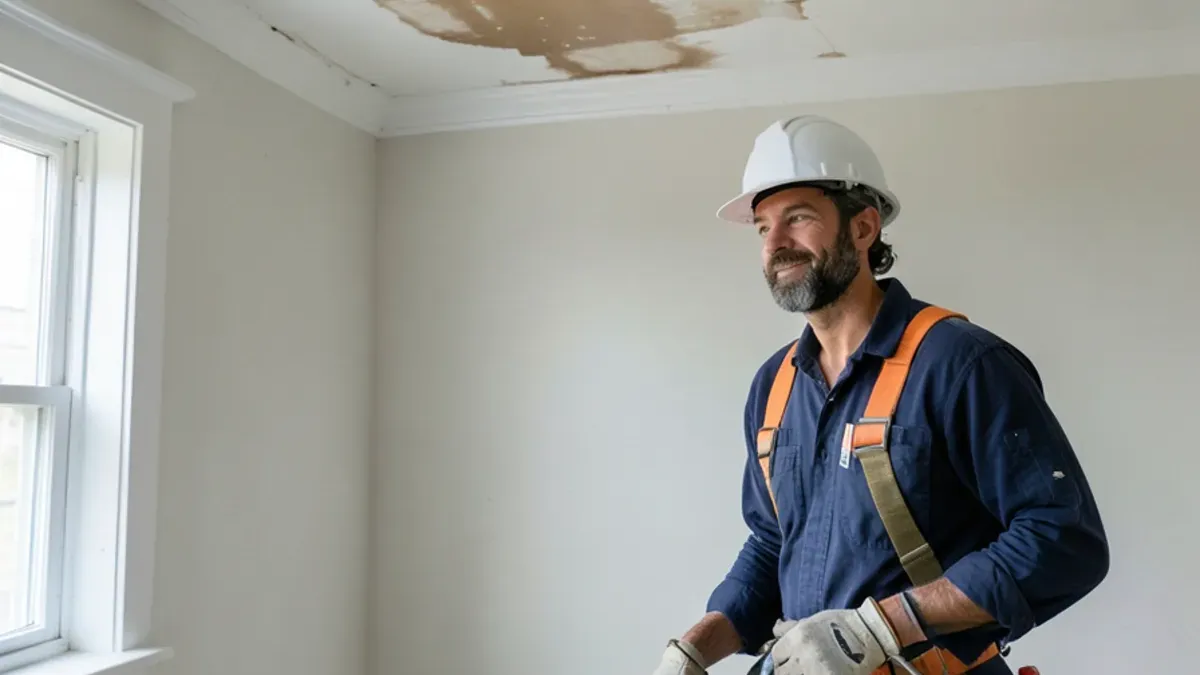
Whether homeowners insurance covers a roof leak in California depends on the cause. Damage from a sudden event, such as wind lifting shingles and letting rain in, is often covered under the policy. A leak that comes from age, wear or lack of maintenance is usually excluded. Your own policy decides, so read it, and do not assume either way.
How do insurers separate sudden damage from wear and tear?
They look at cause and timing. The California Department of Insurance lists wear and tear and maintenance among the perils a homeowners policy generally does not cover. A policy is built around covered events, so the question is whether something happened or whether the roof simply wore out.
| Situation | How it is often treated |
|---|---|
| Wind tears shingles off, rain enters | Often covered as sudden damage |
| Tree limb punctures roof | Often covered, subject to policy terms |
| Slow leak at old flashing | Often excluded as wear or maintenance |
| Leak at an aged, brittle roof | Often excluded, roof condition scrutinized |
| Interior water damage from a covered opening | Often covered with the roof damage |
These are common patterns, not guarantees. Policies differ in wording, limits and deductibles, so ask your insurer or agent where your policy draws the line.
What should you do the moment a roof leak starts?
Protect the property, document everything and report the loss. The Department of Insurance guide tells owners to make temporary repairs to prevent further damage, such as covering damage with plastic sheeting or plywood. A policy may not cover ensuing damage if you do not take reasonable steps to secure the property.
- Photograph the leak, the stain and the roof if you can see it from the ground.
- Stop the damage with buckets, plastic or a tarp, and keep every receipt.
- Report the loss to your agent or the insurer's claim line.
- Keep a log of calls and who you spoke with.
- Hold off on extensive permanent repairs until the adjuster has inspected.

Insurers reimburse reasonable protection costs and count them toward the settlement, according to the Department of Insurance. Wait for the adjuster before throwing away damaged property.
How long does a claim take in California?
An insurer must acknowledge a claim within 15 calendar days and decide whether to accept or deny it within 40 calendar days after receiving proof of claim, under Title 10 of the California Code of Regulations. If it needs more time, it has to say why in writing and repeat the notice every 30 days. After accepting a claim, payment is due within 30 calendar days.
A denial must be in writing, give the factual and legal grounds, cite any exclusion relied on, and say you may have the matter reviewed by the California Department of Insurance. If you disagree, ask the adjuster to point to the specific policy provision, then call the department's consumer line at 1-800-927-4357. Do not accept the first check as final without understanding what it covers, because the first check is often an advance.
How can you tell sudden damage from wear on the roof itself?
The roof carries the evidence, and a roofer reads it as a record of cause. Neither one decides coverage. Your insurer does, but dated photographs of what the roof looks like help whichever way it goes. Typical signs:
| Evidence | Points toward |
|---|---|
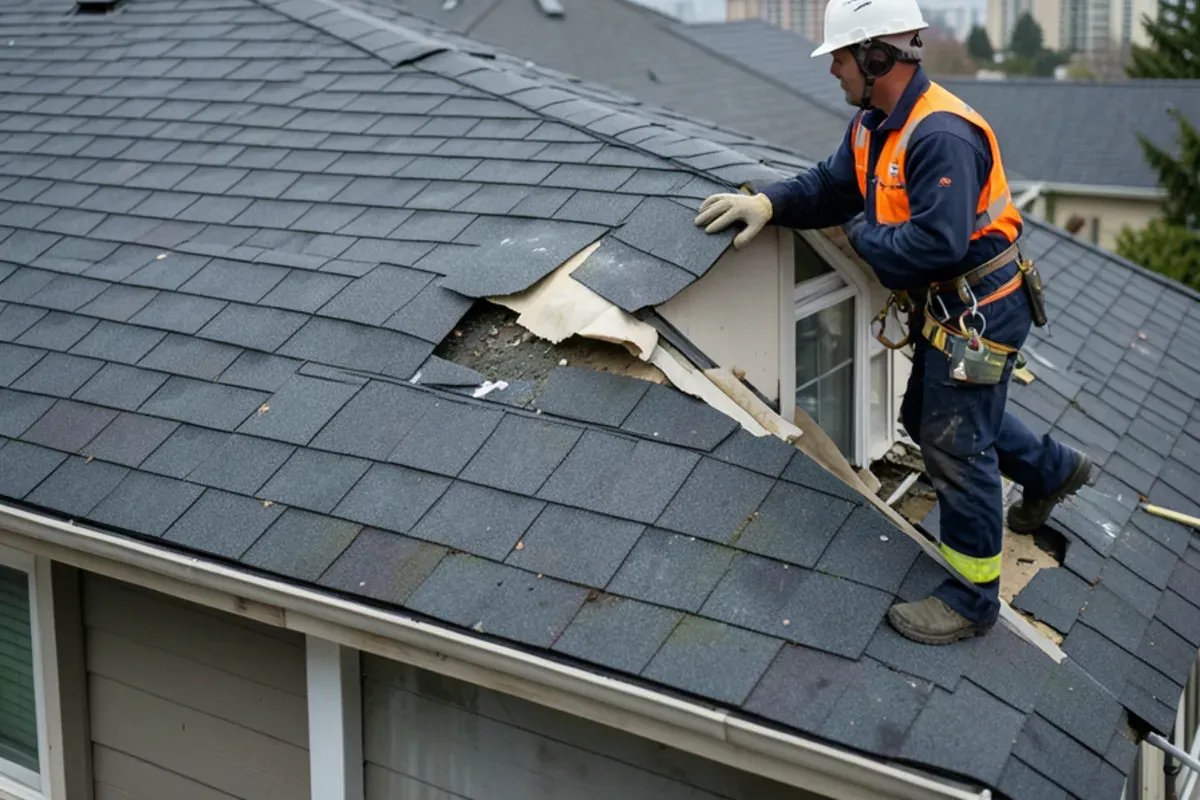
| Clean tears, creased tabs, fresh debris in the yard | A sudden event such as wind |
| Fresh exposed wood or a punctured area under a limb | Impact damage |
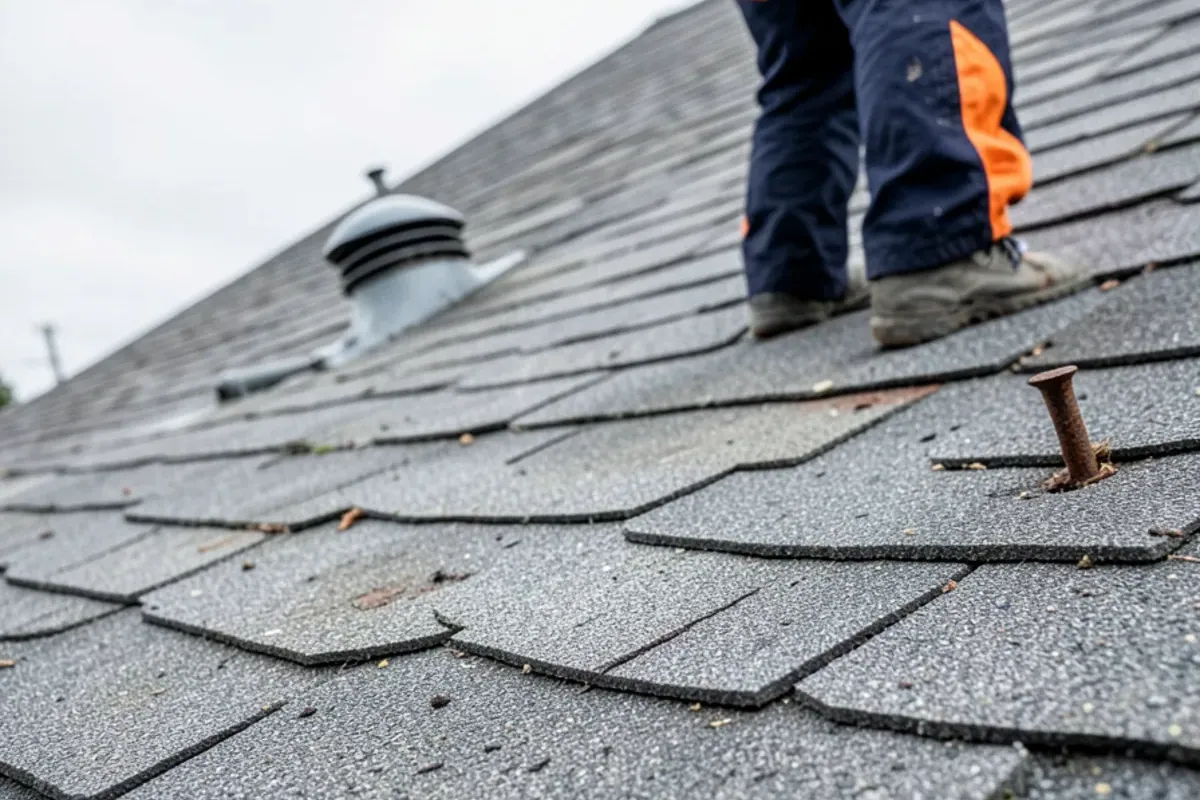
| Bare mat, widespread granule loss, brittle tabs | Age and wear |
| Rust streaks and long dark trails at old flashing | A slow leak over time |
| Dried stains in layers on the ceiling or sheathing | Repeated wetting, not one storm |
Roofs often show both. An aging roof can lose shingles in a real wind event, which means the sudden damage and the wear sit on the same slope. A written scope that separates the two, with photos of each, gives the adjuster something specific to evaluate.
What do actual cash value and replacement cost mean for a roof?
They decide how much of the repair cost you receive. The Department of Insurance defines actual cash value for a partial loss as the repair or replacement cost less depreciation, and replacement cost as what it costs to replace the damaged property with new property of like kind and quality in the local market. On an older roof, depreciation can make the first payment a lot smaller than the repair bill.
Read three things in your policy before a claim: whether roofs are paid at actual cash value or replacement cost, how much depreciation is held back, and how long you have to complete repairs to collect the rest. The Department of Insurance guide lists a minimum of 12 months to rebuild after a non-catastrophic loss, with extensions for good cause, and 24 months after a declared state of emergency. Some replacement cost policies leave out building code upgrade coverage, so check that too. Save the final repair invoice, since the insurer needs it to release withheld funds.
Are interior water damage and mold covered?
Interior water damage from a covered roof opening is often handled with the roof claim, but mold and slow leaks are different. The Department of Insurance guide lists sudden and accidental water damage as typically covered, and lists seepage, leaks and mold among things generally not covered. That is why timing matters: a ceiling that stays wet for weeks can move from a sudden-damage claim toward a maintenance dispute.
We fix the roof and document interior damage for the claim. Ceiling and drywall repair is for other trades.
What does a roofer do in a leak claim?
A roofer documents the cause, writes the scope and meets the adjuster. That is the extent of it. California limits negotiating a property claim to the policyholder, the insurer or a licensed public adjuster, so a roofer cannot negotiate for you, and we never promise a result.
Honesty matters here. California Penal Code section 550 treats a padded invoice that hides a deductible as insurance fraud. Ask for an invoice that matches the real work, and walk away from anyone who offers to waive or cover your deductible.
What claim jobs have looked like in Alameda
Past Alameda customers describe the paperwork side as a large part of the work. One said the company helped document the damage, met the adjusters, handled paperwork and sent emails with detailed photos, then stayed patient while the final payment processed. A different owner had a wind-damaged roof claim open. Another was dropped by an insurer over an aging roof without an inspection and chose to reroof.
Roof age is the thread. Alameda has older housing, with 31.9% of homes built in 1939 or earlier per Point2Homes, so roof age and condition come up often. An inspection report and dated photographs establish condition either way.
Our roof insurance claims page explains the documentation we prepare, and the storm damage roofing section covers wind and tree work, and wind damage roof repair explains how a sudden-damage repair is scoped. The same process applies across Alameda County, where city building departments handle permits and Alameda County handles unincorporated areas.
If water is coming through your roof, call the office or ask for a free inspection and estimate, and tell us a claim is open. Bring the policy and photographs to the first visit.