
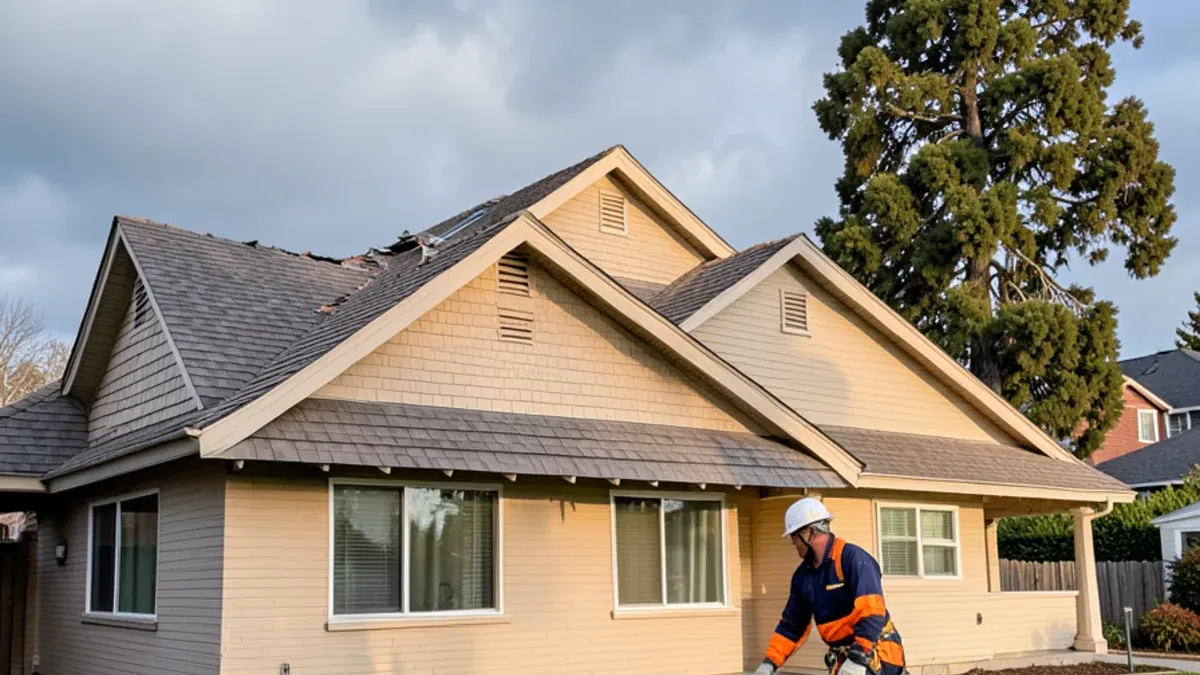
Wind damaged shingles: what to look for
The first signs are a missing piece, a crease or a bare strip, and most of them are visible from the ground. Walk around the house after a blow and check these places.
- Ridge and hips. Bare gaps in the cap line, or caps hanging by a few nails.
- Eaves and rakes. The edge shingles lift first because wind gets under them.
- Tabs with a horizontal crease. The shingle was bent back and the mat is broken.
- Debris in the yard. Shingle pieces, granules, and loose flashing point to the slope above.
- Exposed dark patches. Underlayment showing where the shingles should be.
Inside, check the attic for daylight, damp insulation or a fresh stain after rain. Shingles blown off the roof often leave a roof that looks only slightly different from the street and leaks for weeks.
Why wind damage happens on Alameda roofs
Alameda is an island on San Francisco Bay, and the open water means little shelter from winter storm winds. Wind lifts the edge of a shingle, breaks the factory seal strip and flexes the tab until it creases or tears. Once the seal is gone, even a moderate gust can finish the job.
Age raises the odds. Sealant weakens with years of sun, shingles become brittle and old nails back out. A newer, properly nailed roof resists the same wind. Ask whether the nails were driven straight and flush, with four or six per shingle depending on the pattern.
The same wind knocks down limbs, and a roof can have both wind and tree damage. See tree damage roof repair if a branch hit the house.
Why do ridge shingles blow off first?
The ridge is the highest, most exposed line on the roof. Air accelerates over it, and the cap shingles sit on a single line of nails, with a narrow sealant strip. Those caps also have no shingle above them to hold them down. After a windstorm the ridge, hips and rakes are the first places to check, and one Alameda customer had lost ridge shingles tarped the same day.
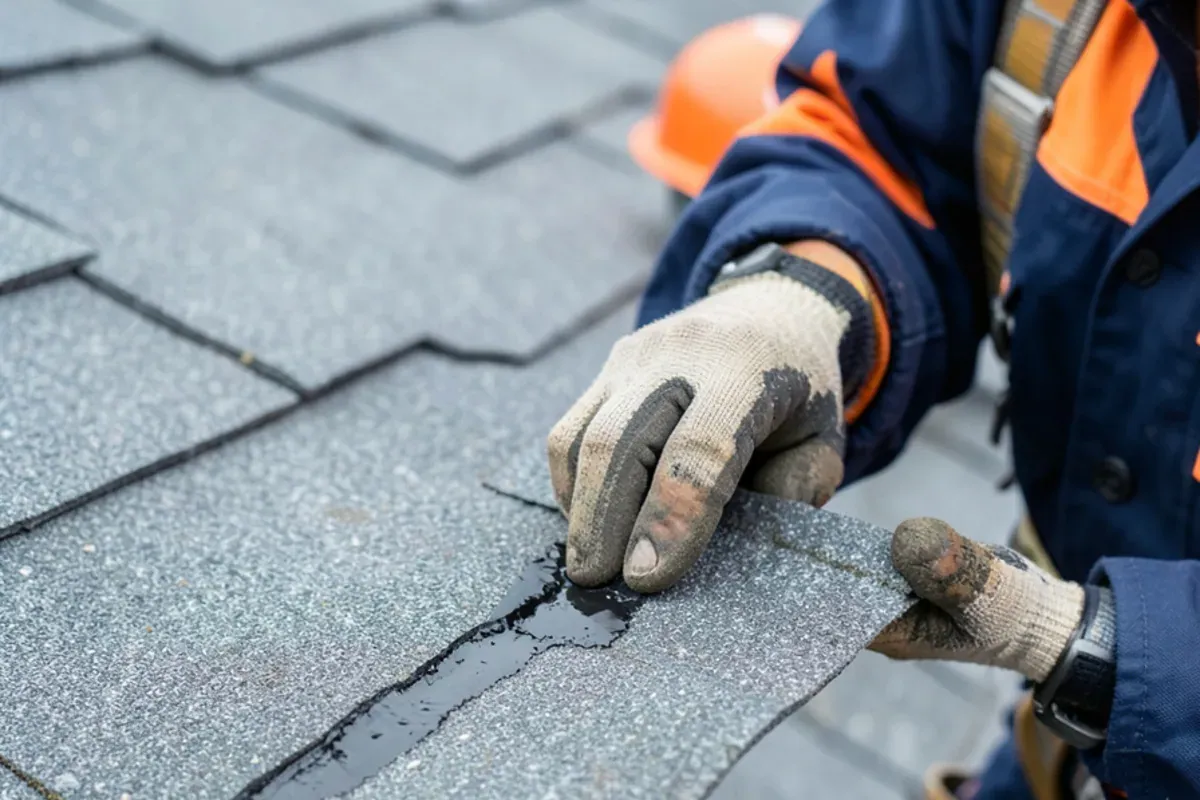
What a wind damage repair includes
A wind repair scope usually covers these deliverables:
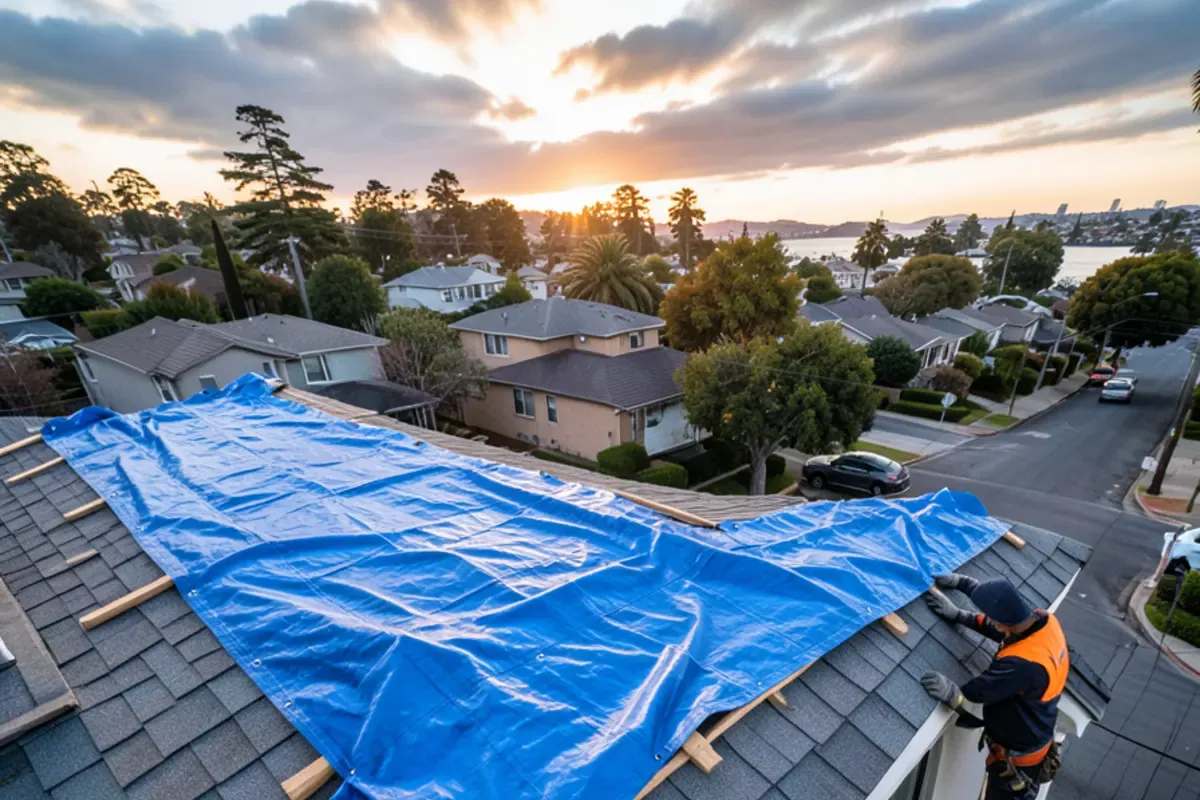
- Temporary tarping or sealing where water can enter
- Replacement of lost or creased shingles and ridge caps with the closest match
- Resealed tabs and new nails where the seal strip failed
- Replacement of bent flashings and vent boots
- A photo set and written scope for your insurer
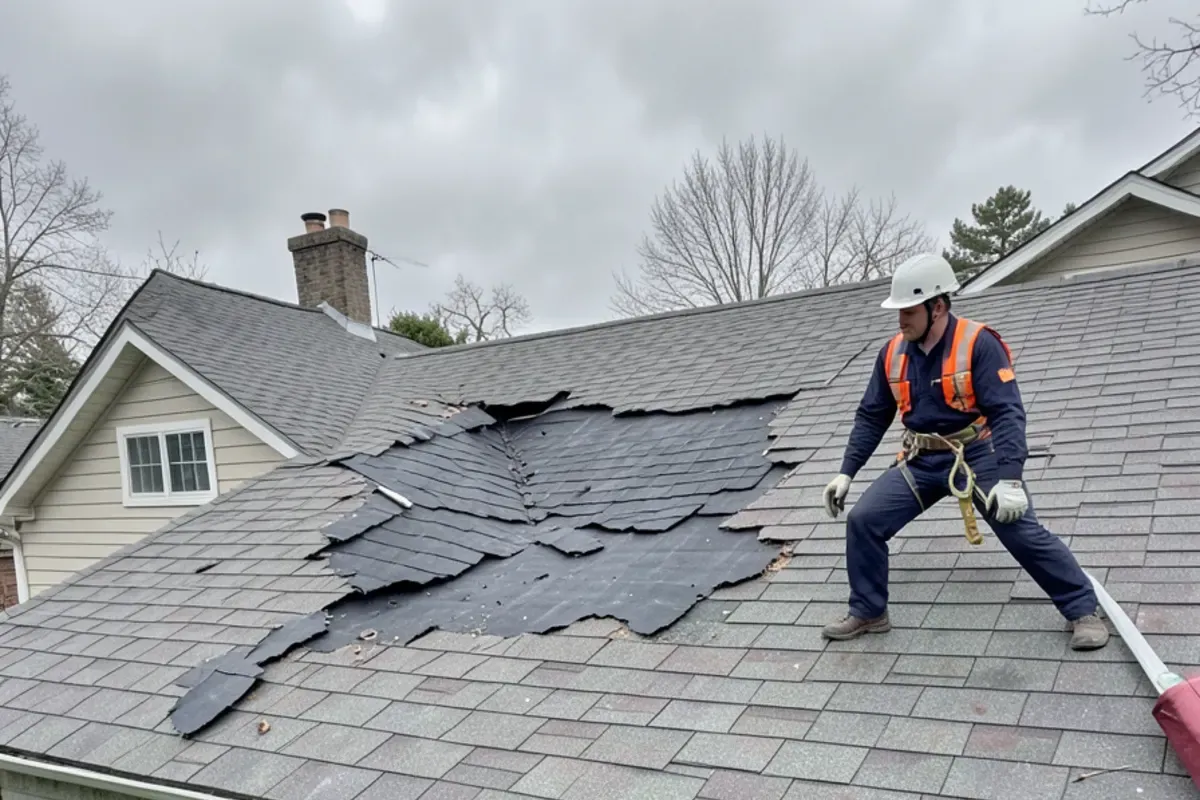
How we inspect a wind-damaged roof
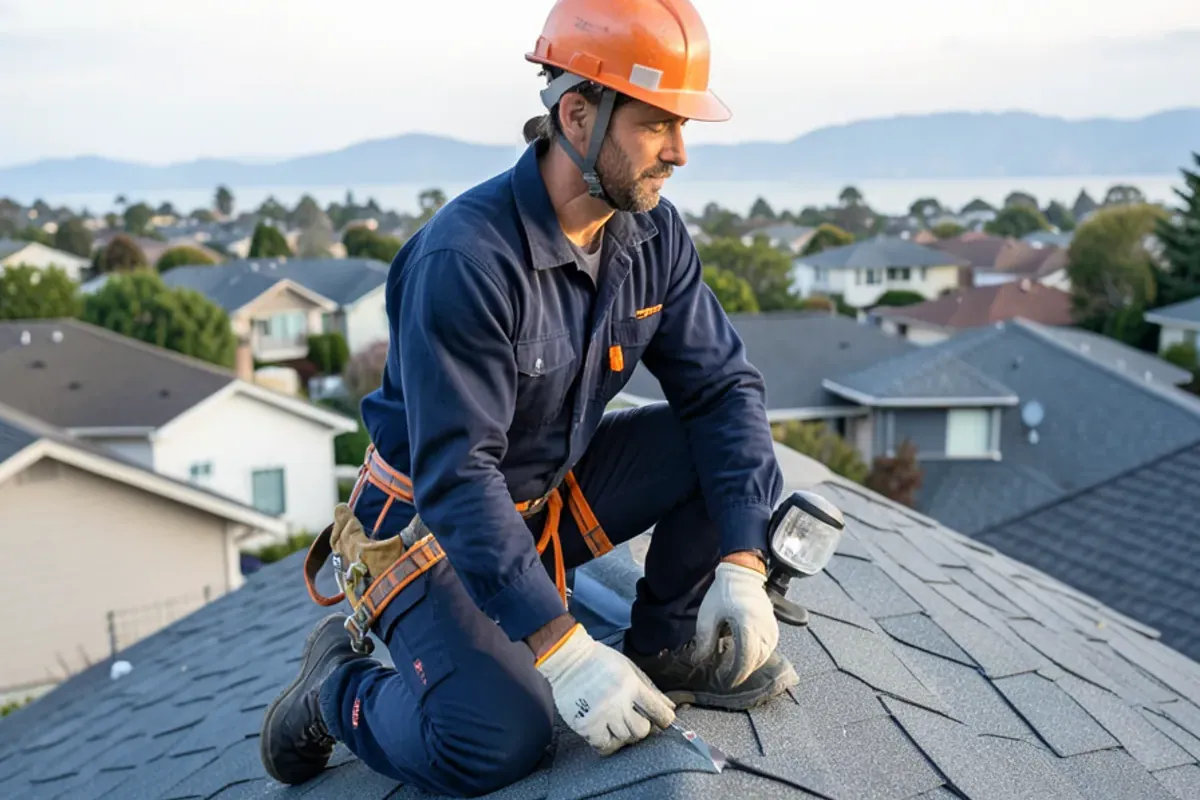
Inspection means a ground walk, a roof walk and an attic check, in that order. Wayne or Pedro often does it.
- Ground walk. We note displaced shingles, gutters, and debris to map the damage.
- Roof walk or drone-style photos. On steep or multi-section roofs we use aerial photos to avoid more wear on loose shingles.
- Tab lift test. We gently lift tabs along the windward slopes to check seal strips.
- Flashing and vent check. Wind bends step flashing, vent boots and chimney counterflashing.
- Attic check. We look for daylight, wet sheathing and stained rafters.
- Photo set. Every damaged area is photographed with a reference point.
Repair options and trade-offs
Pick the option that fits the age of the roof and the extent of the damage.
| Option | Best when | Trade-off |
|---|---|---|
| Reseal lifted tabs | Seals broken, no creases | Cheapest, but fails if the shingle is brittle |
| Replace individual shingles | Isolated losses, matching available | Visible patch if color has weathered |
| Replace ridge caps | Caps lost or loose along a run | Needs matching cap and venting check |
| Re-roof a slope | Damage across one plane or brittle shingles | Higher cost, uniform look |
| Full replacement | Widespread damage or end-of-life roof | Highest cost, new roof system |
If the roof is near the end of its life, a patch can fail the next windstorm. We say so plainly. One Alameda customer was told to wait rather than replace when waiting was reasonable.
Wind damage roof inspection: the visit step by step
The visit follows the same path each time, so you know what to expect.
- You call. Tell us what you saw and when the wind hit. Alameda customers report office visits scheduled within hours of a call.
- Temporary protection. If water can get in, we tarp or seal the exposed area first.
- Inspection and photos. We document every area and send the photos by text or email.
- Written scope. The scope lists the damaged shingles, caps, flashings and any decking.
- Insurer visit. If you file, we meet your adjuster on site to walk the damage.
- Repair. Work is done after you approve the scope and the insurer has seen the roof.
- Walkthrough. A site supervisor checks the work and gives you photos and paperwork.
Roof wind damage insurance: how documentation helps
Photos and a written scope make the claim easier to review. We document what the wind did, where and when, and meet your adjuster. We do not negotiate the claim, we never promise an outcome and we do not offer to cover a deductible. Inflating an invoice to absorb a deductible is insurance fraud under California Penal Code section 550. See roof insurance claims for the full process.
Permits, claim timing and licensing
A third-party county guide says repairs touching more than about 200 square feet generally need a permit, so ask the City of Alameda Permit Center where your repair falls. California's Department of Insurance says insurers must acknowledge a claim within 15 days of notice. Roofing requires a C-39 classification from the Contractors State License Board, so verify any roofer's license number at cslb.ca.gov.
Timeline, aftermath and prevention
A small repair often takes under a day once materials are on hand. A larger slope or a replaced roof takes one to a few days. Alameda customers report reroofs finished in a day or two. After the repair, check the attic after the next rain, and keep the photos and invoice with your policy. For the next windstorm, replace brittle shingles before winter, keep trees trimmed back and re-seal loose tabs in dry weather. Ask for proper nailing on any new roof, and look at the ridge first after strong wind.
What does wind damage repair cost?
The cost depends on how many shingles and caps are involved, the roof pitch, access and whether matching materials exist. Cost factors:
- Number of damaged areas
- Roof height and pitch
- Age and brittleness of the existing shingles
- Matching material availability
- Decking or flashing damage found beneath
- Gutter and fascia damage
Hold any figure to the written estimate before you approve the work.
Serving wind repairs across the East Bay
From our Webster St office, Oakland is about 12 minutes, Berkeley about 18, San Leandro about 24, Hayward about 31 and Castro Valley about 35. Those are estimates, and bridge routes can run long.