
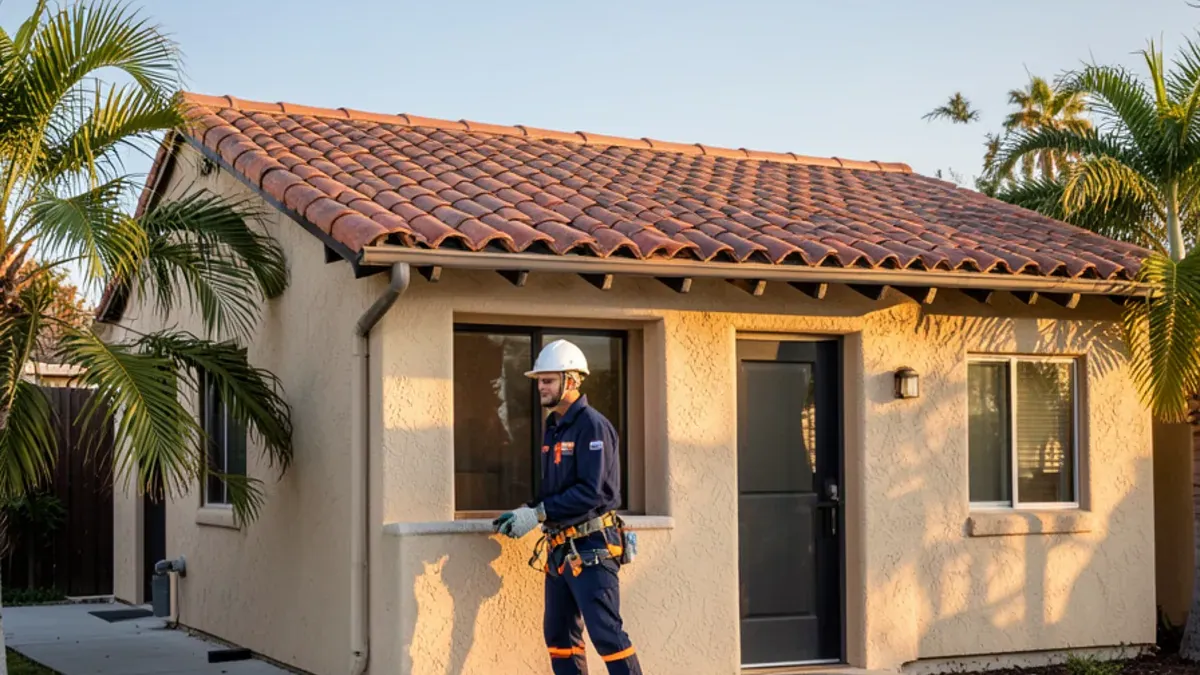
Why does a tile roof leak when the tiles look fine?
Because the tiles are not the waterproofing. Clay and concrete tiles shed most rain, but wind pushes some of it underneath, and the underlayment beneath them is the layer that actually keeps it out of the house. When that layer ages, tears at a fastener or fails at a valley, the roof leaks without a single visibly broken tile.
The second source is flashing at walls, chimneys and skylights, where tile meets another surface. A roof that leaks only in heavy rain, with intact tile, points to one of these two.
Cracked roof tile repair: when replacing a single tile works
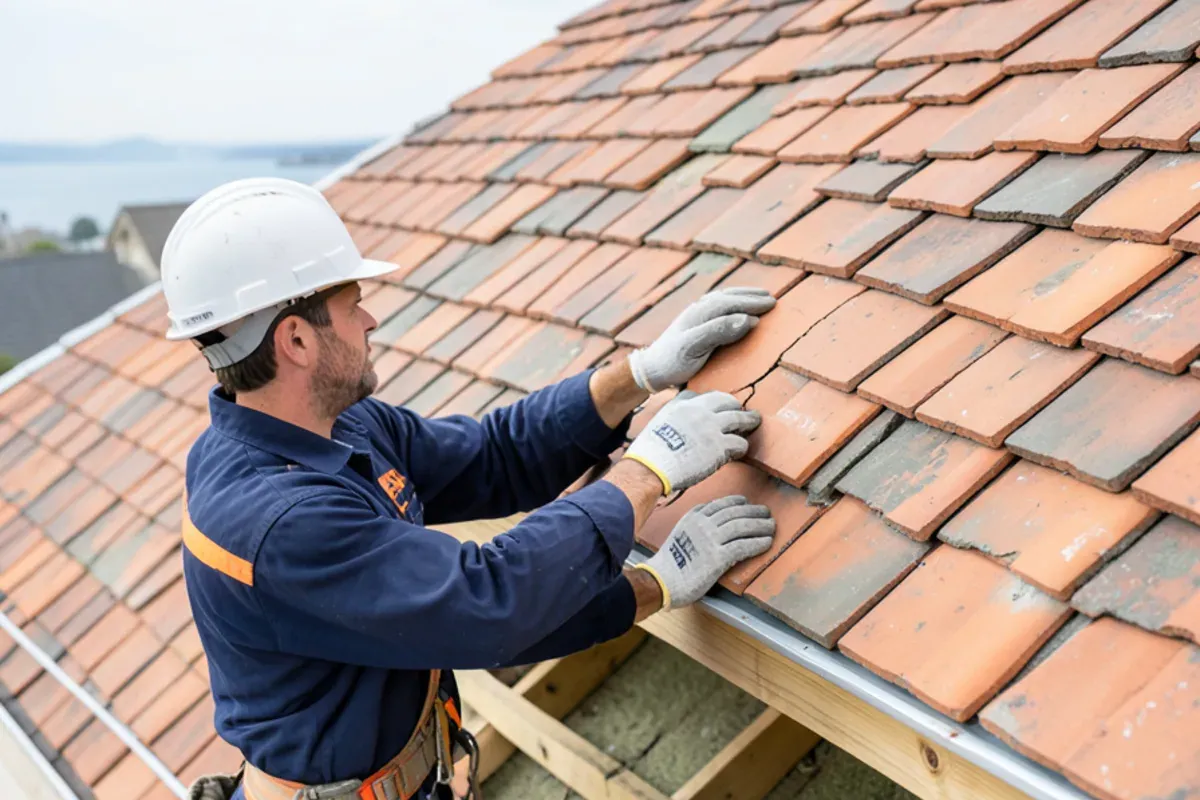
Replacing a single tile works when the damage is local and the underlayment below it is sound. We lift the broken tile, check the felt or membrane under it, and set a matching tile in its place with the correct fastener or clip.
The hard part is the match. Tile fades and weathers, so a new clay or concrete tile can look noticeably different from a thirty-year-old neighbor. We check what is available during the inspection. Sometimes the answer is to take a tile from a hidden slope and put the new one where it will not show.
Tile repair also fails when the damage is not local. If tiles are cracking across a slope, the underlayment beneath has often failed as well, and replacing tiles only returns the leak.
Clay, concrete, Spanish and slate: what is different
Each tile type has its own handling and weak points.
- Clay barrel and Spanish tile: Heavy, fragile at the edges and often set in mortar at the ridge and hips. Mortar cracks long before the tile does.
- Concrete tile: Heavier still and more porous, with a surface coating that wears.
- Slate: Brittle and slow to repair. A few failed slates can be replaced, but an old slate roof with many slipping slates usually needs more than a patch, and we say so at the inspection.
Because tile weighs a great deal, a house with a tile roof also needs sound framing under it. We note sagging or soft decking when we lift the tiles.
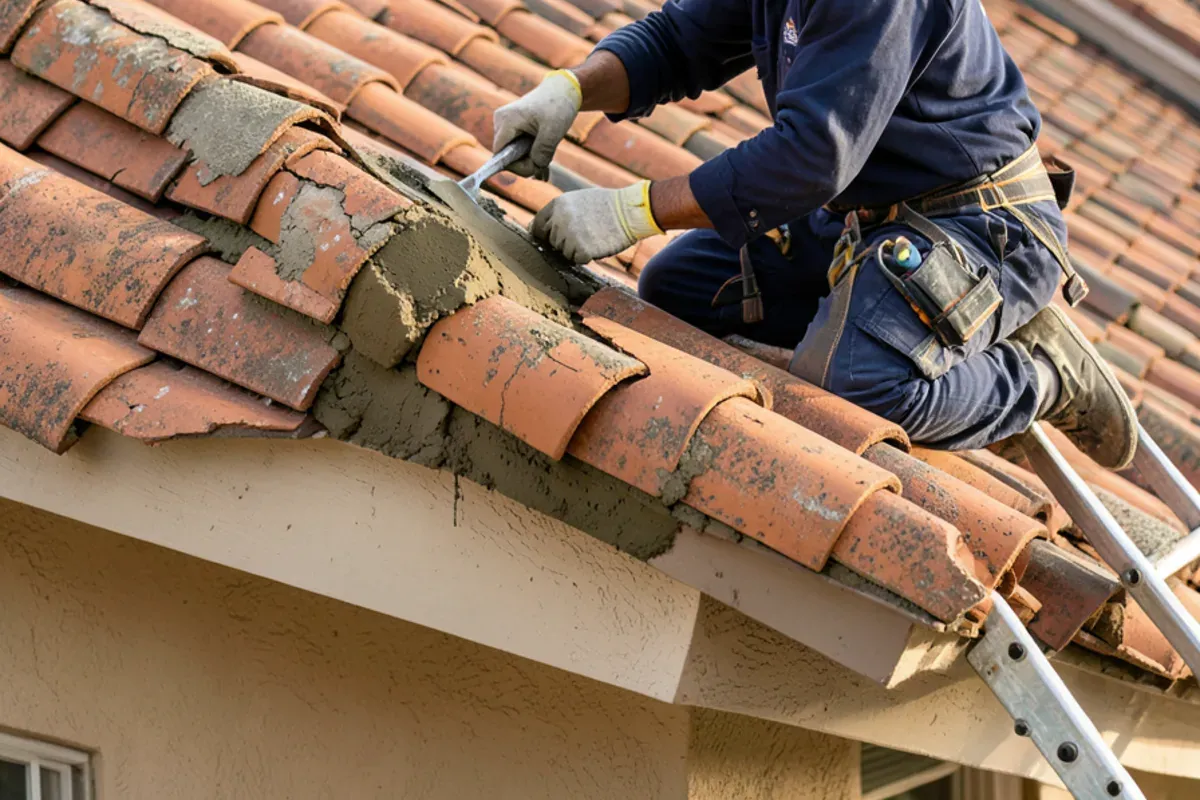
Tile roof underlayment repair: lifting, relaying, or replacing the roof
Underlayment repair means taking the tile off, repairing or replacing the layer beneath, and relaying the same tile. The tile is reused, which saves material and preserves the look.
You have three options, and each carries a trade-off.
- Spot repair: Lift tiles around a leak, patch the underlayment and set them back. Fastest and cheapest. It does nothing for the rest of the roof.
- Section relay: Remove tiles from one slope or valley, replace the underlayment and relay. Fixes the area that is failing at a reasonable cost.
- Full relay or replacement: The whole roof is stripped and new underlayment goes down. Right when the underlayment is dried out all over.
Valleys and wall edges fail first, so we look there. Metal valley liners fail by a different mechanism, covered on the metal roof repair page.
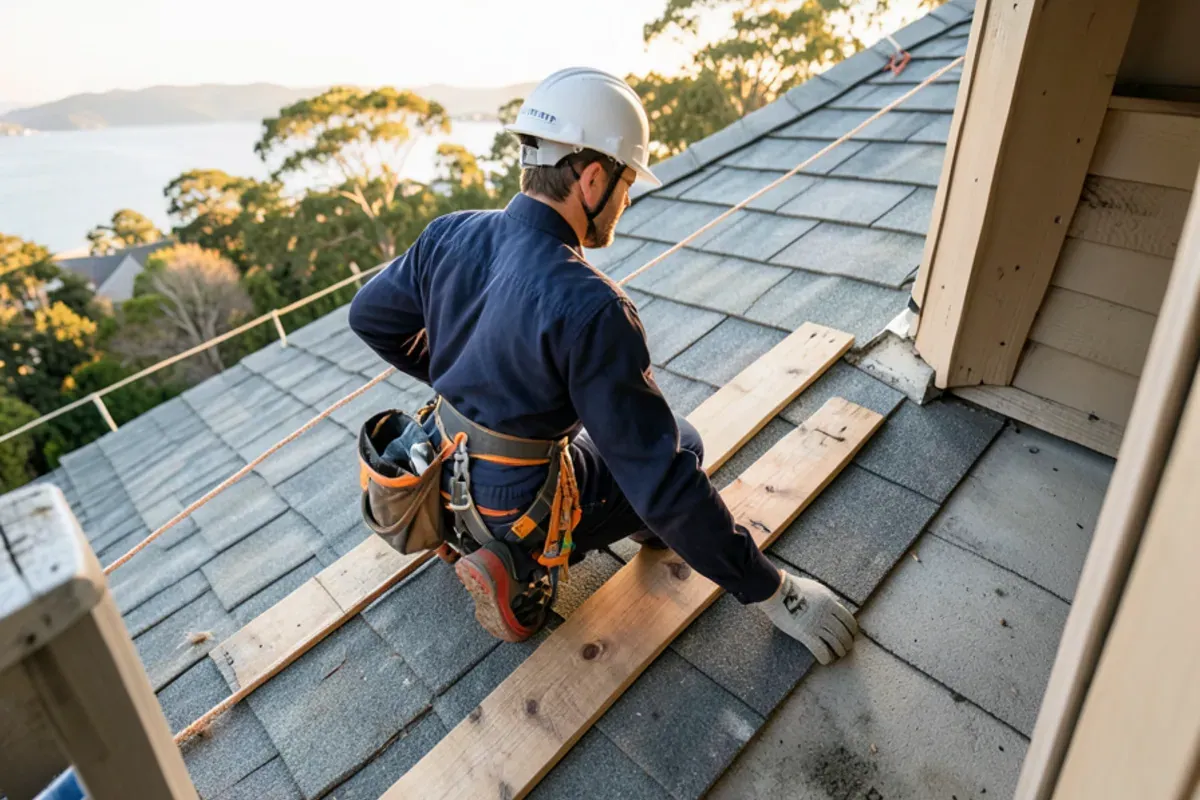
How we move around a tile roof
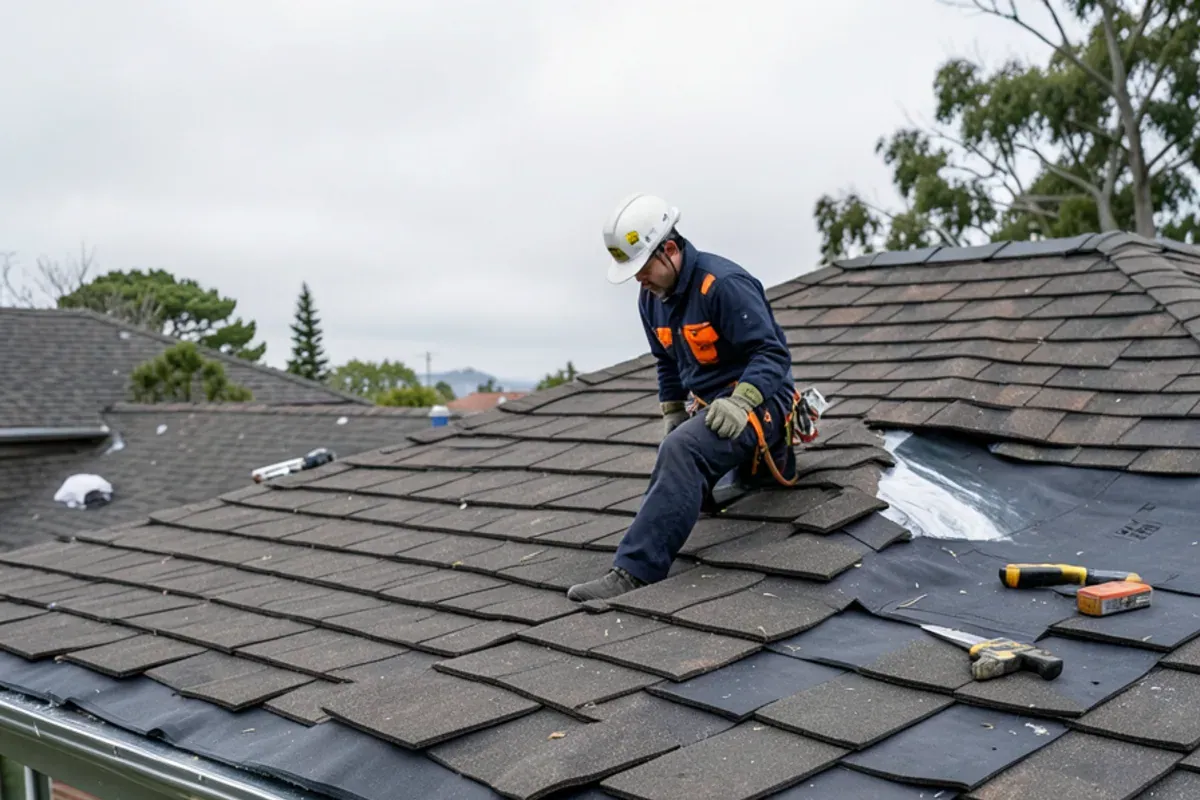
Tile cracks under a careless foot. We step over the battens, near the lower third of each tile, wear soft soles and spread weight across a plank on steep sections. On a steep or very brittle roof, we use aerial photos for the inspection and only walk the places that must be touched.
Broken tile found during the visit is counted and added to the estimate rather than discovered afterward. A few extra tiles are broken by the process on many tile roofs, which is why we state a cracked-tile allowance up front.
Tile roof repair visit, step by step
- Call and description. You describe the leak, the location and when it appears.
- Inspection. Visual check from the ground and roof, with aerial photos where the roof is steep or fragile.
- Lift test. A few tiles are lifted at representative points to check the underlayment.
- Written estimate. It states the tile, underlayment, flashing, who pulls any permit and the allowance for breakage. Confirm the permit question before signing.
- Repair. Tiles come off, the layers beneath are repaired, and the tiles go back or new ones are set.
- Flashing check. Walls, chimneys and valleys are resealed or rebuilt.
- Cleanup and photos. Broken pieces are removed from the yard and finished photos reach you the same day.
Timeline and what comes after
A few-tile repair can be finished in a morning. A section relay takes a day or more, depending on the roof's size and the weather. Rain stops tile work, because the underlayment cannot be left open overnight without a cover.
After the repair, watch the ceiling through the next storm. If a stain returns, tell us; the cause may be a flashing point we could not see from the roof. We document interior water damage for your claim.
The roof flashing repair page explains why wall and chimney flashing is often the real cause on tile roofs.
What affects the cost of a tile roof repair?
Tile repair usually costs more per square foot than shingle repair, and the reasons are specific. Tile is heavy and has to be handled by hand, so labor hours rise. Matching tiles may need to be sourced. Lifting and relaying tile around a leak takes time that a shingle replacement does not.
Other drivers include roof pitch, the number of stories, how many tiles break during the job and whether the flashing needs rebuilding. We do not publish a flat price for tile repair because the range is too wide to be honest. Your written estimate is the number that counts, and it should itemize tile, underlayment and flashing.
Permits and licensing for tile roof work
Lifting a few tiles is small work, but relaying a slope can pass the roughly 200 sq ft where a third-party county guide says roof permits generally begin (PermitFlow). The City of Alameda Permit Center has the final word, and the estimate should name who pulls the permit. Roofing requires a C-39 classification from the CSLB, verifiable at cslb.ca.gov.
Tile roof repair across the East Bay
From the Webster St office, Oakland is roughly 12 minutes, Berkeley about 18, San Leandro about 24 and Hayward about 31. Those are estimates, and bridge traffic changes them.