
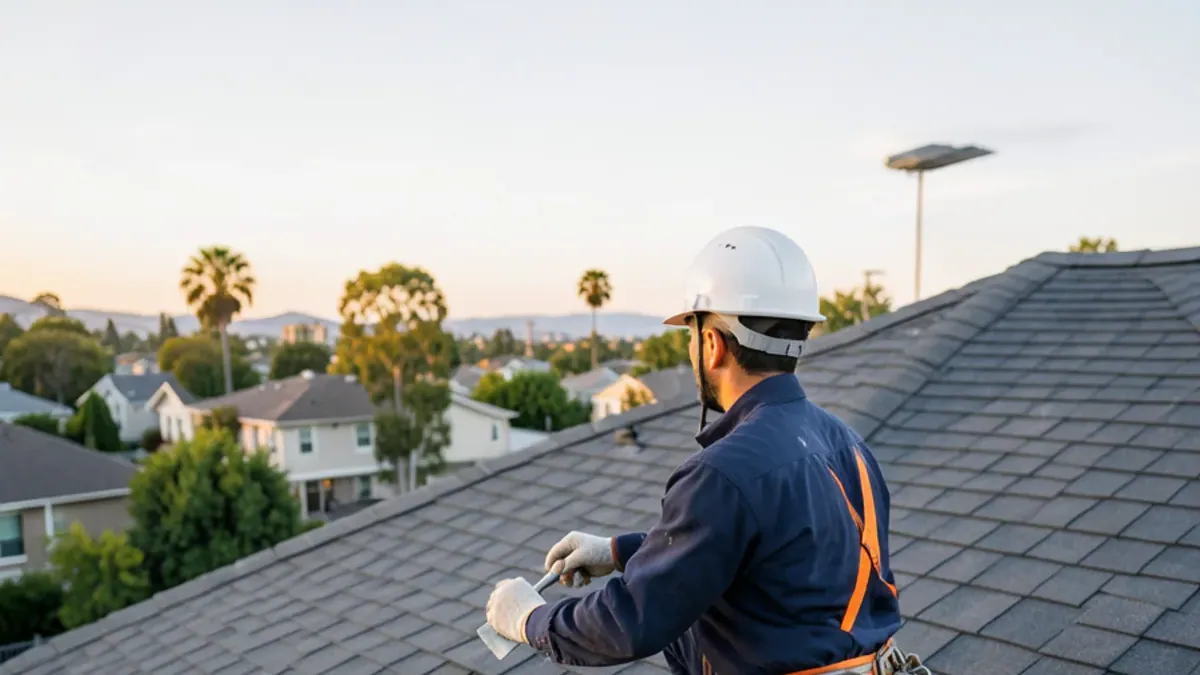
Roof repair cost in the East Bay depends on what failed, how hard it is to reach and what has to be replaced around it. A small flashing reseal and a patch over rotted decking are different jobs even when the leak looks the same inside. Expect a fair estimate to name the cause, the method and the materials, and treat any quote that does not as incomplete.
Why does one roof patch cost so much more than another?
Cost follows scope, and scope follows access and cause. These are the factors that move a repair quote:
- Roof pitch and height, which decide safety gear and set-up time
- The type of failure: flashing, a pipe boot, a lifted shingle or a soft spot in decking
- How many penetrations or valleys are involved
- Whether the decking underneath is dry or rotted
- Matching existing shingles, which can mean sourcing an older product
- Whether the leak has damaged interior areas that need separate documentation
One Alameda customer reported a patch repair of around two thousand dollars on one job. That figure belongs to that customer and that roof. It shows that repairs can run from small to meaningful, not what yours will cost.
How much effort does each kind of repair take?
Different failures need different amounts of work, and effort drives cost. This table ranks common repairs from lightest to heaviest by labor and materials. It gives no dollar figures, since your roof sets those.
| Repair | What drives the effort | Relative effort |
|---|---|---|
| Pipe boot or vent flashing | Small area, but the old seal must come off cleanly | Light |
| Skylight or chimney reseal | Flashing detail, access to all sides | Light to medium |
| Replacing individual shingles | Matching, nailing pattern, sealing the tabs | Light to medium |
| Valley or wall flashing rework | Shingles above must be lifted and relaid | Medium |
| Decking patch | Cutting out rot, new sheathing, new underlayment | Medium to heavy |
| Ridge or hip rebuild | Exposed work, long run, often wind-damaged | Medium to heavy |
A repair that begins as a pipe boot can become a decking job when the sheathing around it is wet. That is why a good estimate carries a decking allowance and says how extra boards are billed.
What does access change on the Alameda island and in the hills?
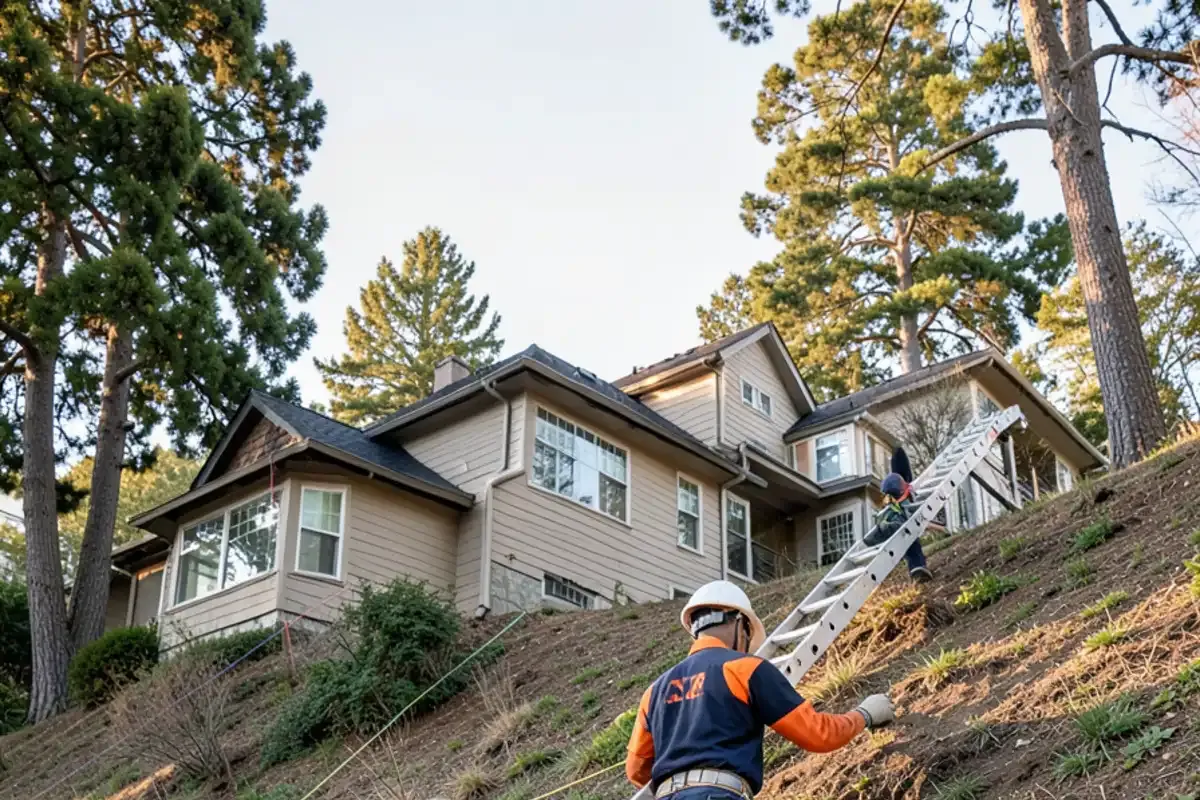
Access changes set-up time more than most owners expect. Alameda lots are flat but often tight, with fences, trees and narrow side yards that limit ladder and debris-bin placement. Hillside streets in parts of Oakland add slope, steep pitches and tighter staging. Oakland is one of the places we cover, and the same repair there can take longer to set up than the same repair on a flat lot.
Ask the roofer what the quote assumes about ladders, staging and the debris bin. If the plan changes on site, the change should be explained before work continues.
What should a fair repair estimate list?
It should list the location, the suspected cause, the repair method, the materials and any allowance for hidden damage. A one-line total with no detail is a warning sign.
| Line item | What it tells you |
|---|---|
| Location and photos | The roofer actually found the problem |
| Cause | Flashing, shingle failure, penetration or decking |
| Method | Reseal, replace, flash-in or patch |
| Materials | What goes on the roof and how closely it matches |
| Decking allowance | How rotted boards will be handled and billed |
| Cleanup and disposal | Who removes old material |

Past Alameda customers describe detailed written quotes, photo updates and an estimate by the next day. Those are the habits to ask any roofer about, including us.
What should you ask before you accept a repair quote?
Five questions separate a clear quote from a vague one:
- Where exactly is the problem, and can I see a photo of it?
- Does the repair fix the cause or only the symptom, and how will you know?
- What happens if the decking under it is soft, and how is it billed?
- Will the new material match the old, and can I see it first?
- Who pulls the permit if one is needed, and who pays?
Roof work over about 200 square feet generally needs a permit according to a third-party Alameda County guide, and the City of Alameda Permit Center says permits are needed for most construction work. A small patch often falls under that size, but confirm with the Permit Center rather than assuming. CSLB also advises that a home improvement down payment is capped at 10 percent of the price or $1,000, whichever is less, and that payments should not run ahead of the work. Your written estimate is the number that counts.
Is repair or replacement the better call?
Repair is the better call when the roof is otherwise sound and the failure is local. CSLB's roofing guide notes that interior water damage is commonly caused by a leak at one weathered portion of the roof or by poorly installed flashing around chimneys and skylights, and that these problems do not necessarily mean you need a new roof. The same guide gives an average life expectancy of 15 to 20 years for a typical residential roof, so age still matters.
Honest advice sometimes means doing less. One Alameda customer was told to wait rather than replace, another received advice on keeping old shingles going, and on leaking skylights the repair was favored over replacement, with flashing resealed on three skylights. The roof leak repair page explains how a leak inspection works, and roof flashing repair covers the most common patch.
When does a second opinion pay off?
A second opinion pays off when a quote is large compared with the damage, when replacement is pushed without photos, or when the pressure is to sign now. CSLB lists the scare tactic of calling a leaky roof a danger to push unnecessary work as a common scam, and advises not rushing into repairs or deciding under pressure. It also advises comparing at least three bids.
In one Alameda case, a second roofer judged a customer's much higher patch quote to be too high. That is the value of a second look: someone who is not selling the bigger job checks the first scope.
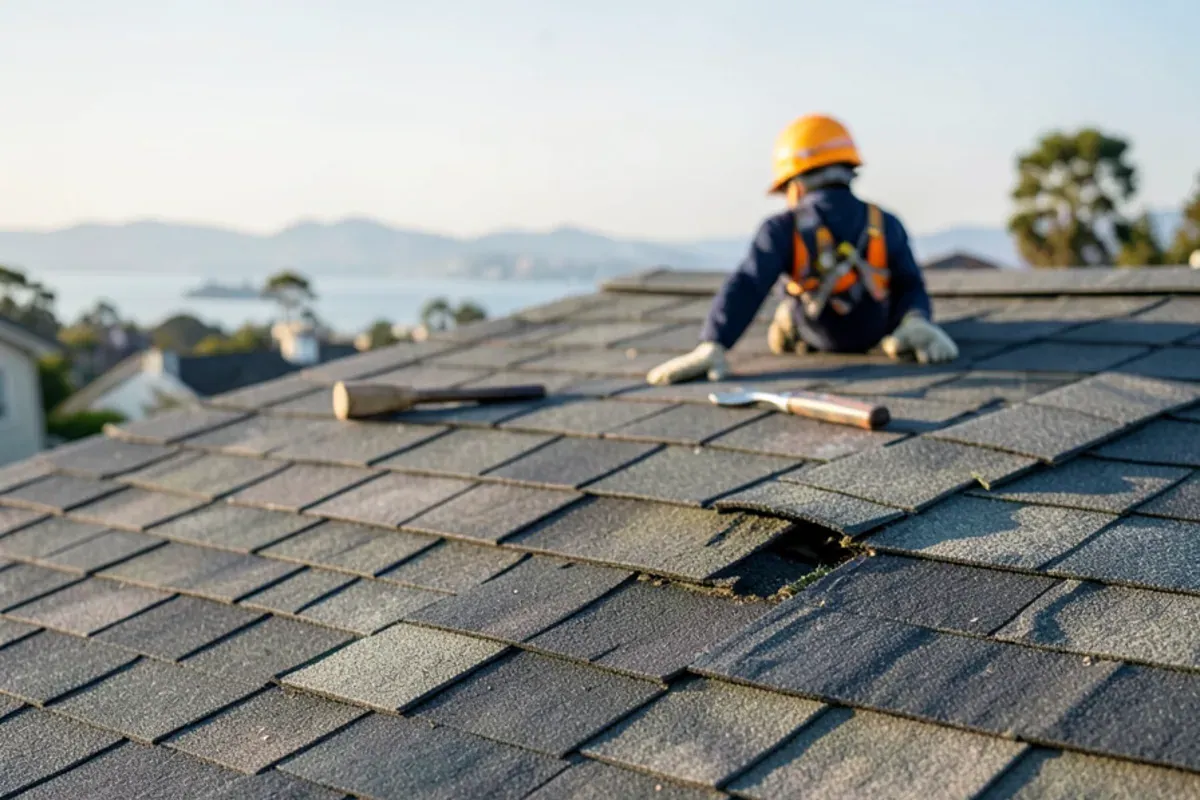
When you compare, line the quotes up item by item. Ask each roofer to show the photo of the problem, name the failed part and say whether the repair addresses the cause or the symptom.
What about repairs after a storm or on an older home?
Older homes need more room in the estimate. Alameda has many of them, with about 31.9% built in 1939 or earlier, so decking may be aged and flashing from a past job may be faulty. On one Alameda visit, flashing and gutter faults left by a previous job were fixed at the same time. Aged decking found at tear-off on another job was handled through a change order explained before work continued.
Insurance changes how repairs are documented but not what they cost. If the damage came from a covered event, photographs and a written scope help the claim. A roofer cannot negotiate the claim for you.
Where do we work, and what happens next?
We are based on Webster St in Alameda and also cover Oakland, roughly 12 minutes away, and neighboring East Bay cities. For a repair in Alameda itself, the home page explains how visits work, and the roof repair hub lists the repair types.
Free inspections and estimates are available, and the written estimate is the figure that governs the work. Call the office or request an estimate, and describe where the water shows up so the visit starts in the right place.