
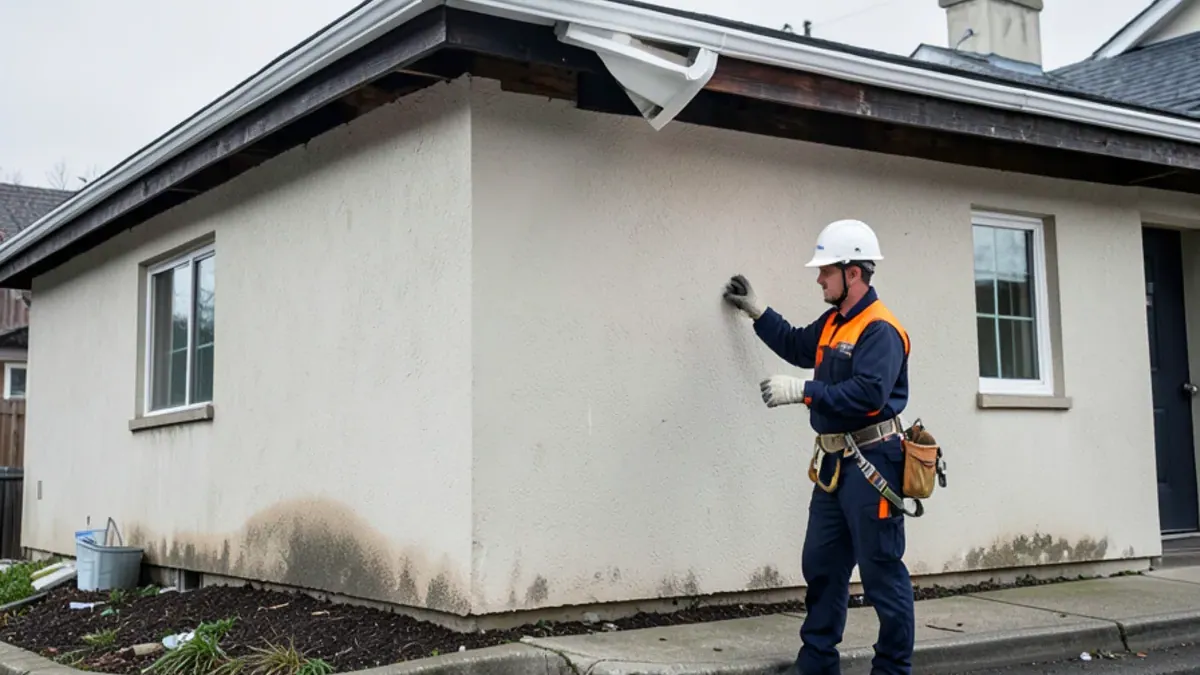
Which gutter problem do you have?
Match the symptom to the fault before anyone prices a repair.
| What you see | Usual cause | Typical fix |
|---|---|---|
| Water pours over the front edge | Clog, or gutter too small | Flush; upsize or add a downspout |
| Gutter sags in the middle | Hangers pulled out or spaced too wide | Re-pitch and add hangers |
| Drip at a joint | Open seam or failed sealant | Reseal or rivet |
| Downspout hangs loose | Straps rusted or wall fixings failed | Re-strap, new elbow |
| Gutter bent or pulled away | Wind, limb or ladder impact | Straighten or replace the section |
| Stain or rot behind the gutter | Chronic overflow | Fascia repair, then re-hang |
If the stain is on the fascia or soffit, the fault may have been there for a while. Our fascia and soffit repair page covers what comes next.
Local causes: why Alameda gutters fail
Rain here totals about 22 inches a year, concentrated in October through April (BestPlaces, ZIP 94501). The gutter sits dry and fills with seeds, leaves and dust for months. The first heavy storm then turns that debris into a dam. Water backs up, spills, soaks the fascia and over time pulls the hangers loose.
The island's older housing adds to it. About 31.9% of Alameda homes were built in 1939 or earlier (Point2Homes), so many gutters hang on original wood with decades of paint over rot. Salt air attacks steel hangers and straps. Trees add weight and debris in the gutter, and a limb can bend the whole run in one fall. The problem is rarely only the gutter.
How we inspect before we repair
We look at the gutter, the board behind it and the roof edge above it in that order.
- Probe the fascia with a screwdriver for soft spots
- Look at the pitch with a level or a water test
- Check each hanger and each seam
- Flush each downspout and see where it discharges
- Look at the drip edge and the last row of shingles for water that is getting behind the gutter
A gutter that sags because the fascia is rotten cannot be fixed by adding hangers. A gutter that overflows because the roof edge is dumping water behind it cannot be fixed by cleaning. Checking the roof edge is part of the job, which is why a roofer is the right person to look.
Repair methods and their trade-offs
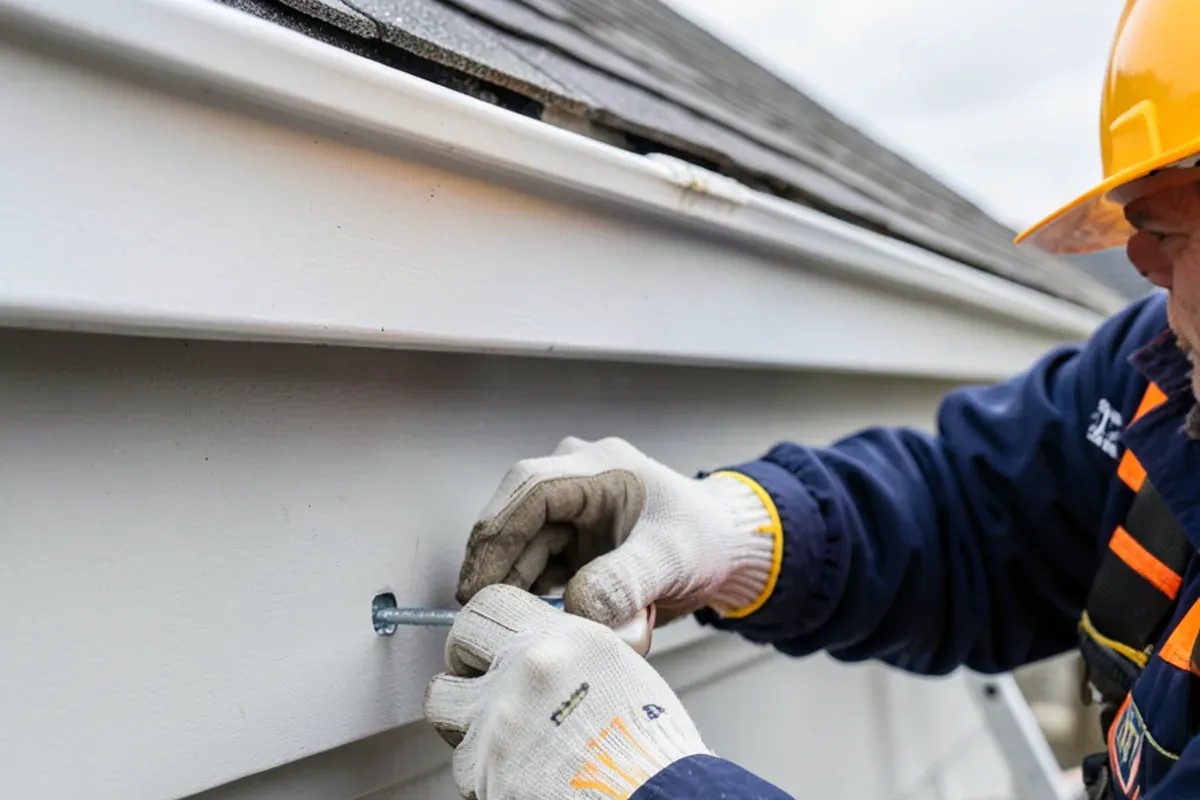
Reseal and rivet a seam or end cap. This is cheap and fast, and it holds if the metal is sound. Gutter reattachment means resetting the run with new hangers into good wood. Straps on a downspout are a similar fix. Section replacement swaps a bent or corroded piece for new seamless metal and works when the rest of the run is healthy. Full replacement is better when the run is bent in several places, seams are failing everywhere, or the profile cannot handle the roof.
The trade-off is simple. Repairs cost less now. If the same run needs repair a second time, replacement was probably the better call, and we say so rather than sell a third patch.
Storm damaged gutter repair
Wind and tree limbs bend gutters, tear hangers out and crack end caps. The roof edge is often damaged too. One Alameda customer had a tree-damage claim for roof, gutters and siding. For claims, we photograph the damage, write the scope of work, and meet the adjuster on site to walk the damage. We do not negotiate the claim. In California, only the policyholder, the insurer or a licensed public adjuster does that. Your own policy decides what is covered: sudden damage is usually covered and wear and tear usually is not.
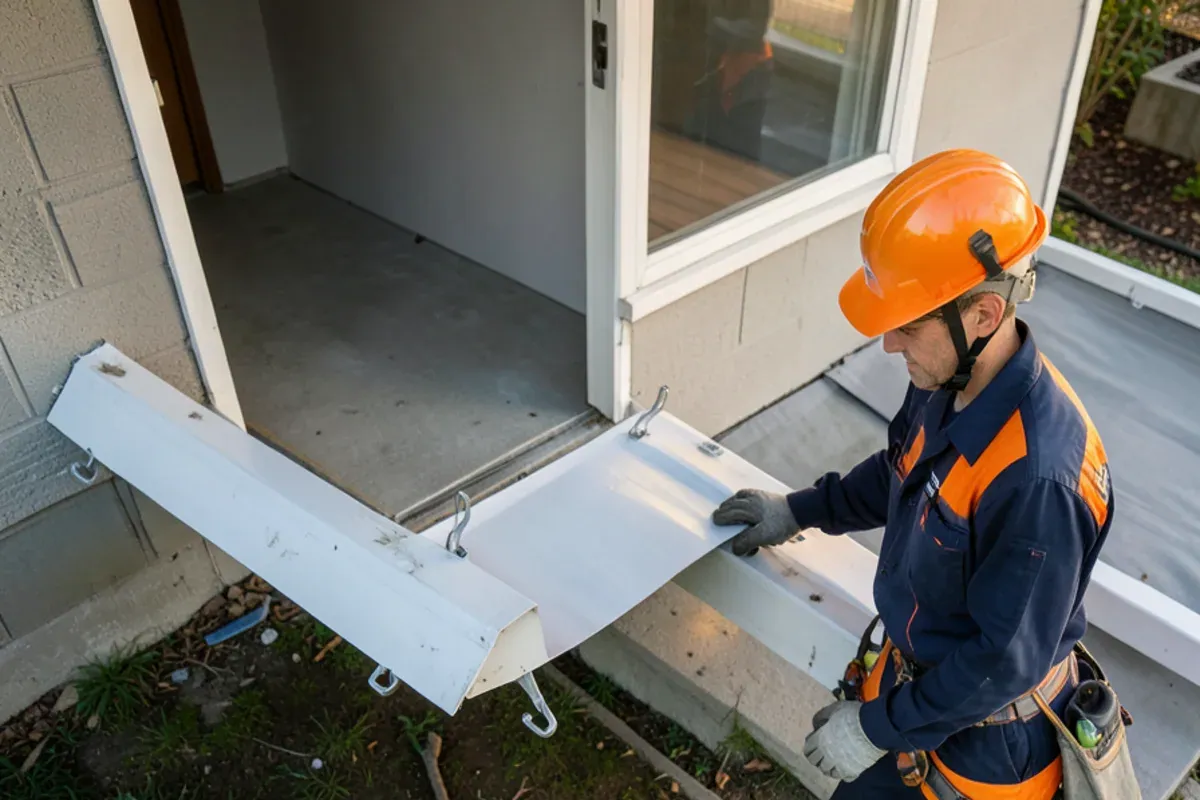
What a gutter repair visit looks like
- You call and describe the symptom. We ask where it overflows and when.
- We inspect. The steps above, from a ladder and from the roof edge.
- You get the finding in plain terms. Which fault, how far it goes, and whether repair or replacement is the better choice.
- We write the estimate. Repairs are itemized: sections, hangers, sealant, fascia boards.
- We do the work. Most repairs are done in one visit.
- We test with water. Seams, corners and downspouts are watched for leaks.
- We clean up and send photos. Customers report same-day photos of the work.
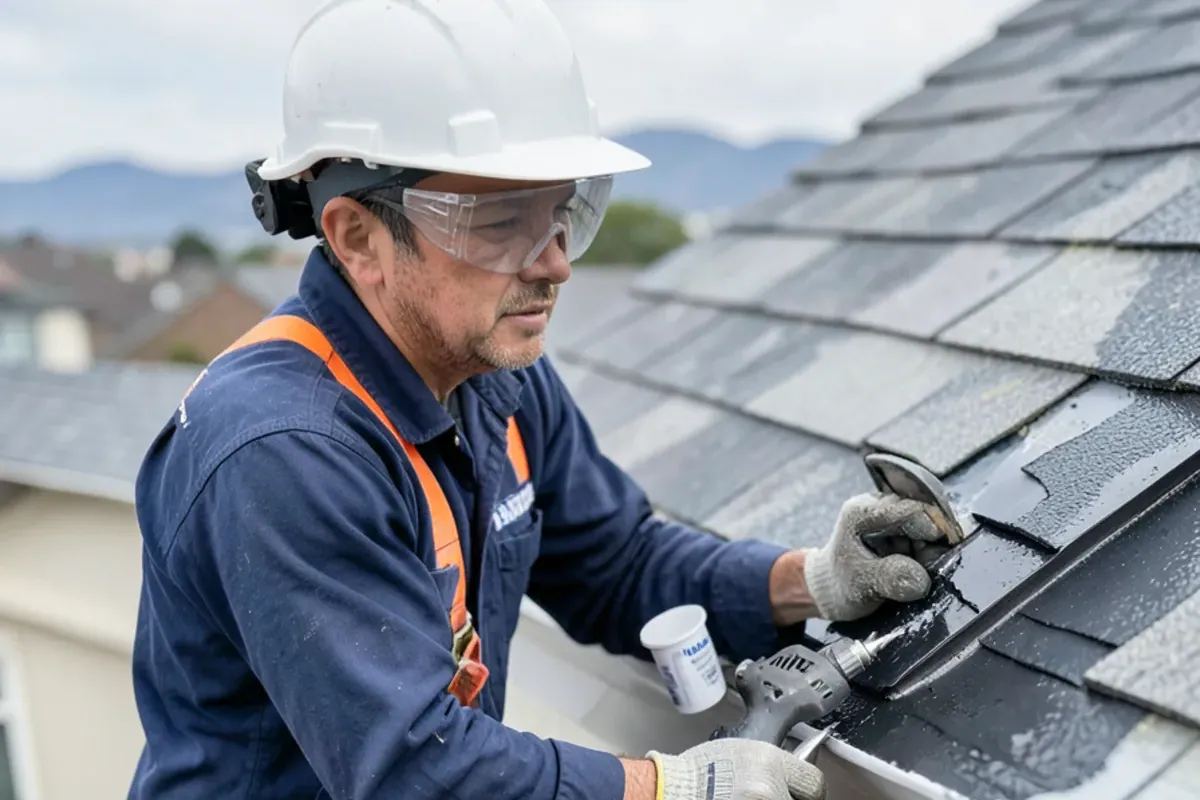
Downspout repair and where the water should go
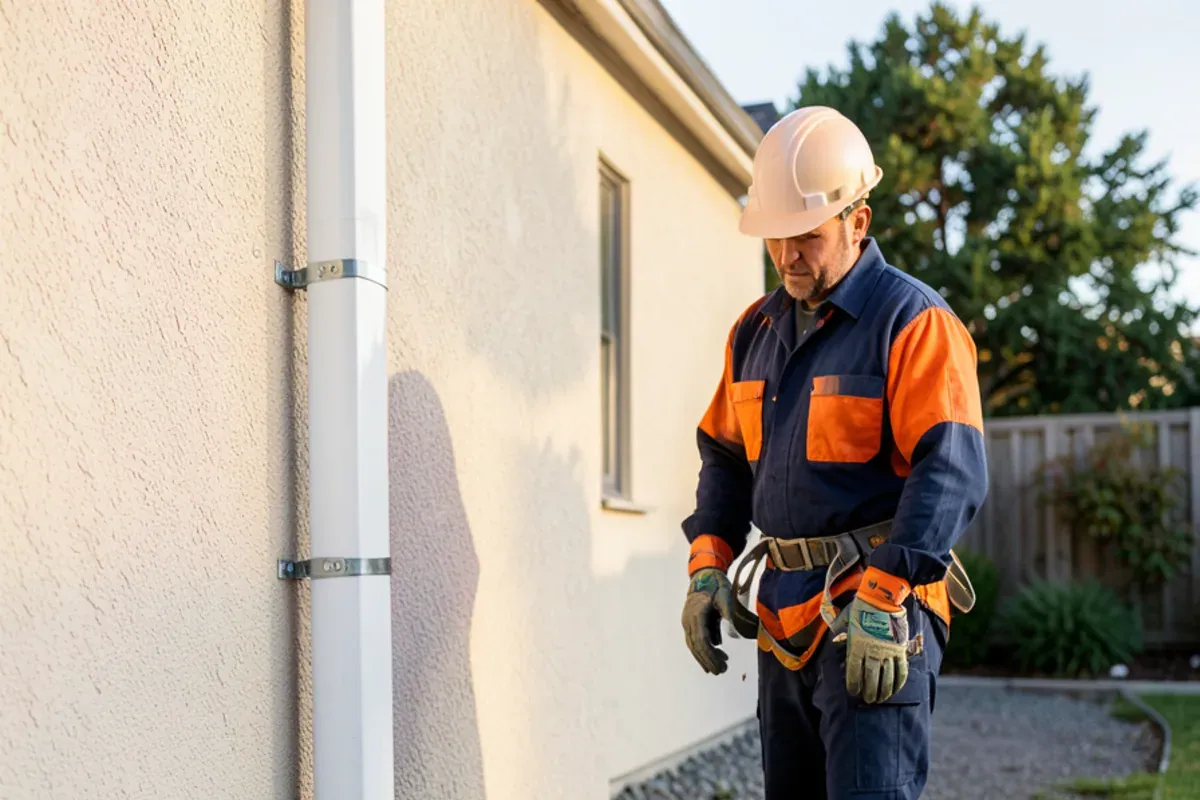
A downspout is part of the gutter, and its job ends at the ground. On a flat island like Alameda, water has little slope to run off on, so the last four to six feet matter. We use elbows and extensions to carry water away from the foundation and toward the street or a yard with fall. We do not aim a downspout at a neighbor's fence or wall.
Before a downspout is tied into a drain, check with the City on what is allowed. The estimate should say what is being connected and who is responsible for any approval.
What a gutter repair costs
Repair costs depend on the extent of the fault, not the length of the gutter. These factors move the price:
- How many seams, hangers or sections are involved
- Story height and ladder or staging needs
- Whether fascia needs replacement first
- Whether the gutter is sectional or seamless
- Whether downspouts need new routing
A small repair may be an hour of work. A bent run with rotted fascia is a bigger job. Ask for the price in writing. Ours separates the repair from any wood work so you can see each.
Rules and licensing for small gutter jobs
A small gutter repair is where unlicensed work tends to hide. California's minor work exemption covers jobs under $1,000 only when no permit is needed and the person employs no one (B&P §7048). Anything larger needs a licensed contractor, so look the name up at cslb.ca.gov before paying. Tying a downspout into a drain is a City question; confirm with the Alameda Permit Center.
Keeping gutters from failing again
Clear the gutters in early fall, before the rains. Flush the downspouts after the first heavy storm. Look up after wind. If trees overhang the roof, consider gutter guards or a more regular schedule of gutter cleaning. Our post on overflowing gutters explains how to tell clog from design problem.
Gutter repair across the East Bay
We repair gutters in Alameda and cover Oakland, Hayward, San Leandro and Castro Valley. We are based at 1910 Webster St on the West End. Bridge traffic changes drive times, so we confirm when we book.