
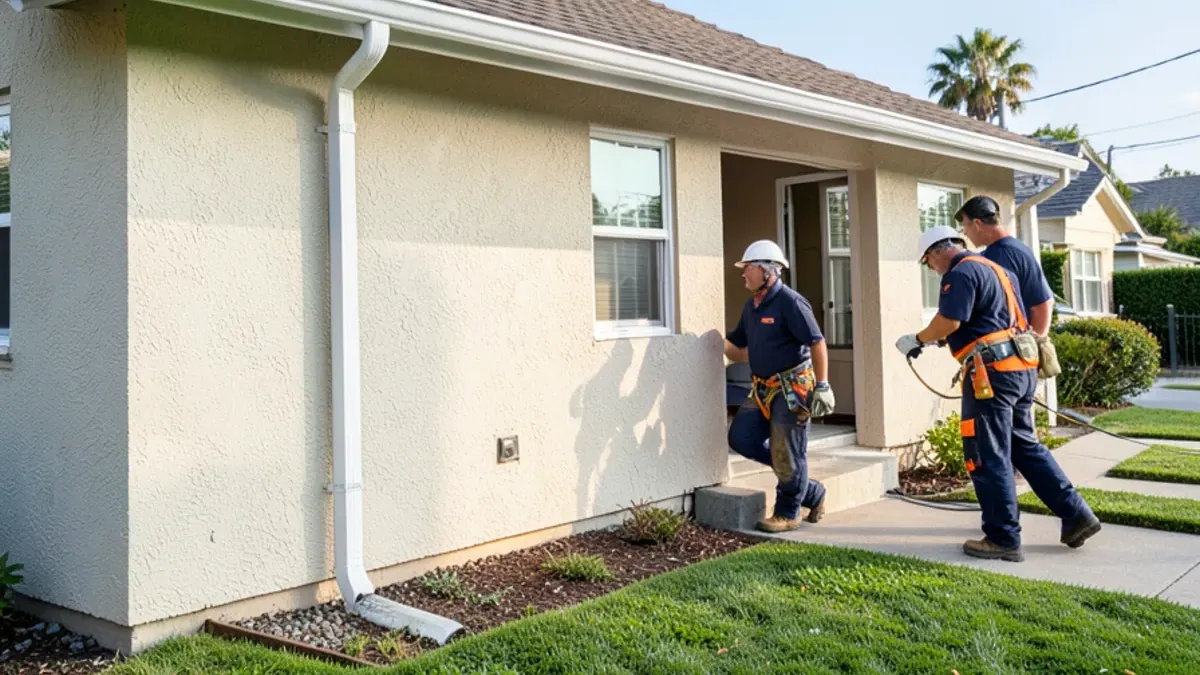
What decides the price of new gutters?
Seven factors set the number: linear feet, stories, gutter depth, material, downspout count, fascia condition and old-gutter removal. Footage and height drive most of it. A one-story ranch with a simple rectangular roofline is the cheap end of the range. A two-story house with several jogs, a long garage run and a tall back wall is the expensive end.
Every inside or outside corner adds a mitered joint and labor. Every extra downspout adds parts and a drain path. That is why two houses with the same square footage can price very differently.
This post gives cost factors, not a price list. We do not publish gutter prices because the number depends on your roof edge, and only a written estimate for your house gives a figure you can rely on.
How are new gutters measured and quoted?
Gutters are priced by the linear foot of eave they cover, then adjusted for the details. A good estimate lists each of these:
- Total footage of gutter, ideally by elevation (front, back, sides)
- Profile and depth, for example 5-inch or 6-inch K-style
- Material and thickness
- Number and size of downspouts, and where they discharge
- Outside and inside corners
- Removal and disposal of the old gutters
- Any fascia or trim repair that has to happen first
Seamless gutters are formed on site from a coil of metal, cut to the exact length of each run, so there are fewer joints to leak. That is a product term, not a promise: the corners, downspout outlets and end caps are still where leaks start, which is why detail work shows up in the price.
Our estimates are detailed and written, and on steep or multi-roof properties aerial photos are used to confirm measurements. One Alameda customer described getting a clear written quote the next day.
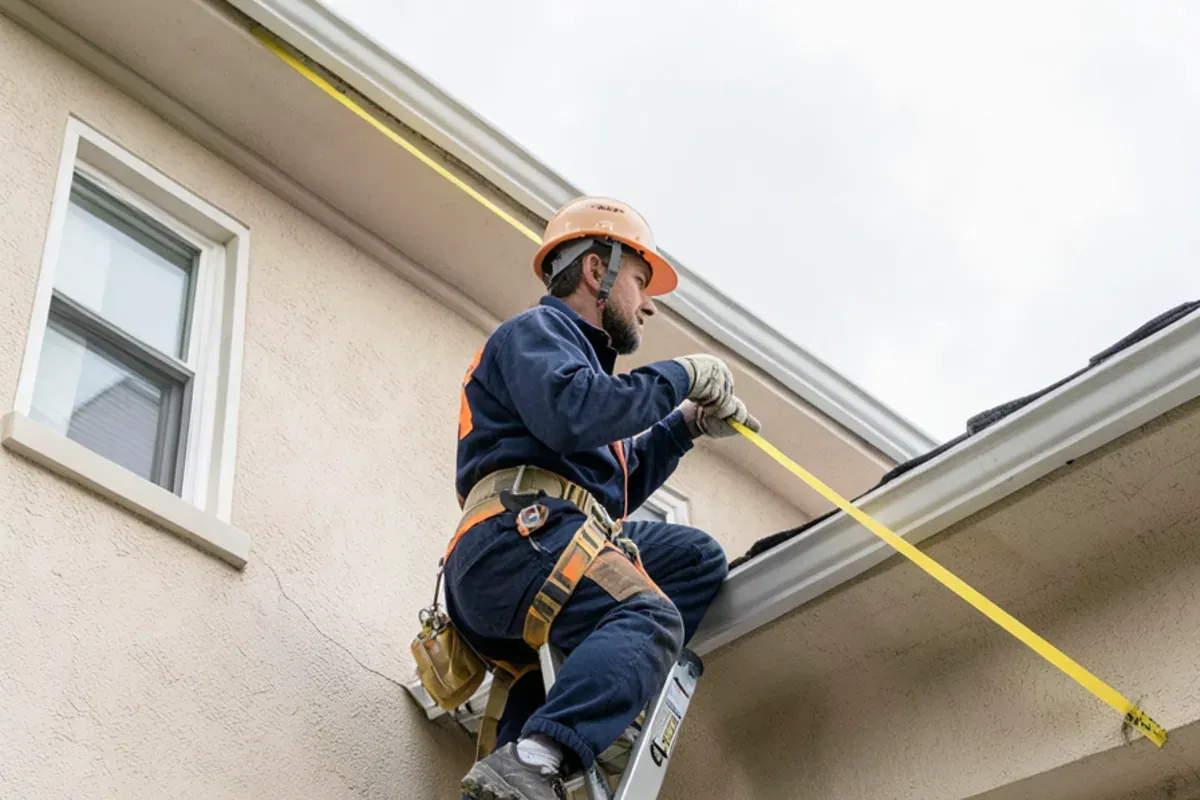
Which cost factors move the price most?
Footage and the number of corners move the price first, and fascia repair is the factor most likely to surprise you. This table ranks what to look for on your own house before anyone arrives:
| Factor | Price goes up when | What to ask for |
|---|---|---|
| Linear feet | Long rear runs, wrap-around porches, detached garages | Footage by elevation |
| Stories | Walls are two stories or taller | Whether staging or a tall ladder is included |
| Depth | 6-inch profile on large roof planes | Which roof planes feed each run |
| Downspouts | More outlets, longer routes, tie-ins to drains | Discharge point for each one |
| Corners | Many jogs in the roofline | Corner count in the estimate |
| Fascia | Soft or split boards behind the old gutter | Repair priced as its own line |
| Removal | Old runs, hangers and downspouts must be hauled off | Disposal stated in writing |
Treat the table as a checklist for reading quotes, not a calculator. The same seven factors apply to every house, and the written estimate for yours is the number that counts.
Does gutter depth change the cost?
Yes, and it should change the design too. The common residential sizes are 5-inch and 6-inch K-style. The 6-inch profile moves more water, and it usually comes with larger downspouts. The material and parts cost more, but the larger size handles heavy rain off big roof planes without spilling over the front edge.
Pick depth by the roof, not by habit. Long valleys, large unbroken slopes and steep pitches all concentrate water in a small stretch of gutter. If your current gutters overshoot in a hard Alameda winter storm, the size may be the problem, not the slope.
On one Alameda job, deeper gutters went around an entire house. That kind of upgrade is a line you can see in the estimate, so you know what you are paying for.
What else changes the gutter price?
Fascia condition. New gutters need solid wood to hang on. If the fascia behind the old gutter is soft, it gets repaired or replaced first. This is the most common surprise, and a reputable estimate tells you before work starts. If you suspect rot, read about fascia and soffit repair before you compare quotes.
Material. Aluminum is the usual residential choice. Copper and other premium metals cost much more and suit specific architecture.
Downspout routing. A downspout that ends on a splash block is cheap. One that has to tie into a drain line or carry water across a patio takes more parts and time.
Access. Tall walls, steep side yards and landscaping that blocks ladder placement add labor.
Old gutter removal. Tearing off and hauling away old runs is part of the job and should be on the estimate. On one Alameda property, the crew also cleared junk out of existing gutters during the work.
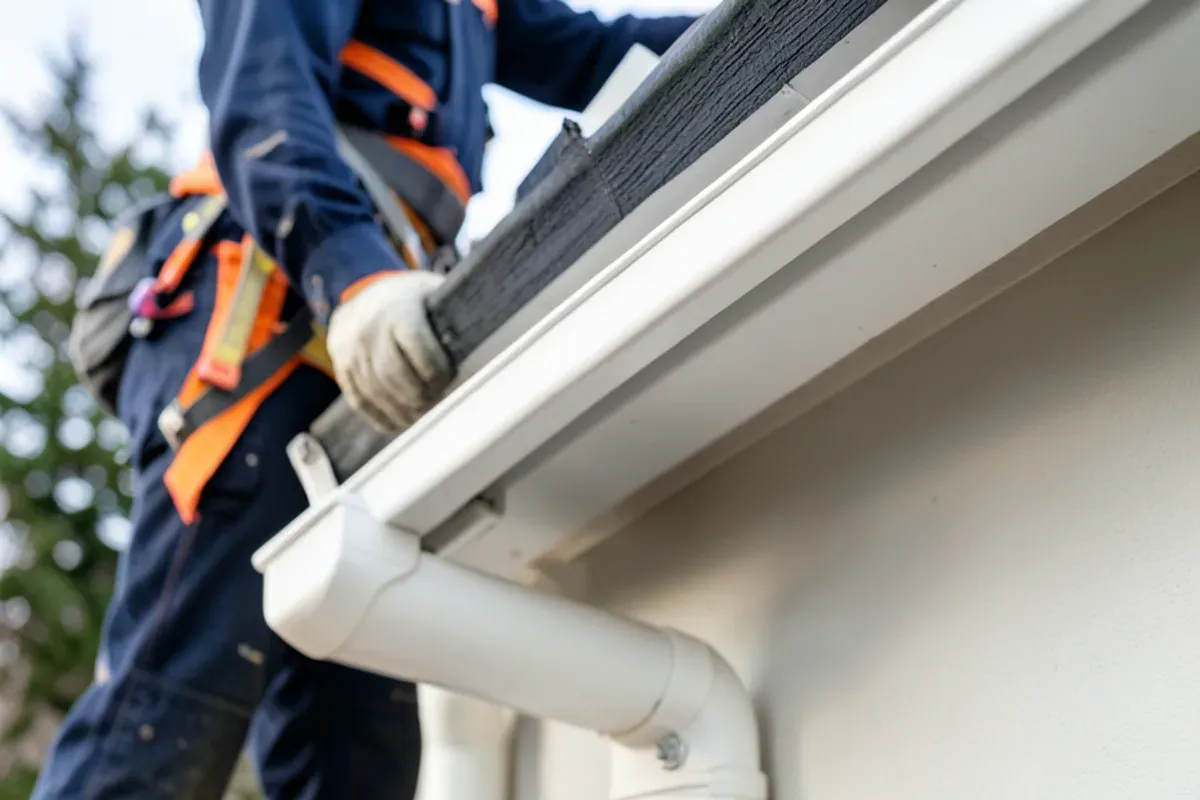
What does an installer check before writing the number?
Before pricing new gutters, an installer checks the wood they will hang on, then the pitch, then where the water goes. The order matters because each check can change the scope.
- Press a screwdriver into the fascia behind the old run. If it sinks in, repair is a line item.
- Look for a drip edge at the eave. Without one, water can wick behind the gutter and rot the board again.
- Run a level along each gutter. Standing water inside a run means it is pitched wrong or sagging.
- Trace every downspout to where it lands. A downspout that dumps beside a foundation is a drainage problem, not just a gutter problem.
- Note the roof planes above. Valleys and long unbroken slopes push water into one stretch of gutter.
The trade-off is real. A larger 6-inch gutter can handle more water, but it will not fix a rotten board or a missing drip edge, and sometimes one extra downspout does more than a bigger profile. Older Alameda houses often have original wood trim, so the fascia check is the one we would not skip. If the numbers on two quotes disagree, this checklist usually explains why.
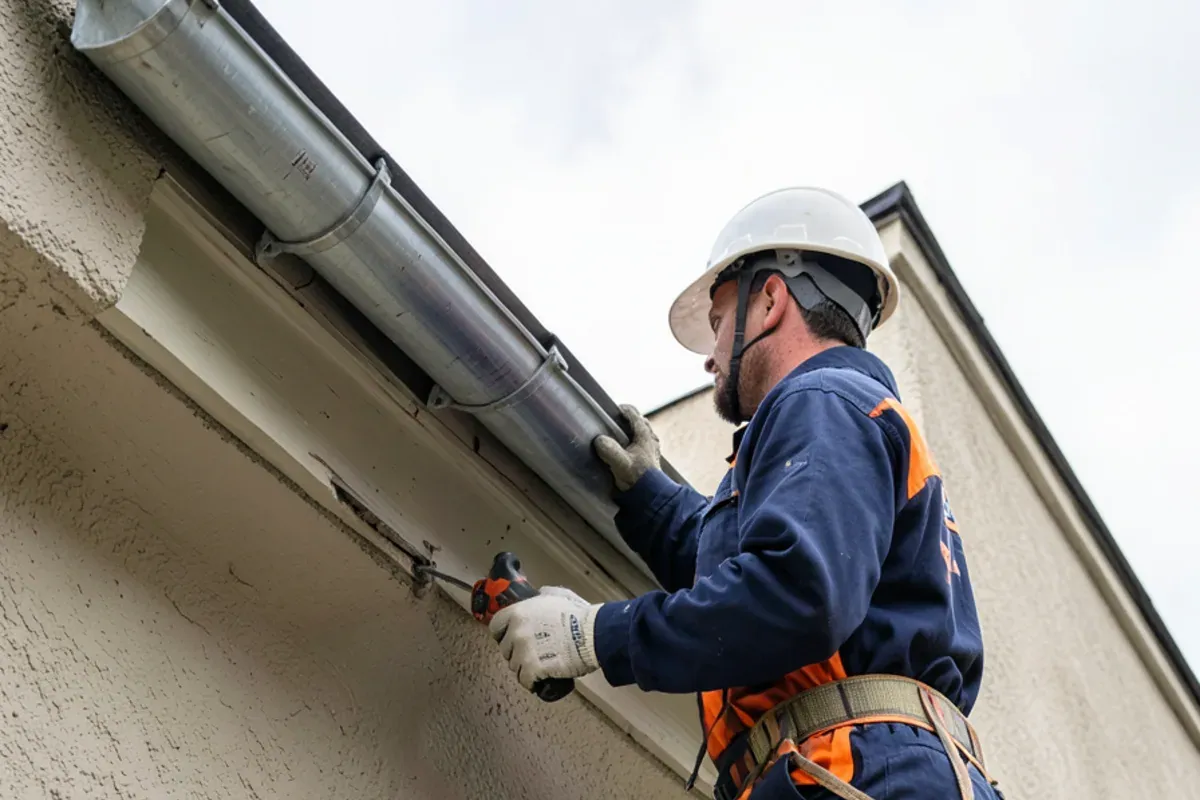
Should you repair the old gutters first?
Repair first when the run is sound and the fault is local, such as a loose hanger, a failed seam or one split corner. Replace when the metal is bent along most of its length, or when it hangs on soft fascia. A good contractor prices both and tells you which one they would choose. On one Alameda job the customer was told to wait rather than replace, and that kind of advice is what a fair estimate should include. For repair-only work, see gutter repair.
What we see on gutter jobs in Alameda
Gutters often go in after a reroof, or as the fix for a roofline that has been dripping onto walls. Past Alameda work includes gutter jobs on three rental homes for one owner. Another was a ranch home where the roofline trim, soffits, fascia and gutters were replaced together.
Doing the gutters while the fascia is exposed from a reroof saves ladder time. Ask whether the gutter line is separate on your quote so you can see exactly what that saves.
How to compare gutter estimates
Compare footage first, depth second, downspouts third. If one quote is far lower, find out which of those it leaves out. Ask each contractor to state in writing:
- Linear feet and profile
- Number of downspouts and discharge points
- Whether old gutters are removed and hauled away
- What happens if the fascia is rotten
- Who handles cleanup
For the full scope of what new runs involve, see gutter installation in our gutters section, and the main gutters page for repairs and related work.
Get a number for your house
A tape measure and a look at the fascia explain most of the price. To get a real figure for your Alameda home, call the office and ask for a free inspection and a written estimate.