
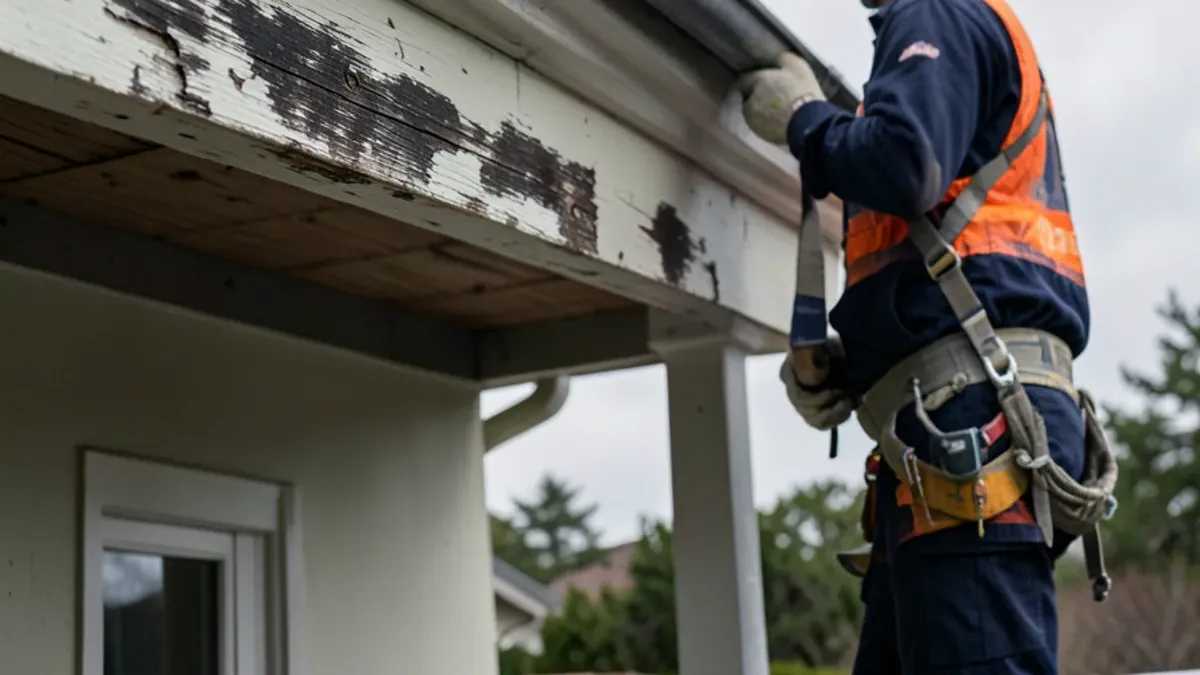
Signs your fascia or soffit has failed
Look for these from the ground, with binoculars if needed:
- Paint bubbling, peeling or dark along the lower edge of the board
- Soft wood that gives under a thumb or a screwdriver tip
- Gutters sagging or pulling away despite new hangers
- A split or spongy board where the gutter attaches
- Soffit panels that sag, stain or show daylight at the seams
- Bees, wasps or birds using a gap in the eave
- Water stains on exterior walls under the eave
The fascia is the board along the roof edge that the gutter fastens to. The soffit is the underside of the overhang. Both are exposed to water that gets past the gutter.
Local causes: why Alameda eaves rot
Alameda's roughly 22 inches of annual rain falls mostly October to April (BestPlaces). Dry summers harden paint and open hairline cracks. Then the first rains drive water into every crack, and the wood stays damp for months in the shaded, low-airflow spots around the eave.
Housing age adds to it. About 31.9% of Alameda homes date from 1939 or earlier, which is 10,315 homes (Point2Homes). Original fascia from those years often has layers of paint over decades of slow decay. Salt in the air does not rot wood, but it corrodes steel nails and hangers, so fastener failure and rot arrive together.
The usual starting point is a gutter that overflowed for years. Our post on what causes fascia rot goes through the sequence step by step.
How we inspect fascia and soffit
We work along the roofline from a ladder and from the roof edge.
- Probe the fascia every foot or so with a screwdriver
- Check where shingles end and whether the drip edge laps over the board
- Lift a gutter end cap or section to look at the board behind
- Look at each soffit panel for stains, sag and blocked vents
- Check the ends of rafters that show at the eave
- Note any sign of insects or animals using the gap
Rot that stops at the board is a trim job. Rot that goes into the rafter tails or the roof deck is a roofing job. A roofer can tell which, and we say so before pricing.
Rotted fascia board replacement: your options
Spot repair cuts out the bad section and splices in new wood. It suits localized rot with sound board on both sides. Full-run replacement removes the whole board from corner to corner. It is the better choice when rot recurs along a run or when new gutters are going on. Material choice matters too. Primed wood is the base. Finger-jointed primed boards resist splitting, fiber cement resists rot and takes paint, and PVC or composite trim has no wood to rot. Every option has a trade-off in cost, look and how it takes paint.
We seal cut ends and the back face before the board goes up. Bare end grain is where water wins first.
Soffit repair in Alameda and what it does for the attic
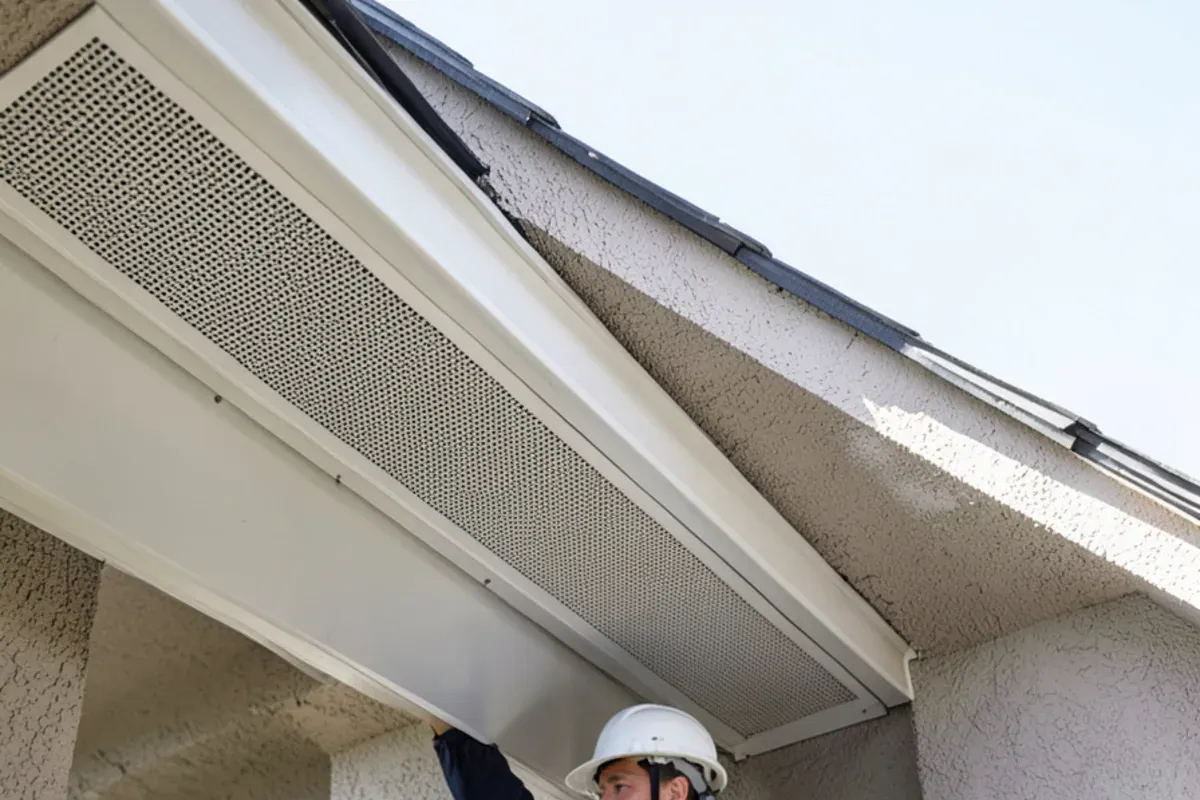
A soffit that is stained, sagging or holed lets in weather and animals. A vented soffit also lets cool air into the attic, which pushes warm, damp air up to the ridge or roof vents. When the vents are blocked by paint, debris or insulation, the attic runs hotter and wetter.
Replacing a damaged soffit with a vented panel, or clearing the blocked openings, restores that intake. Attic venting repair is on our Google listing, and customers report vents replaced during a reroof. Intake and exhaust work as a pair, so if you add soffit vents we check the ridge or roof vents, too.
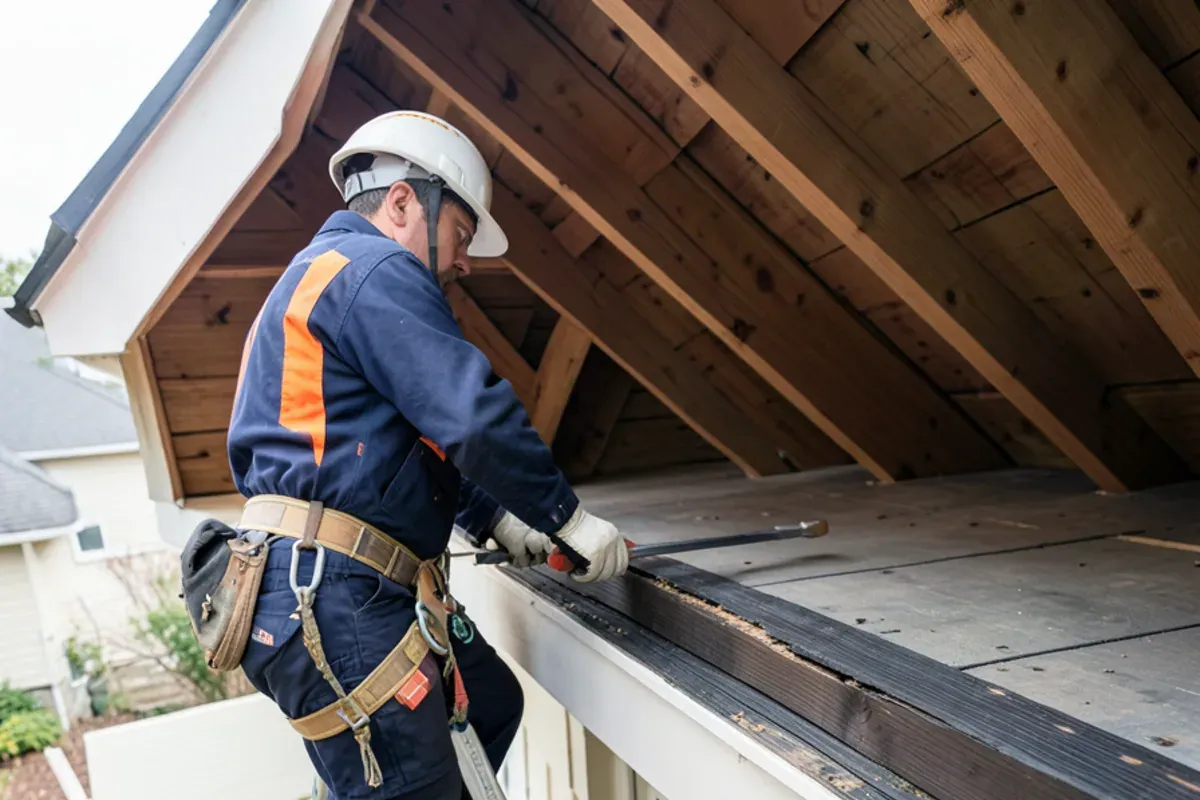
Roofline trim repair and eave repair, step by step
- Inspect and mark. We probe, photograph and mark the bad sections.
- Write the estimate. Footage, material, paint, soffit panels and gutter removal are itemized.
- Take down the gutter. Gutters come off the section being repaired, or the whole run if the board is replaced throughout.
- Cut out the rot. We remove the board and check rafter tails and the roof deck beneath it.
- Raise anything deeper. If rot goes beyond the board, we show you and explain before continuing, as one customer's decking change order was handled.
- Install and seal. New board, sealed ends and a back-primed face. Drip edge is checked and corrected where it is short.
- Prime and paint, or hand off for paint. The estimate states which.
- Re-hang the gutter. On solid wood, with the pitch re-set.
Projects of this kind take from part of a day to a couple of days, depending on the length of the roofline and the paint schedule.
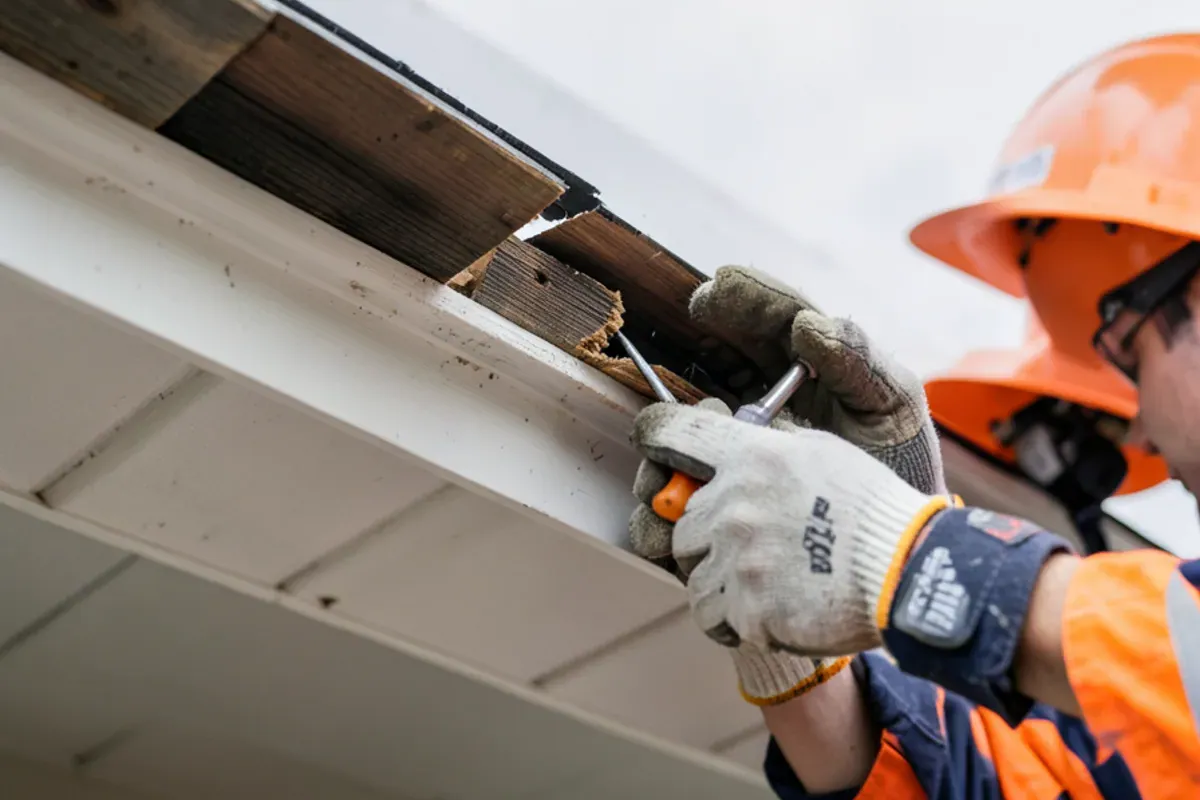
Dry rot fascia repair on pre-1978 houses and historic homes
Houses built before 1978 may have lead paint on the trim. Ask any contractor how they contain dust and clean up when old paint is disturbed. We raise it if the age of the house suggests it, and the estimate should explain how the work is handled.
On a historic home, the City of Alameda Permit Center notes that work changing the exterior of a building may need Planning design review as well as a permit. Ask before changing a profile or a material. The estimate should say who handles any application, and you should confirm with the Permit Center. Check the contractor's license at cslb.ca.gov before paying a deposit, and remember that the $1,000 minor work exemption applies only when no permit is needed and the person employs no one (B&P §7048).
Fascia replacement cost: what moves the number
We do not publish a price list. The factors:
- Linear feet of fascia and soffit
- Story height and access
- Material, with fiber cement or PVC differing from primed wood
- Whether rafter tails or decking need repair
- Gutter removal and re-hanging
- Paint, and whether you or we handle it
The written estimate is where the real figure lives. We itemize wood repair apart from gutter work so you can see where your money goes, and if hidden damage turns up, you hear about it before the work continues.
Doing fascia and gutters together
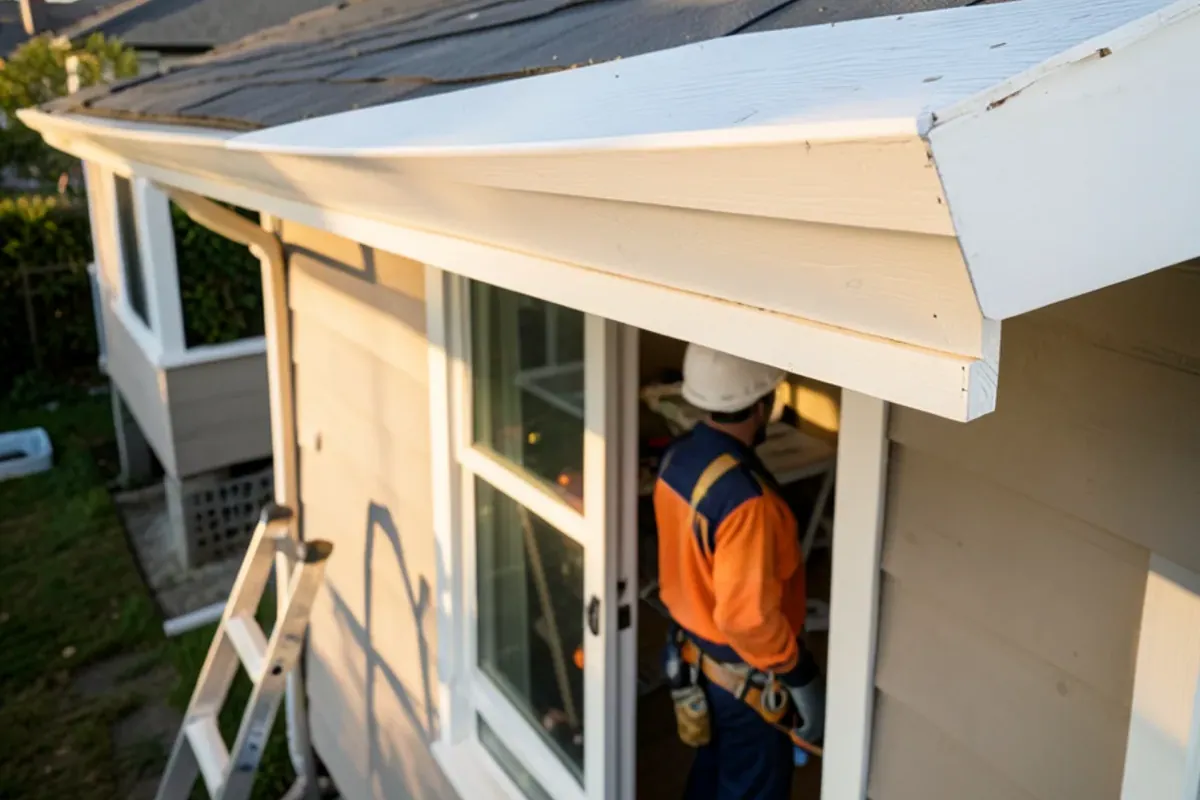
The best moment to replace fascia is just before new gutters. One Alameda customer had roofline trim, soffits, fascia and gutters replaced on a ranch home. Our gutter installation page explains how new runs are fitted, and gutter and downspout repair covers fixes when only the gutter has failed.
Fascia and soffit repair across the East Bay
We repair fascia and soffits in Alameda and cover Oakland, Berkeley, San Leandro and Castro Valley. Our office is at 1910 Webster St on the West End, and bridge and tube traffic changes drive times, so we confirm timing when you book.