
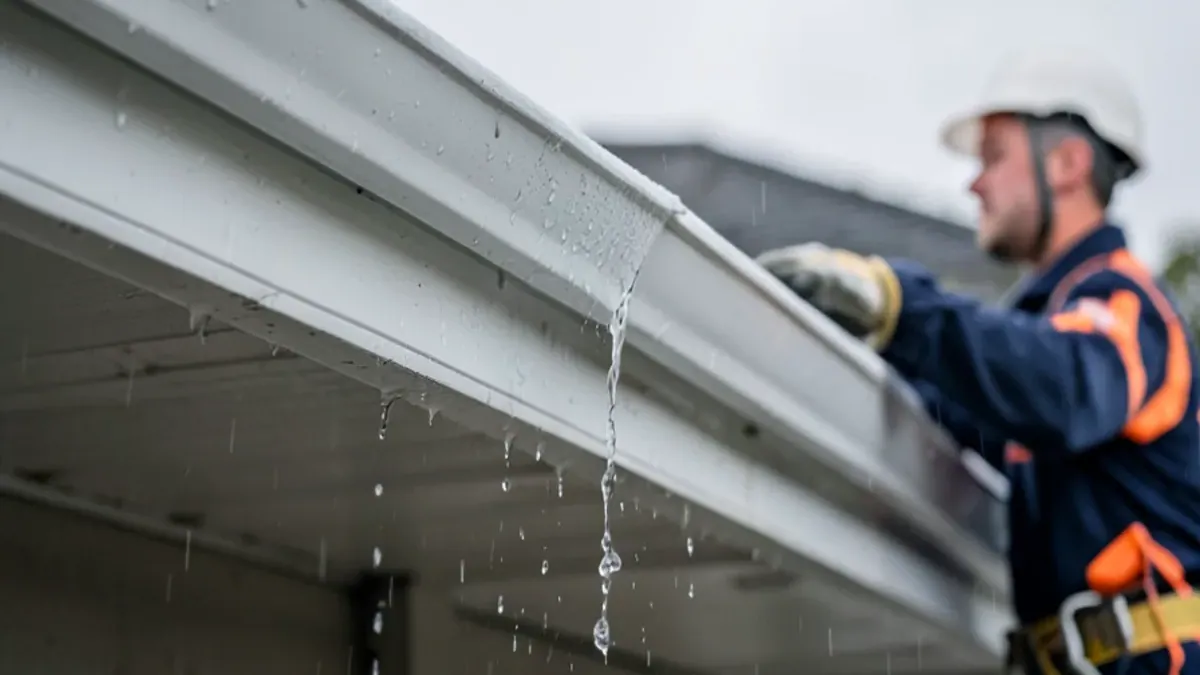
Why do gutters overflow?
Gutters overflow because of clogs, wrong slope, too little capacity, damaged hangers or water arriving from the roof faster than the gutter can take it. Find the overflow location in a rainstorm and you will usually know the cause. Water spilling at one point suggests a clog or low spot. Water spilling along the whole run suggests size or slope.
Fix the overflow quickly. Water that spills behind the gutter soaks the fascia and soffit, and that is a common way roofline boards start to rot.
What are the five causes?
- Clogged gutters. Leaves, shingle grit and debris fill the channel. Overflow starts at the clog.
- Clogged downspouts. The gutter is clear but the outlet is blocked, so water backs up and spills at the nearest low point.
- Wrong slope. Water sits in the middle and spills, or it rushes past the outlet.
- Too small a gutter. A 5-inch gutter on a large or steep roof can overshoot in heavy rain. A deeper profile and larger downspouts often solve it.
- Too few downspouts. A long run with one outlet cannot drain fast enough.
Two more are easy to miss: gutters that have pulled away from the fascia, and water that shoots over the lip from a steep valley or a roof edge with no drip edge.

What does the overflow pattern tell you?
The place where water leaves the gutter points at the cause. Watch a hard rain and match what you see to this table:
| What you see | Likely cause | First check |
|---|---|---|
| Spills at one spot, rest of run is calm | Clog or low spot | Scoop debris, check slope at that point |
| Water backs up and spills near the downspout | Blocked or crushed downspout | Flush it from the top |
| Spills along the whole front lip in heavy rain | Gutter too small for the roof area | Compare to roof size and valleys |
| Spills at the end of a long run | Too few downspouts | Count outlets against run length |
| Water falls behind the gutter, wet fascia | Missing drip edge or gutter pulled away | Roof edge and hangers |
| Spills below a valley | Concentrated flow overshooting | Valley discharge point |
One overflow point is usually cheap to fix. A run that overflows everywhere in a hard rain is a design question, and that is where gutter depth, downspout count and roof size come together.
How to diagnose it yourself
Do this in the rain, from the ground, with a raincoat and binoculars.
- Watch where the water leaves the gutter. Note the spot.
- Look at the downspout bottom. Is water coming out steadily, or just a trickle?
- Check for water running behind the gutter, which shows as a wet fascia.
- Look for sagging, gaps at the hangers and end caps that have come loose.
- Check the roof edge for missing drip edge or shingles that stop short of the gutter.
In dry weather, with a ladder and someone holding it, scoop out debris and run a hose into the gutter. Watch whether water flows to the outlet. If it pools, the slope is off. Then flush the downspout. If water backs up, the downspout is clogged or crushed.
Is the gutter the wrong size?
Sometimes. Common residential sizes are 5-inch and 6-inch. Roofs with big slopes, long valleys or a steep pitch concentrate water, and a gutter that was fine for a smaller roof can fail after an addition or a reroof. A deeper gutter and bigger downspouts add capacity. Deeper gutters have been fitted around an entire Alameda house.
Slope matters as much as size. The usual guidance is about a quarter inch of drop for each ten feet of run, though sources vary and the run length and downspout location change the answer. A level gutter holds water; a steep one throws it.
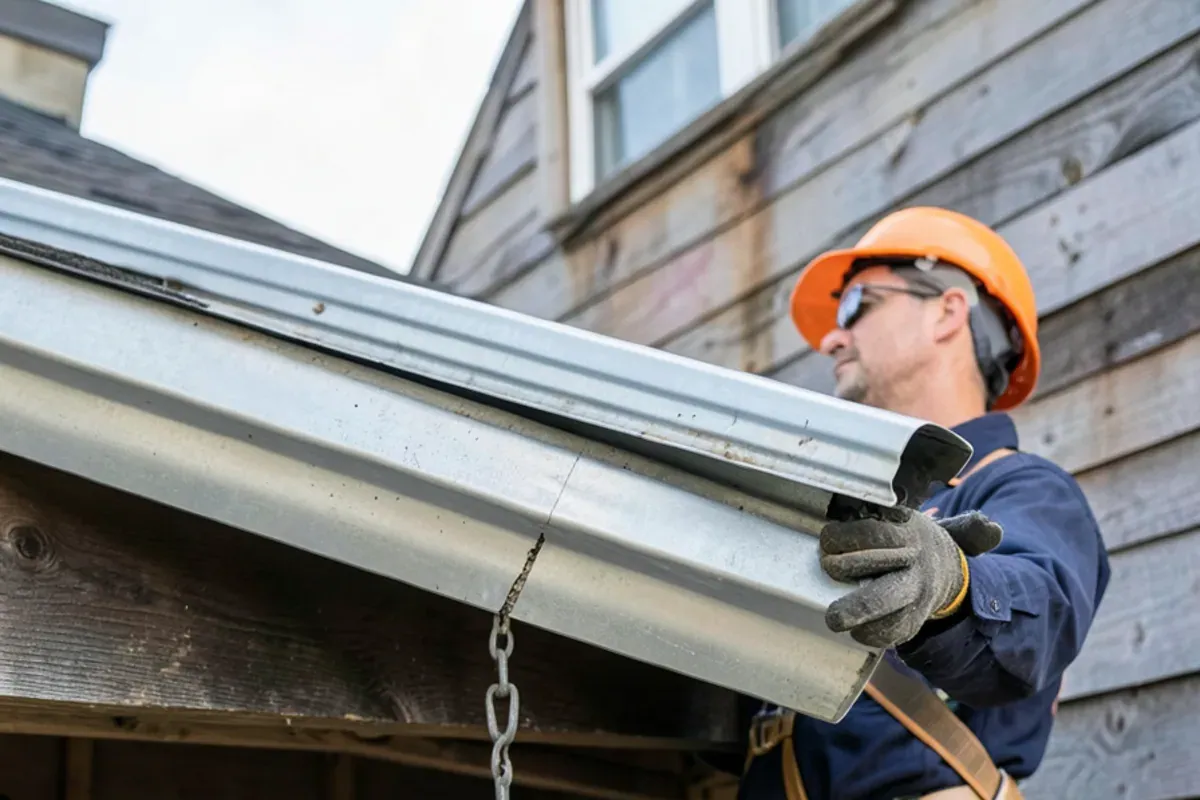
What do roofers check at the roof edge?
A roofer looks at the roof edge because gutters only work if water enters them. Three details decide that:
- Drip edge. The metal strip at the eave should carry water out over the gutter, not let it curl under the shingle and run down the fascia.
- Shingle overhang. Shingles that stop short of the gutter let water fall behind it. Shingles that overhang too far can shoot water past the front lip.
- Gutter position. A gutter hung too low or too far from the wall misses the stream off the roof.
The trade-off is scope. A gutter cleaning is the cheap fix. But if the water bypasses the gutter at the roof edge, a bigger gutter will not cure it, and the right repair is edge metal or a re-hung run. The drip edge is installed with the roof, so it is also a question for a reroof estimate. One Alameda customer reported flashing and gutter faults from a previous job being fixed in the same visit as other work, which is the efficient way to handle edge problems. If rot has started, the fascia and soffit repair page covers the wood side.
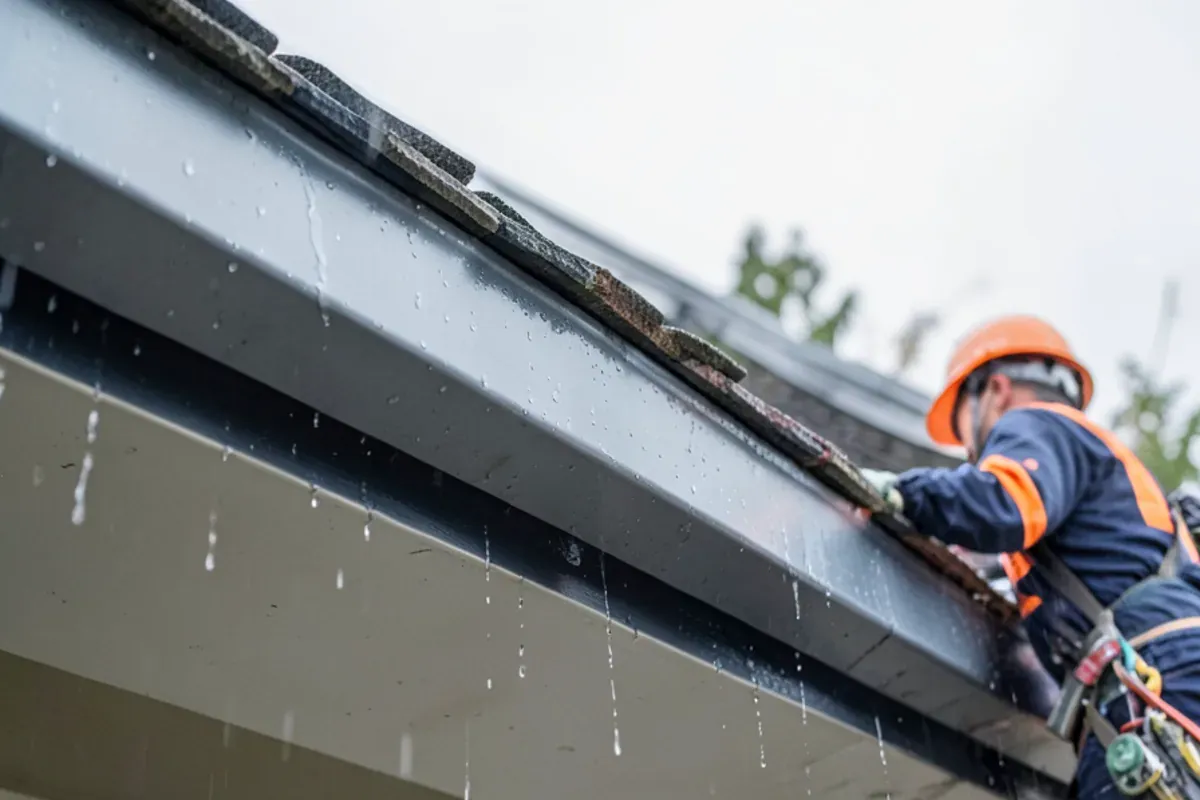
What it does to the roofline
Overflow is slow damage. Water that runs behind the gutter wets the fascia board, soffit and the end of the roof deck. Paint peels, wood softens, and the boards eventually need replacement. If you see dark, soft or crumbling fascia, read about fascia and soffit repair as well.
The ground matters too. A downspout that dumps water at the foundation sends it where you do not want it. Extend it away from the house or tie it into a drain line.
When should you clean gutters to prevent overflow?
Clean them before the rainy season and again after the first big storm. In Alameda, most rain falls from October to April, so a cleaning in early fall makes sense. Properties with trees overhead need more frequent attention, because leaves arrive all season.
A simple routine:
- Scoop debris by hand into a bucket, working toward the downspout
- Flush the run with a hose and watch the water flow
- Flush the downspout and check that it drains freely at the bottom
- Look at the roof edge for loose shingle grit that will wash down
- Tighten any loose hangers and end caps
Gutter guards reduce debris but do not remove the need to check the system. Fine debris and shingle grit still get through, and a guard can make a clog harder to see. Read about gutter guards before buying so you know what they do and do not do, and see gutter cleaning for what a professional cleaning covers.
If your gutters fill again within weeks, the cause may be a roof shedding grit, a tree that needs trimming, or a gutter too small for the roof. Those are the cases where a cleaning will not cure the problem.
What gutter repair looks like in Alameda
Past Alameda work includes gutters cleared of junk during a roofing job, gutter faults left by a previous contractor fixed in the same visit, and gutters installed after a reroof. Repairs range from re-hanging a sagging run to adding a downspout to replacing a section.
The repair steps:
- Clean the gutters and flush the downspouts
- Re-hang or re-pitch the run, adding hangers where needed
- Seal or replace damaged joints and end caps
- Add or enlarge downspouts if the roof area demands it
- Check the fascia and roof edge for water damage and flashing
See gutter repair for what a visit includes, and the gutters section for new gutters and guards. If you live in Alameda, the home page is the place to begin.
Call the office and ask for a free inspection if your gutters overflow in rain; bring a note of where the water leaves the run.