
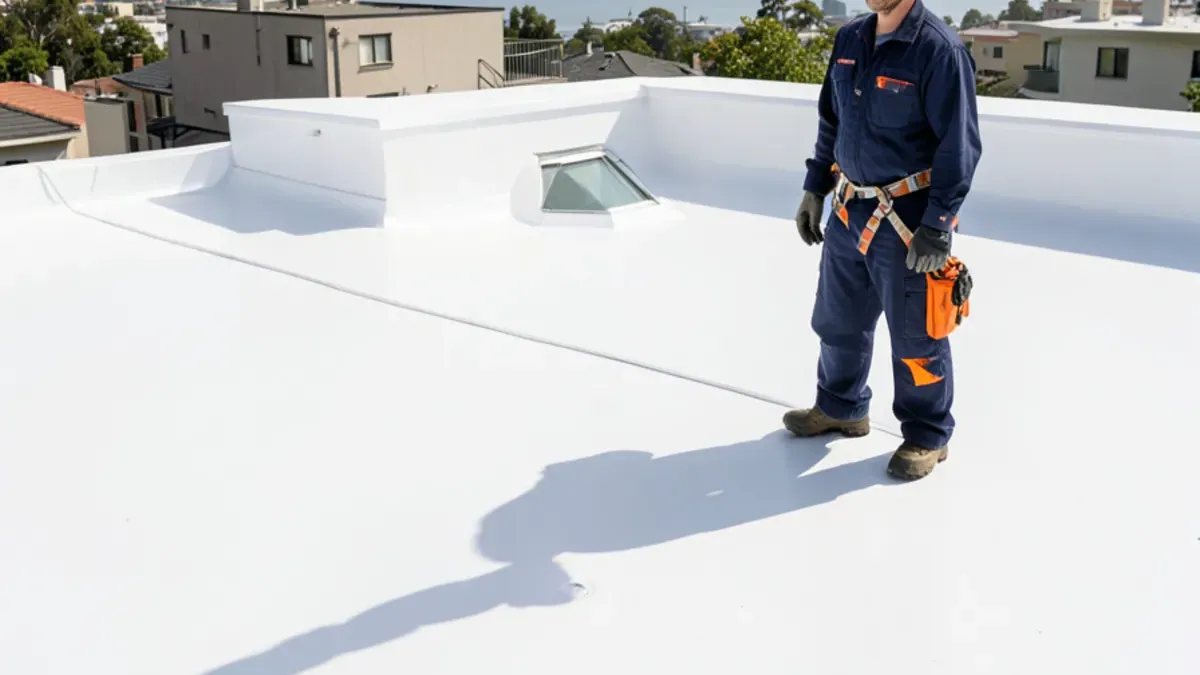
What a roof coating can and cannot do
A roof coating is a waterproofing layer applied over an existing roof. It seals hairline cracks, covers old seams, and protects the surface from sun. It adds no structure and does not dry out wet insulation, so it can only extend a roof that is still sound.
That limit is the whole decision. Coat a dry, aging roof and you can add years. Coat a wet one and you trap moisture, and the leak returns with a fresh coat of paint on top. Our job at the inspection is to tell those cases apart.
Silicone roof coating vs elastomeric roof coating
Silicone and elastomeric coatings behave differently, and the roof decides which one fits.
- Silicone: tolerates standing water, stays flexible, resists UV. Dirt picks up on the surface, and it does not accept a recoat of other materials easily.
- Elastomeric (acrylic): easier to apply and repair, usually less costly, but it does not like long ponding.
- Other coatings: asphalt-based and polyurethane products exist, and the right one depends on what the old roof is made of.
Compatibility is the quiet issue. Some coatings do not bond to some roofs, and a bad match peels. A cleaning step, a primer and a test patch are normal parts of a careful job, and the estimate should list each one.
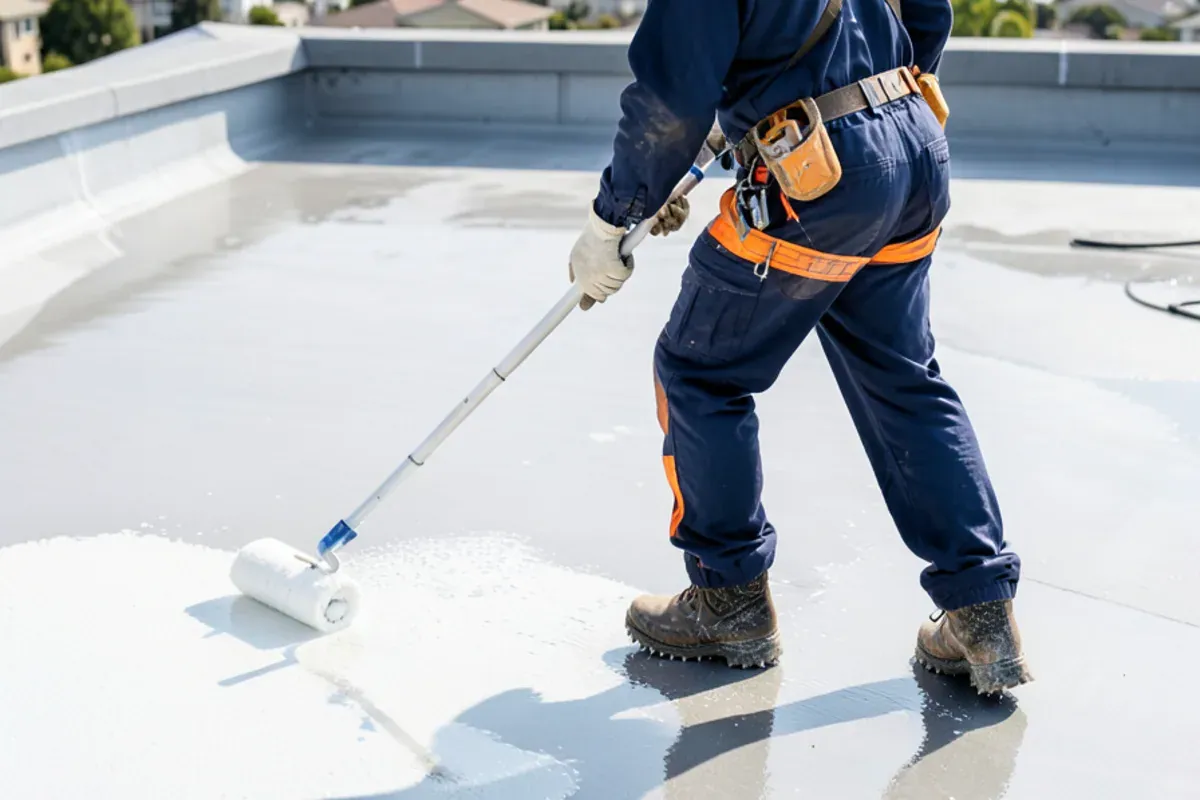
Is your flat roof a candidate?
Candidates share four traits:
- The roof is dry. A moisture scan or cores show no wet insulation.
- The deck is solid, with no soft or sagging spots.
- The membrane is intact enough to take the coat. Laps are sealed and flashing is sound.
- Water drains. Roofs with persistent ponding are fixed first, or are poor candidates.
Older stucco homes in Alameda often have flat roofs that have been patched many times. Every patch is a bump or a seam, and each needs to be reseated before coating. If a roof shows more repair than original surface, flat roof repair may be the stopgap and replacement the plan.
What a roof coating job includes
- Moisture scan or cores to confirm the roof is dry
- Washing and full drying of the surface
- Repair of seams, blisters, cracked flashing and loose laps
- Primer and a test patch where the product requires them
- Base coat, fabric at seams and details, then top coat at the stated thickness
- Thickness check, photos and cleanup
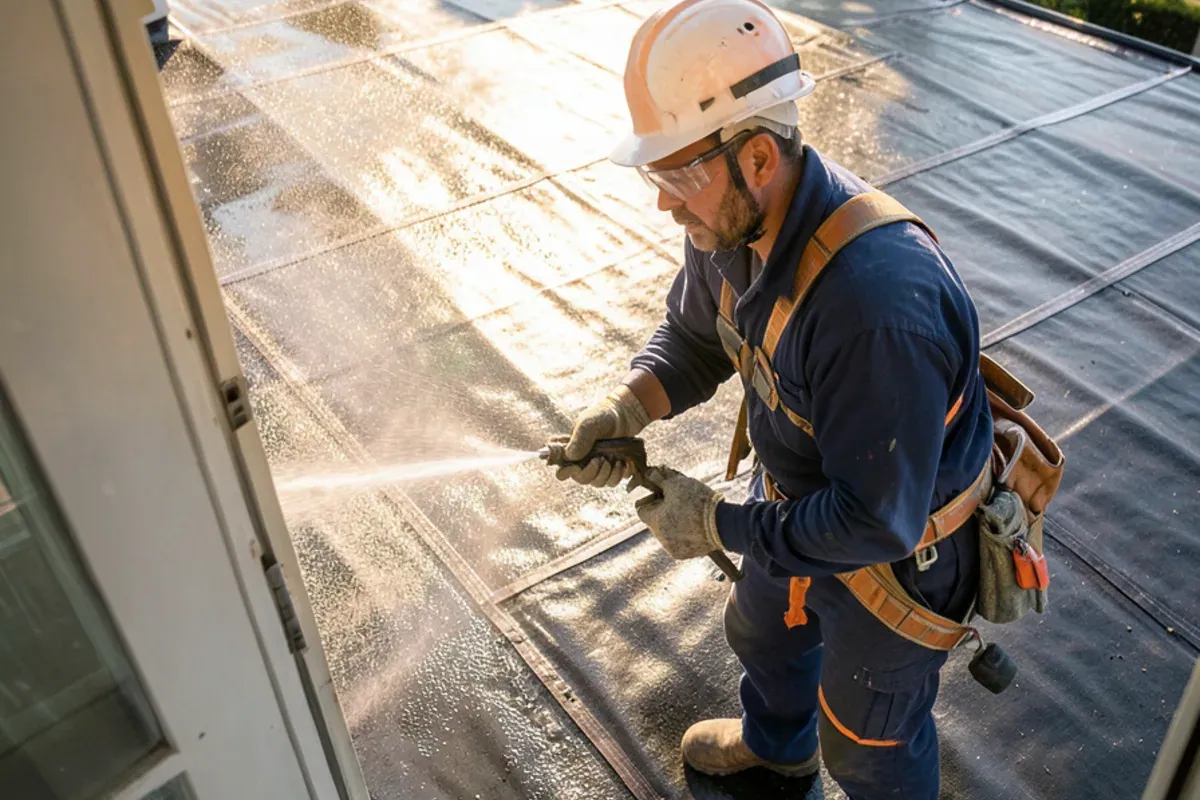
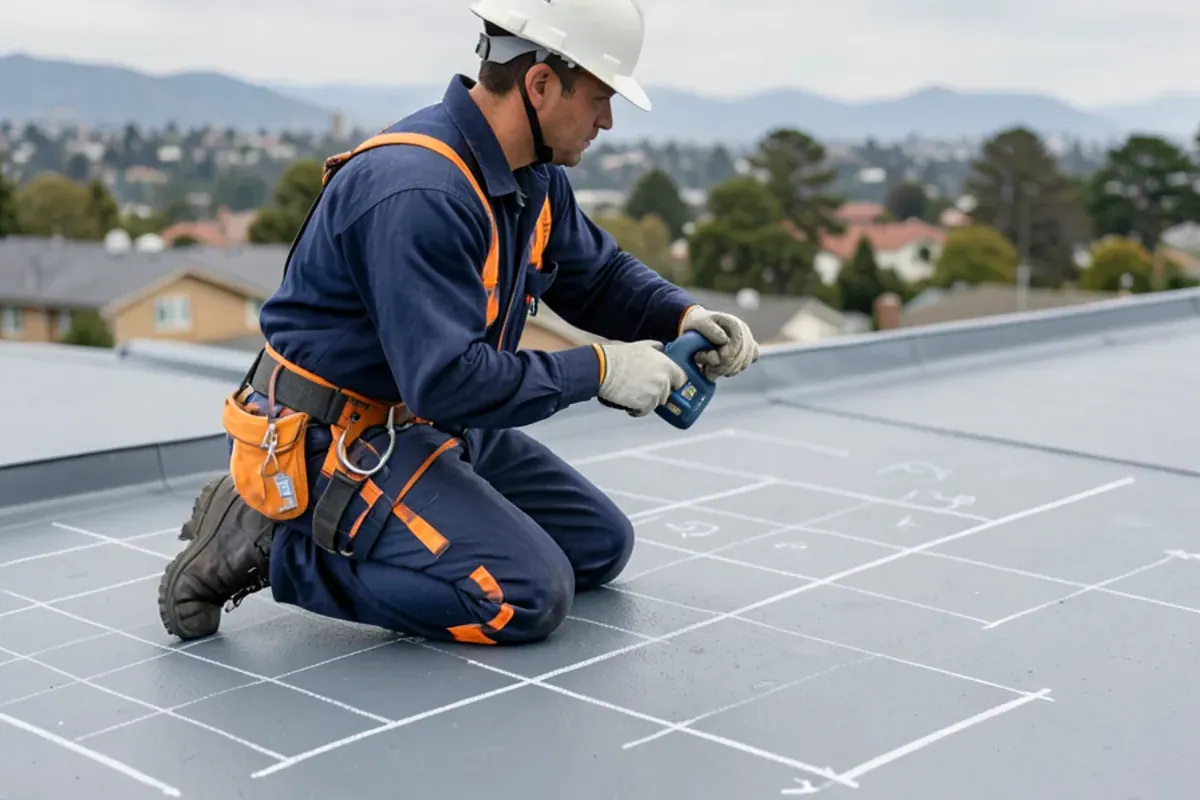
Roof restoration coating: the process
- Inspect the roof and run moisture checks, then report what we find.
- Write the estimate with the product, the coat thickness and the prep listed.
- Pressure-wash or scrub the surface and let it dry fully.
- Repair seams, blisters, cracked flashing and loose laps.
- Prime where the manufacturer calls for it.
- Apply the base coat, embed reinforcing fabric at seams and details, then apply the top coat.
- Check thickness, walk the roof, send photos and clear the site.
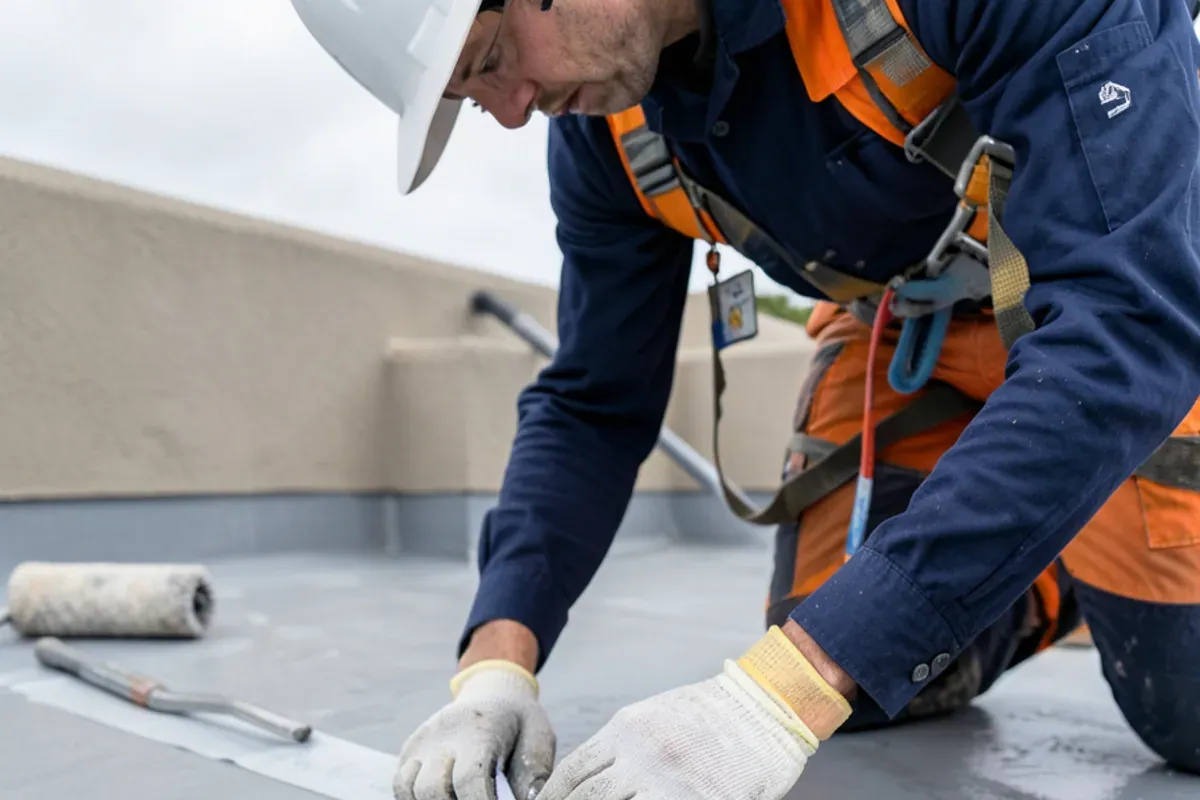
Weather matters more here than for most jobs. Coatings need dry surfaces and mild temperatures, so Alameda's rainy season, October through April, pushes the work into the drier months.
Reflective roof coating: is a cool roof worth it?
A reflective roof coating lowers the surface temperature of a flat roof. It helps most over a sunroom, an attic bedroom or an addition without much insulation. One Alameda customer was advised to choose a lighter color to keep a sunroom cooler, which is the same logic.
It is not a requirement here. Under the 2025 Energy Code, effective January 1, 2026, single-family reroofs need rated cool roofs only in certain climate zones, and Alameda's Zone 3 is outside both lists. The local building department has the final word, and exceptions exist. For compliance work, the product must be rated by the Cool Roof Rating Council.
What does a roof coating cost?
Roof coating cost depends on the roof's area, the repairs needed before coating, the product, the thickness and access. We have no verified local per-square-foot price for coatings, so we do not publish a number. A 2026 Alameda source puts flat or built-up roof replacement at $6,000 to $18,000, a useful ceiling when you weigh a coating.
Two traps appear on bids. A cheap coating with no prep, or one applied thinner than the manufacturer requires, fails early. Ask what thickness is in the price and what repairs are included. Compare bids on the written estimate, not the range above, and it should show the coating cost next to the replacement cost for the same roof.
Permits, ratings and licensing for roof coatings
A coating alone may not trigger a permit, but a third-party Alameda County guide sets the roof-work line at about 200 square feet (PermitFlow), so ask the City of Alameda Permit Center before assuming. Tear-off, drain or insulation work around a coating usually changes the answer, and the estimate should say who pulls any permit. If you want a cool roof product, it must be rated by the Cool Roof Rating Council. Roofing in California calls for a C-39 classification, so check the license, bond and workers' compensation status at cslb.ca.gov. Keep the manufacturer's data sheet, which states the thickness the warranty requires, with your contract.
Where we coat flat roofs
We work from Webster St, with Oakland about 12 minutes away, Berkeley roughly 18 and Hayward around 31, plus time for bridges and tunnels. The roof deck waterproofing page covers walkable surfaces, which are a different product from a roof coating.