
How to tell what kind of flat roof leak you have
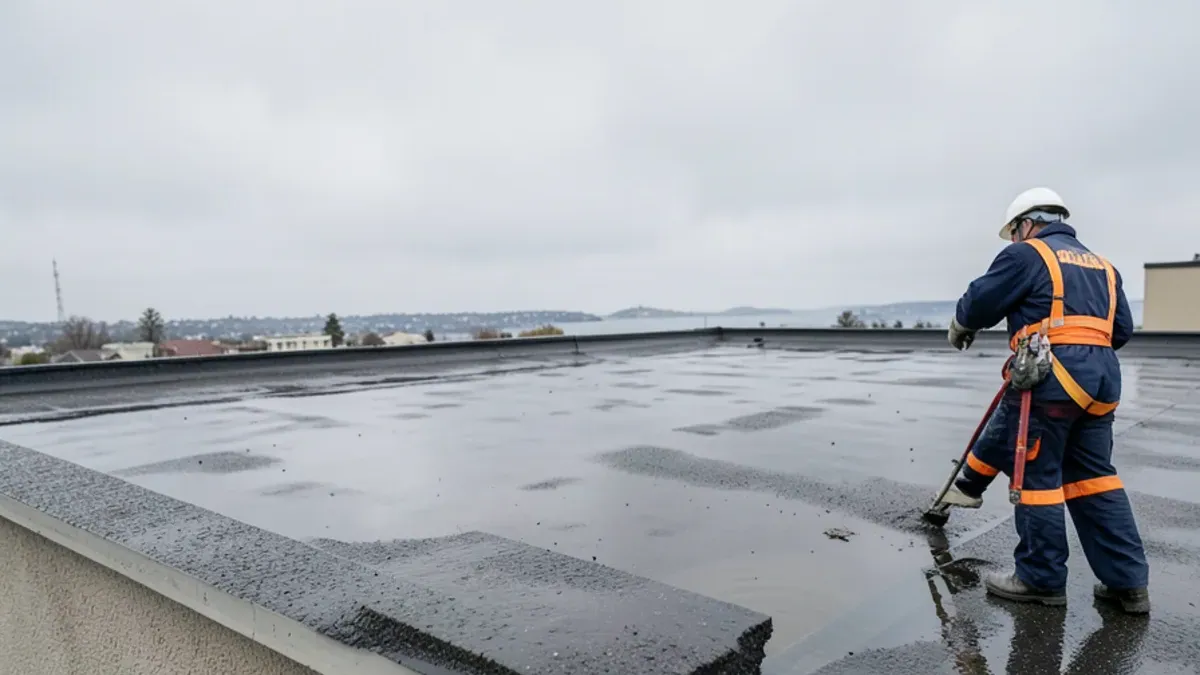
Water on a flat roof leaves a pattern you can read before anyone climbs a ladder. The pattern tells us where to look first.
- A ceiling stain that grows after every rain points to a seam, a flashing or a drain.
- A stain that appears a day or two after rain points to water traveling along the deck.
- Bubbles you can press under the membrane are blisters from trapped moisture.
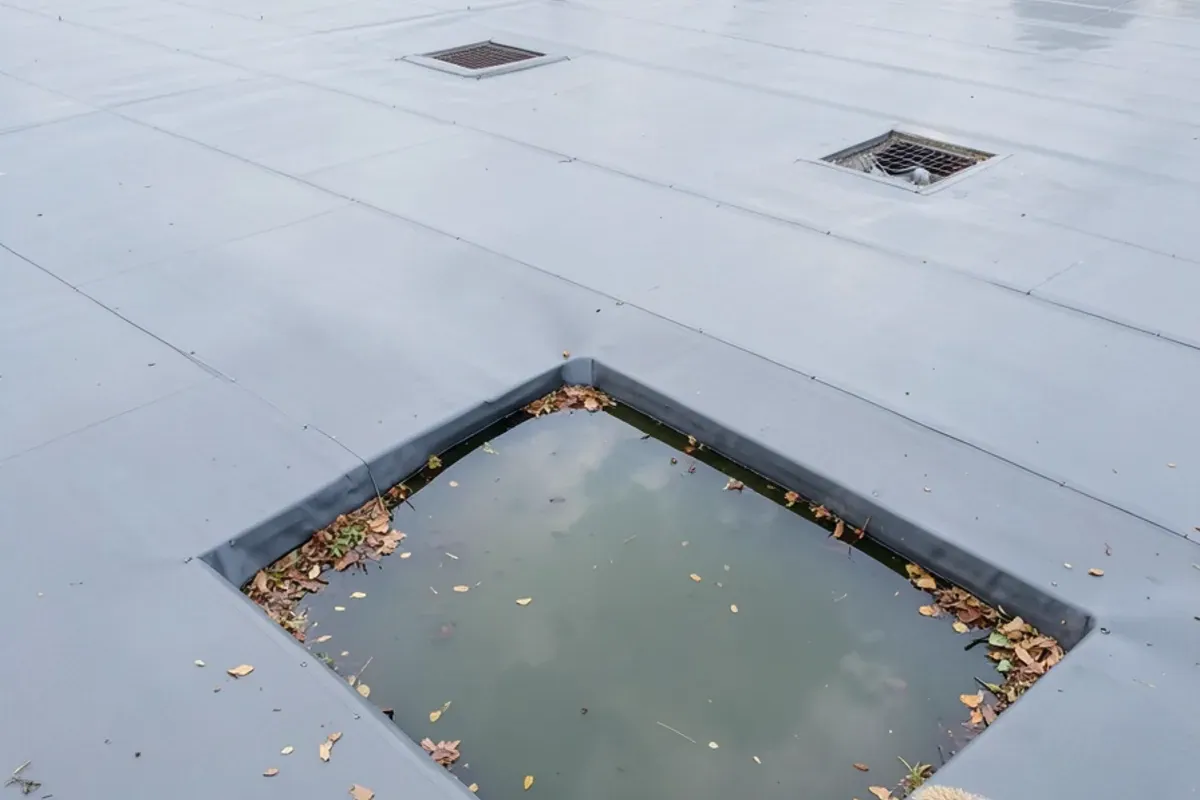
- A dark ring around a drain is ponding, not necessarily a leak, but it ages the membrane.
- Gaps or open stucco cracks at the parapet top let water down inside the wall.
Take photos of the stain and the roof surface, and note the weather on the day it appeared. That timing helps us more than people expect.
Why do flat roofs leak in Alameda?
Flat roof leaks in Alameda come from a short list of causes, and age drives most of them. Roughly a third of the city's homes date to 1939 or earlier (Point2Homes), and roofs on old buildings collect patchwork: tar over tar, caulk over caulk, a vent cut in years later. Each addition is a seam.
The rain pattern matters too. Alameda gets about 22 inches a year, nearly all of it from October through April on roughly 66 days (BestPlaces). After months of dry summer sun, the first storm finds every crack that opened while the membrane baked and shrank. Leaves from street trees then block drains and scuppers, and a blocked drain turns a manageable roof into a pond.
How we inspect a flat roof
We inspect from the inside out. Wayne or Pedro often does the visit, and it starts at the ceiling stain, then moves to the roof. On the roof we check seams, flashing at every wall and curb, the drains and scuppers, the parapet caps, and the surface for blisters, cracks and soft spots underfoot.
A soft spot means wet insulation or a rotted deck, and that changes the repair. Patching over wet insulation traps the moisture and the leak returns. You get photos of what we find and a written estimate that separates what is leaking now from what is simply aging.
What flat roof repair includes
A repair visit should end with specific work done and documented, not only a covered stain:
- Leak trace from the ceiling stain to the opening on the roof
- Patch, seam, blister or flashing repair in material that matches your membrane
- Drain, scupper and parapet cap clearing or repair
- Temporary protection first when rain is coming
- Photos of the problem, the repair and the cleaned roof

Repair methods and their trade-offs
Four repair methods cover most flat roof leaks:
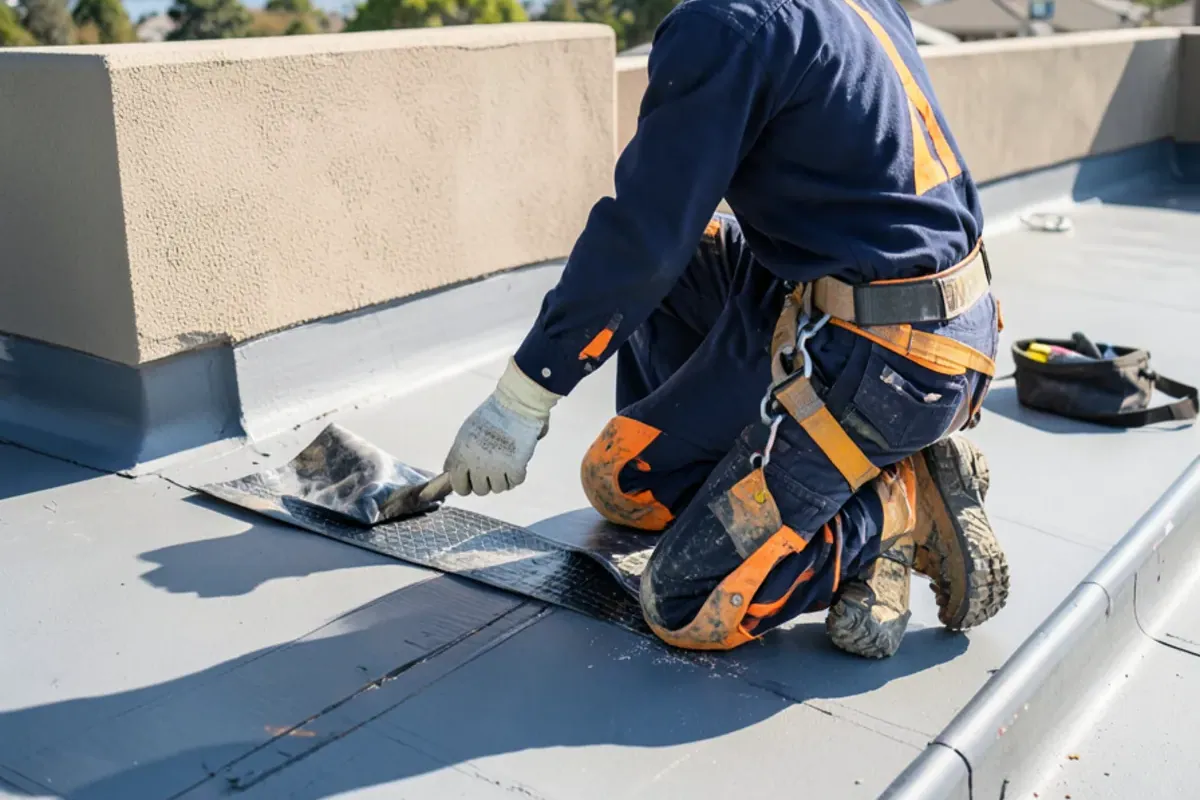
- Membrane patch: a cut-to-fit patch welded or adhered over a split or puncture, as on a TPO or PVC roof. Fast and clean on a sound roof.
- Seam or flashing repair: cutting out failed flashing and rebuilding it with fresh material. It lasts longer than caulk, and costs more.
- Drain and scupper repair: replacing a cracked drain bowl or clamping ring, or opening a scupper to its proper size.
- Coating over a sound roof: a liquid membrane that seals small defects. It is a stopgap on a worn roof; see roof coatings for when it makes sense.
Roofing cement smeared over a crack is the repair we avoid. It looks like a fix for one winter and cracks again in the next dry season. If the roof has more patches than original membrane, a full flat roof replacement usually costs less over time.
What a repair visit looks like
A flat roof repair visit follows this order:
- You call, describe the stain and tell us when it appears.
- We schedule an inspection. Past customers report visits within hours or the next day, and we make no promise on timing.
- We trace the leak from inside, then confirm it on the roof.
- You get photos and a written estimate with repair and replacement options.
- We make the repair, putting temporary protection down first if rain is coming.
- We clean the roof, remove debris and send photos of the finished work.
- We document any interior water damage for your records or claim. We repair the roof, not ceilings or drywall.
Insurance claims have their own rules. In California only the policyholder, the insurer or a licensed public adjuster negotiates the claim, but we can document the roof, write the scope and meet the adjuster on site.
What does flat roof repair cost?
A repair costs less than a replacement, and what moves the price is how much of the membrane has to be opened. A single patch at one penetration is a small job. A repair that traces to a rotted deck is not, because the wood has to be cut out and replaced before anything is sealed over it.
The factors are the size of the failure, access to the roof, the membrane type, how many drains or walls are involved, and whether rain forces temporary protection first. A patch that is quoted far above your neighbors' repairs deserves a second opinion, and ours is free. Only a written estimate gives you a firm figure, so ask for the repair and replacement prices side by side.
Do flat roof repairs need a permit?
A small patch may fall below the permit line, but confirm with the Permit Center. The City of Alameda says most construction work needs a permit, a third-party Alameda County guide puts roof work at about 200 square feet (PermitFlow), and for an emergency repair the City's permit page says the application is due the next working business day. Ask the estimate who pulls the permit. California requires a C-39 Roofing classification for roofing work, and the minor-work exemption stops at $1,000 for jobs that need no permit and involve no employees (Business and Professions Code §7048). Check any roofer at cslb.ca.gov.
Preventing the next leak
Most repeat leaks are maintenance failures. Clear drains and scuppers each October, before the first storm, and again in February. Keep foot traffic to marked paths. Trim branches that drop leaves and scrape the membrane. Have the flashing looked at after any remodel that touches the roof, and check the parapet caps annually.
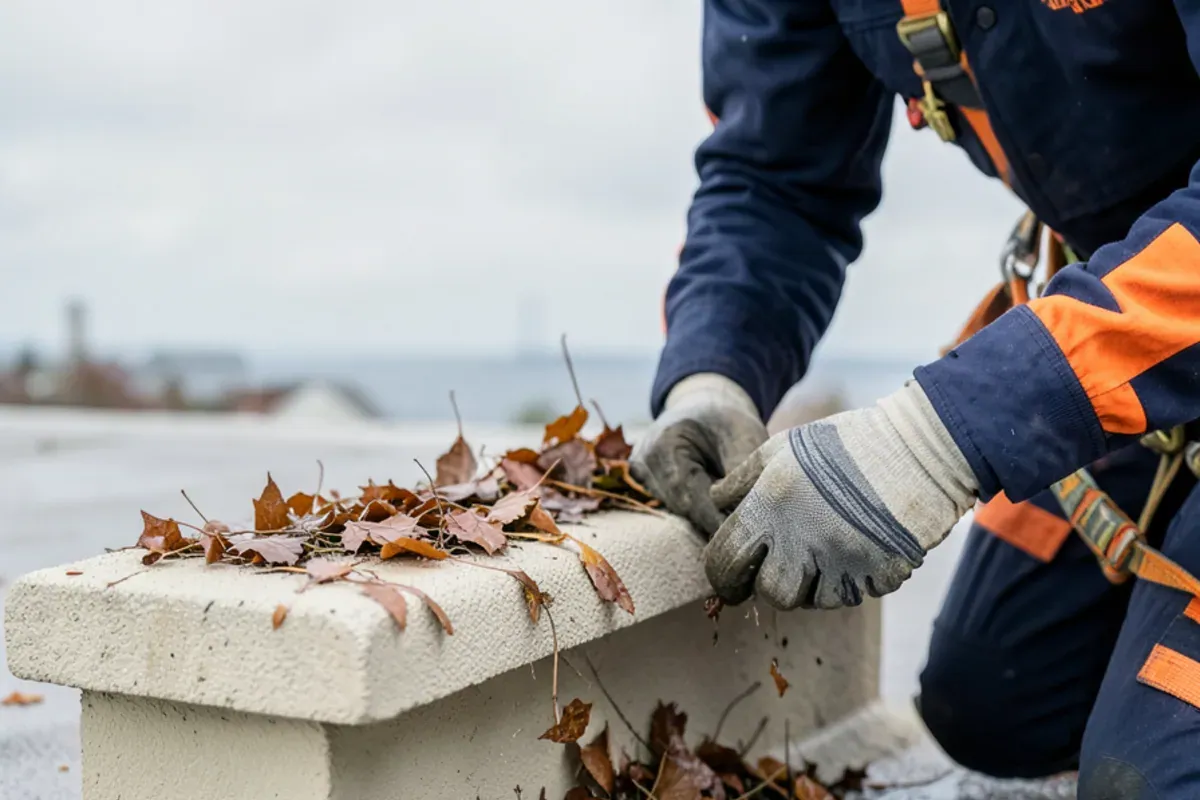
A ten-minute rooftop walk twice a year catches ponding and cracked sealant while they are still small. If you rent the property out, the same checklist goes in the turn-over routine.
Where we repair flat roofs
We repair flat roofs across the East Bay from our Webster St office. Customers in Oakland are about 12 minutes away, Berkeley roughly 18, and San Leandro about 24, allowing extra time at commute hours. Older stucco flats in all three towns share the same problems, which are drains, parapets and patches stacked over patches.