
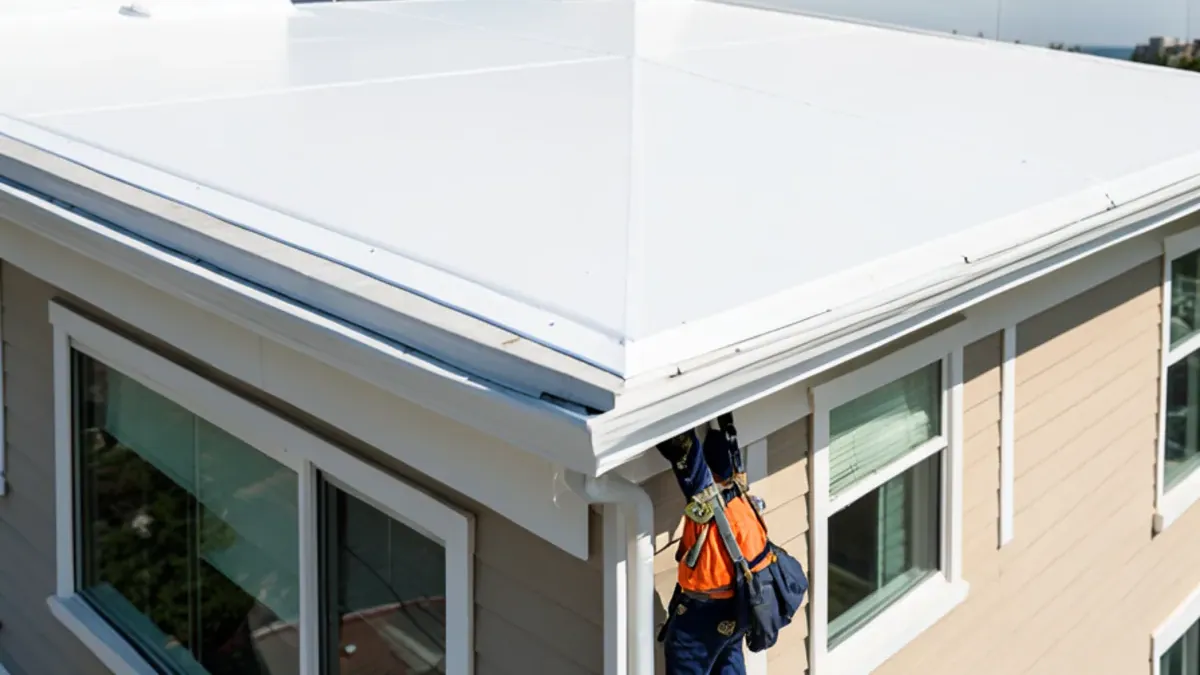
When to replace a flat roof instead of repairing it
Replace the roof when repairs have stopped holding. Three signs make that call:
- Leaks return in new places after each patch.
- The surface is cracked, alligatored or blistered across most of the roof.
- Core samples or a soft deck show wet insulation.
A single failed corner on a sound roof is still a repair. Our flat roof repair page covers those cases, and the inspection tells you which side of the line you are on. We have told customers to wait when a roof was not ready, and we will tell you if yours is not either.
Replace a flat roof: the system options
To replace a flat roof, choose a membrane that matches the roof's use. White single-ply sheets, which we cover on the TPO and PVC roofing page, weld at the seams and suit clean, simple roofs. Layered asphalt sheets on the torch-down roofing page tolerate traffic and many penetrations. EPDM rubber suits small areas.
For a new flat roof in Alameda, the question is rarely which material is best in general. It is which one handles your drainage, your parapet details and your rooftop use. A roof that holds a mechanical unit or sees weekly foot traffic is a different job from a garage cover.
What a flat roof replacement includes
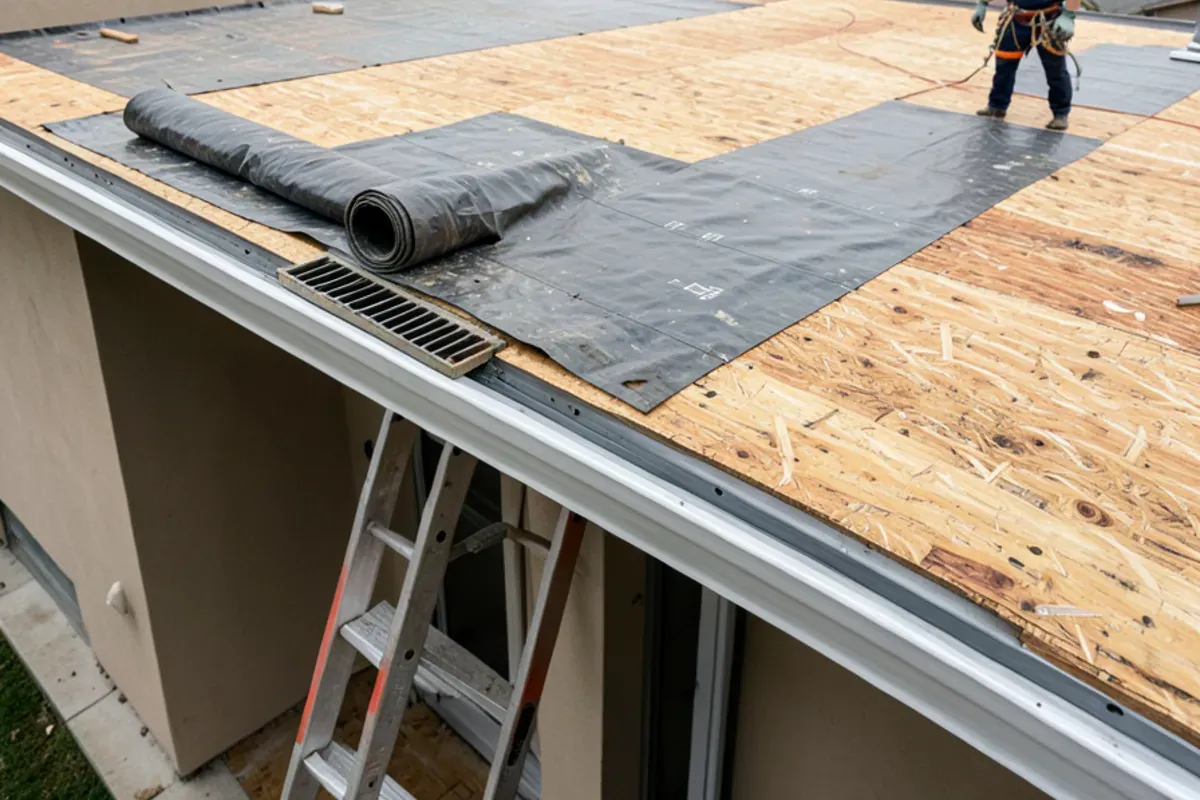
- Tear-off of the old membrane or gravel layers, and disposal
- Deck inspection, with rotted sheathing priced per sheet
- Tapered insulation or cover board to restore drainage
- New membrane with flashing at walls, curbs and the bulkhead
- New drains, scuppers and parapet caps where they are failing
- A final walkthrough with photos and warranty paperwork
Tar and gravel roof replacement
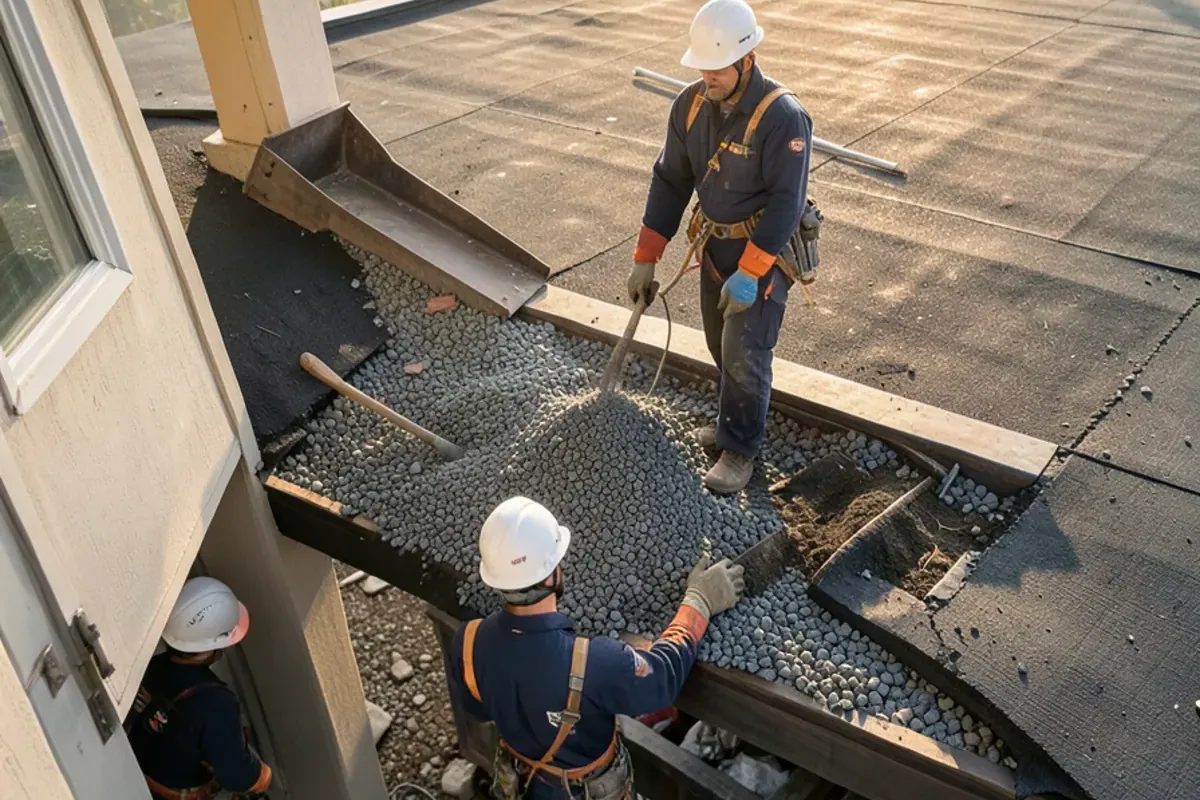
Tar and gravel roof replacement is common here because mid-century Alameda homes and additions were built with it. The roof is a built-up system: layers of asphalt felt, hot mopped, topped with gravel. After decades the layers dry out, the gravel migrates to the drains, and leaks open at flashings.
A tear-off removes the gravel and layers, and we inspect the deck. Then a modern membrane goes on over insulation or a cover board. We avoid recovering over the old layers because California's reroofing rules do not allow a new covering over a roof that already has two or more applications, and wet insulation hides under old material.
Townhouse roof replacement and the bulkhead
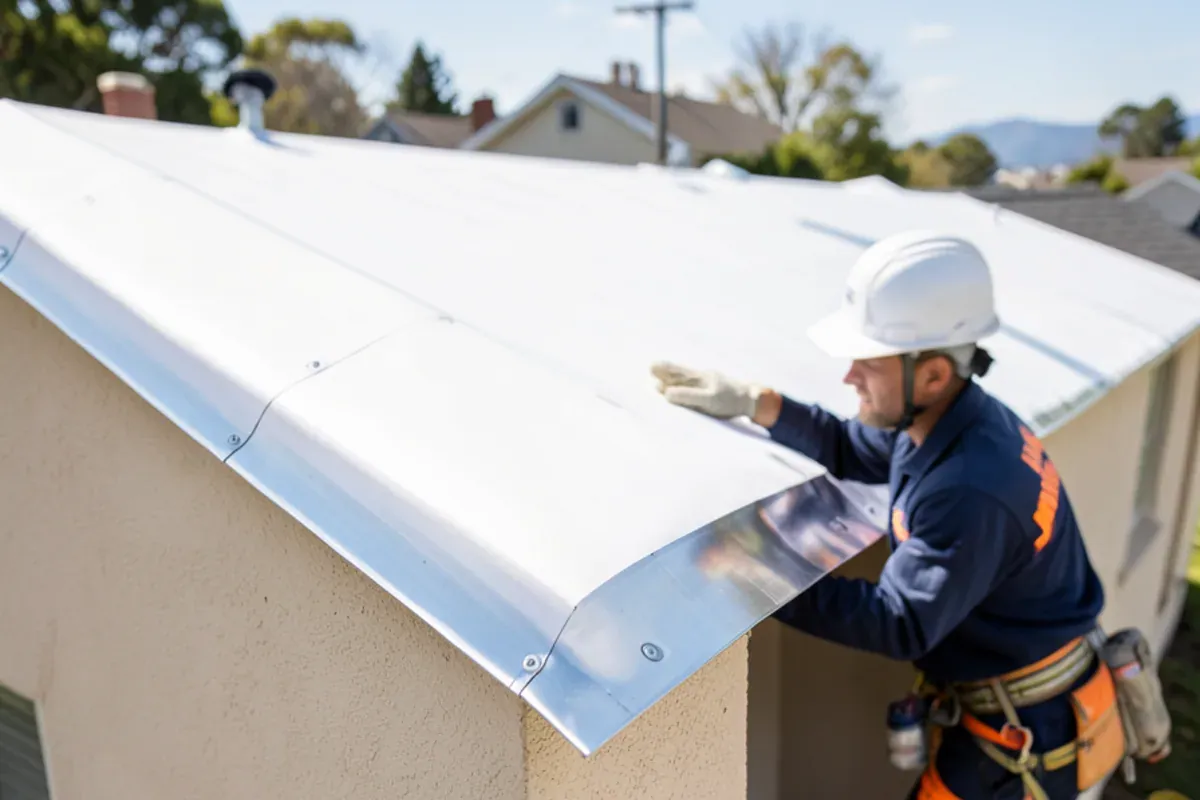
Townhouse roof replacement is a flashing job as much as a membrane job. Parapets, party walls and a stair bulkhead each need the membrane carried up and sealed with counterflashing, and the corners are where leaks begin.
The bulkhead roof is a small roof on its own: the cap above a rooftop stair. It usually has its own drain path, a door threshold and wall flashing, and it gets replaced in the same pass as the main deck. Ask the estimate whether the bulkhead roof and the stair door sill are included, because they are easy to leave off.
Our replacement process, step by step
- Inspect and measure the roof, then send a written estimate with the deck allowance listed.
- Confirm the permit path, who pulls it, and any association approval.
- Protect landscaping, windows and walls, and set up debris chutes.
- Tear off to the deck and look at every square foot of wood.
- Replace bad sheathing after you approve the change order.
- Install tapered insulation or cover board so the roof drains.
- Lay the membrane, flash every wall and curb, and set new drains.
- Walk the roof with a site supervisor, clean up and send photos.
Customers report one contact through the job, texts with progress photos and daily cleanup.
Low slope reroof: what do slope and energy rules require?
A low slope reroof is the moment to fix the slope. California's building code sets a design slope of at least 1/4 inch per foot for new low-slope roofs, and reroofs of existing ones have an exception, so the building official has the last word. Tapered boards over the old pitch of the deck are the usual fix for ponding.
Energy rules matter less here than inland. Under the 2025 Energy Code, effective January 1, 2026, single-family reroofs need cool roof ratings only in certain climate zones, and Alameda is in Climate Zone 3, outside the low-slope list. A reflective white membrane is an option, not a requirement, and exceptions exist. Confirm with the building department.
Permits, association approval and licensing
The City of Alameda Permit Center says most construction work needs a permit, and a third-party county guide puts roof work at about 200 square feet and up (PermitFlow). The estimate states who pulls it. California requires a C-39 Roofing classification, so check any bid's license, bond and workers' compensation status at cslb.ca.gov, and match the license name to the contract. A home improvement down payment is capped at $1,000 or 10% of the contract, whichever is less (Business and Professions Code §7159.5).
What does a flat roof replacement cost?
Flat roof replacement costs vary with area, membrane, deck condition and details. A 2026 Alameda pricing source puts flat or built-up roofs at roughly $6,000 to $18,000, which is a third-party range and not our price. The factors that move it:
- Roof area and access, including how high the material has to be hoisted.
- The membrane: heat-welded single-ply, modified bitumen or rubber.
- Deck repair, which is unknown until tear-off.
- Insulation thickness and tapered boards.
- Drains, scuppers, curbs, skylights and the bulkhead.
Treat every number before tear-off as an estimate of the visible work. The written estimate sets the figure you pay against, and the change order process covers anything hidden under the old roof.
Looking after the new roof
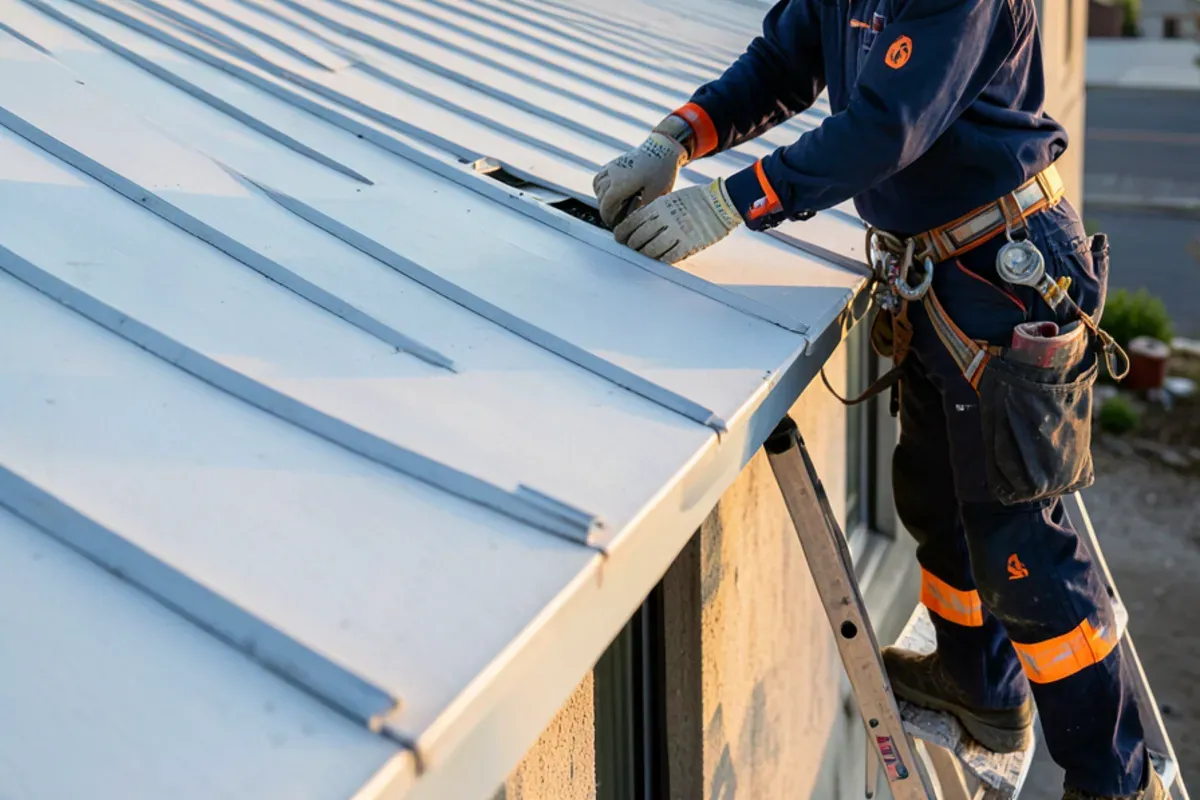
Keep the drains clear and walk the roof each October and February. Use plywood walkways for any regular traffic, and keep service techs off the membrane unless they lay down protection. A new roof that is checked twice a year also gives you dated photos for a warranty claim or an insurer.
Where we replace flat roofs
Our Webster St office reaches Oakland in about 12 minutes, Berkeley in roughly 18 and San Leandro in about 24, with bridge and tunnel traffic as the variable. Castro Valley, about 35 minutes out, is reachable too, and the estimate notes the drive for jobs that far.