
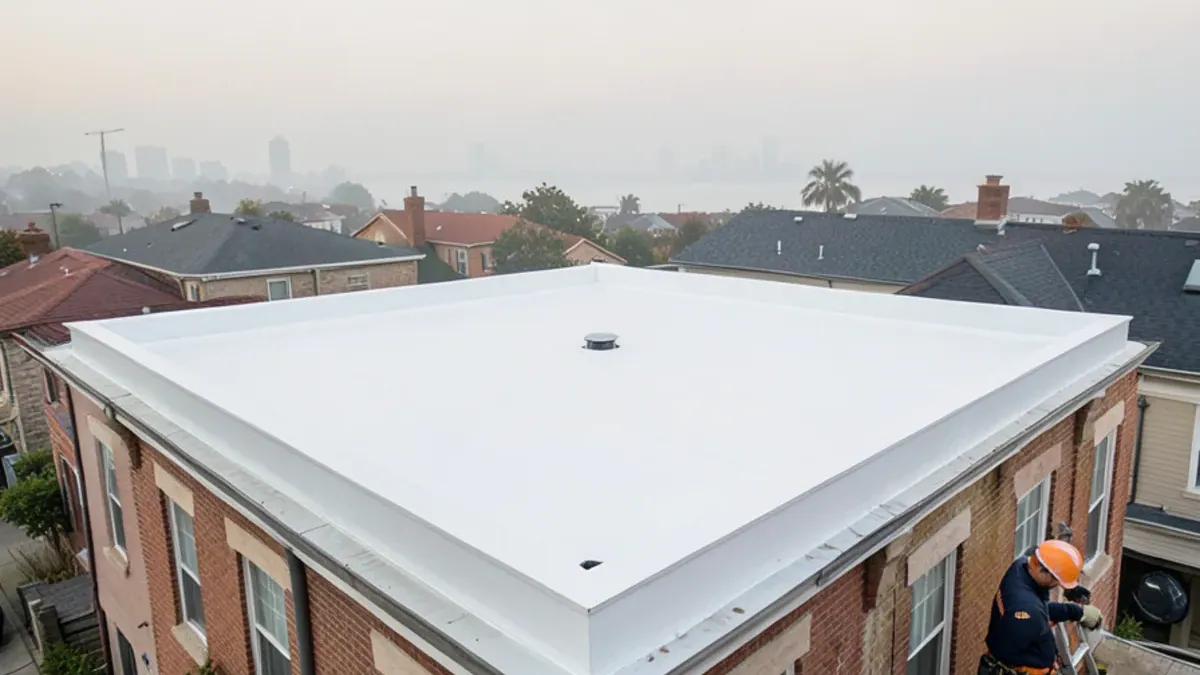
Flat roof replacement cost in the Bay Area depends on six things: membrane type, how many old layers come off, drains and slope, parapets and flashing, insulation, and how crews and materials reach the roof. A 2026 Alameda pricing source puts flat or built-up work at $6,000 to $18,000, but your written estimate is the figure to plan around.
What does a flat roof replacement cost?
A published range is a starting point only. Alameda pricing data for 2026 lists $6,000 to $18,000 for flat or built-up roofs. That is a wide span because flat roofs differ more than pitched ones: a small garage roof and a townhouse roof with a bulkhead and three drains do not belong in the same budget.
Price per square foot varies by system and by site. You will see per-square-foot figures online, but they often leave out tear-off, insulation, drain work and parapet flashing. Ask each roofer which of those are inside the number.
Which factors set the price?
| Factor | How it changes the cost |
|---|---|
| Membrane type | TPO, modified bitumen, built-up and PVC differ in material and labor |
| Tear-off | More layers and wet insulation mean more labor and disposal |
| Drains and slope | Added drains, tapered insulation or crickets add line items |
| Parapets and walls | Every linear foot of flashing adds detail work |
| Insulation | Thicker or tapered boards raise cost and may be required |
| Access | Roof ladders, hoists and tight sites affect staging |
| Penetrations | Vents, skylights, hatches and mechanical units each need flashing |
Flat roofs commonly fail at edges, drains and penetrations rather than in the open field of the membrane. That is why detail work, not membrane square footage, often drives the price.
TPO, modified bitumen or built-up: how do they compare?
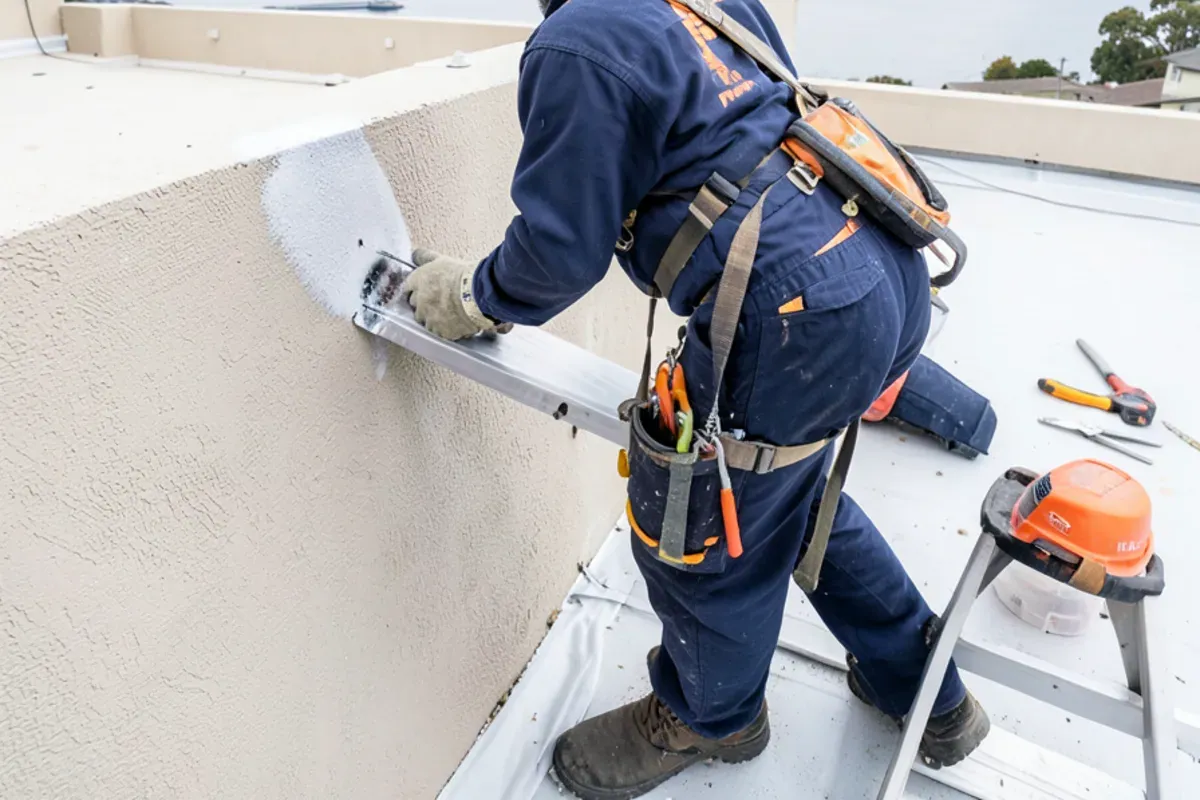
Each is a legitimate system, and the right one depends on the roof. TPO is a single-ply membrane, usually white, with welded seams. Modified bitumen is a multi-layer asphalt roof, and built-up roofing is layers of felt and asphalt, often with a cap sheet.
| System | How seams are made | What to weigh |
|---|---|---|
| TPO | Heat-welded single ply | Light color, clean seams, workmanship at details matters most |
| Modified bitumen | Torched, mopped or self-adhered layers | Multiple layers add toughness, and torch work needs careful fire control |
| Built-up roofing | Felt plies and asphalt, often with a cap sheet | Proven on low-slope roofs, heavier and more labor |
| PVC | Heat-welded single ply | Installed much like TPO, so ask for the manufacturer's detail requirements |
Which of these fits depends on drainage, foot traffic, details and budget, not on a ranking. A system priced well but installed with weak detailing at drains and walls will leak sooner than a plainer system done carefully. Ask for the specific product and the number of plies or the thickness, along with the manufacturer's installation requirements. Compare quotes on the same scope so the price difference reflects the system and not missing items.
California cool roof rules matter for some flat roofs. Under the 2025 Energy Code, effective January 1, 2026, the Cool Roof Rating Council summary lists reflectance and emittance requirements for low-slope roofs in certain climate zones when more than half the roof is replaced. For single-family homes, those requirements apply only in Climate Zones 4 and 6 through 15, and Alameda is in Zone 3. Check your own climate zone on the California Energy Commission's lookup, and the local building department has the final word. Townhouses and multifamily buildings can fall under different rules, so ask which apply to yours. Any product used to show compliance needs a Cool Roof Rating Council rating.
What does a flat roof replacement include, in order?
A full replacement follows a set sequence, and each step carries cost. A fair estimate accounts for all of them:
- Inspect the roof, drains, parapets and penetrations, and cut test openings to count layers and check insulation for moisture.
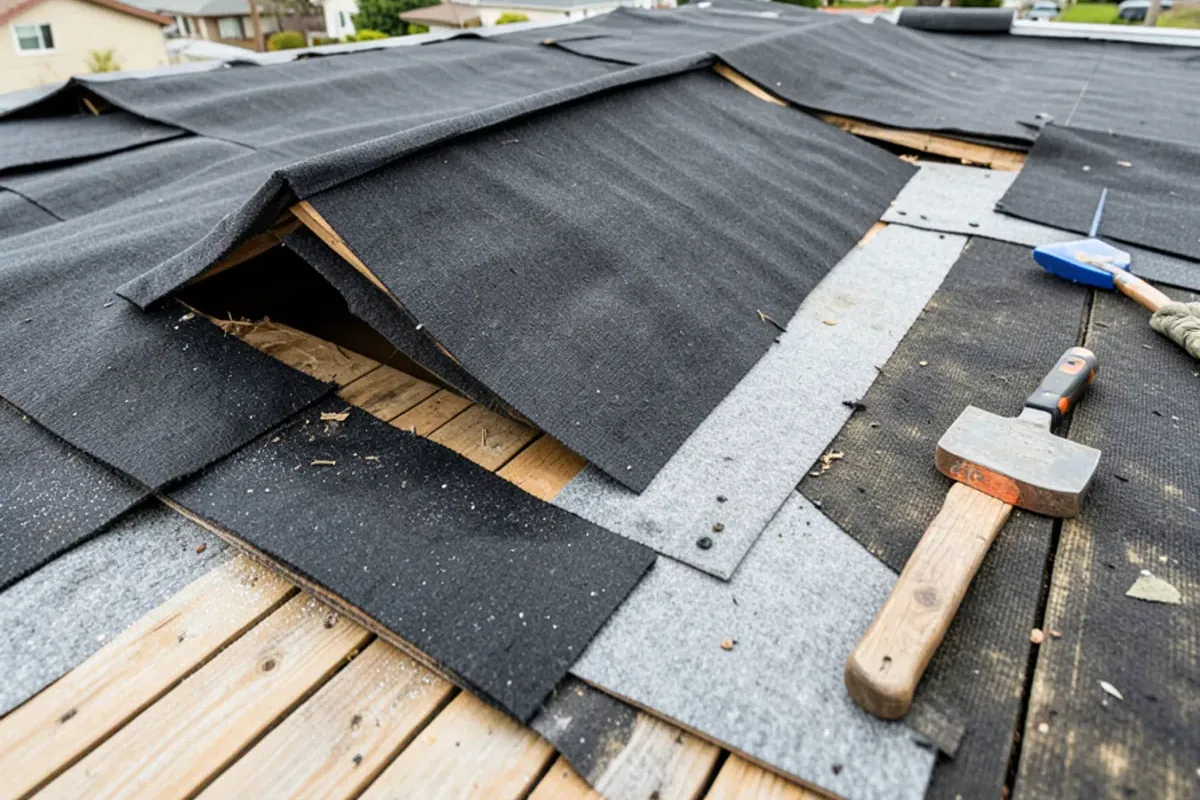
- Remove the old membrane and any wet or failed insulation, down to sound decking.
- Repair or replace decking boards, and add tapered insulation or crickets where water needs a path to the drains.
- Install insulation, then the new membrane system, whether single-ply, modified bitumen or built-up.
- Flash every parapet, wall, drain, curb and penetration, then seal the edges and terminations.
- Clean up, haul away debris and walk the roof for a final check.
Steps 2 and 3 are the ones that move the bill. A roof with dry insulation and sound decking is a lighter job than one with water-soaked boards. Hidden damage found at tear-off should come with a written change order before work continues.
Does a flat roof need overflow drains?
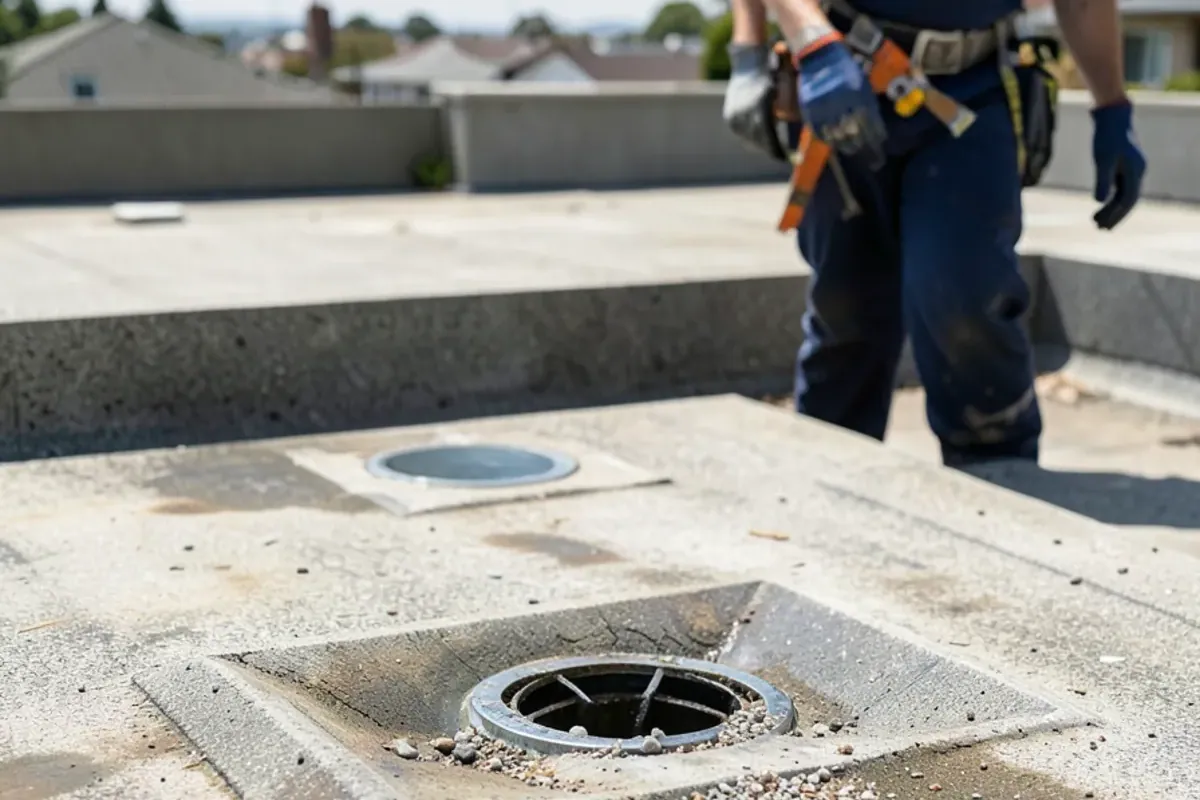
On a roof with a parapet, usually yes. California Building Code section 1502.2 calls for secondary (emergency overflow) roof drains or scuppers where a parapet or other perimeter construction could trap water if the primary drains back up. Sizing follows CBC section 1611 and Chapter 11 of the California Plumbing Code. The reason is weight: water that cannot leave the roof can load the framing.
If your roof has a parapet on all sides and only one drain, ask the roofer where overflow water would go. Adding a scupper through a parapet is a cost item, and a good estimate lists it separately so you can see it. Confirm any drainage change with the building department, since local review can apply.
Why are drains, parapets and ponding such a big deal?
Water has to go somewhere. A flat roof is never perfectly flat, and it needs slope to drains, scuppers or gutters. Ponding water that sits for days shortens the life of any membrane and points to a drainage problem to fix, not hide.
A parapet adds vertical surfaces that must be flashed and sealed at the top, the corners and every penetration. Shared parapet walls on attached buildings can make access more difficult, because crews may work from a neighbor's roof only with permission. Your estimate should note drain work, flashing at the parapet and what happens to the old insulation.
What flat roof work has looked like in the East Bay
Flat work in Alameda includes a townhouse flat roof and bulkhead replacement, a past job. Past Alameda customers describe detailed written quotes, estimates by the next day and photos of progress sent the same day. One reported a quiet worksite on request and daily cleanup.
For larger cities, drive time matters. San Francisco is about 27 minutes from our Webster St office in typical traffic, with bridge traffic able to add much more. Its attached rowhouses often share parapet walls, and the city has its own permit authority, so ask who pulls the permit and confirm it. In Alameda, the City's Permit Center says permits are needed for most construction work.
Our flat roof replacement page explains the process, the flat roofing hub covers the full range, and flat roof repair explains when a repair can wait. For a roof in Alameda itself, the home page covers how a visit is arranged.
Compare at least three written bids, according to CSLB, and do not let payments run ahead of the work. Whatever range you read online, only the estimate for your own roof sets the price. Ask for the system, thickness, insulation and drain scope in writing, then price each option on the same scope so the comparison is fair. Call the office or request a free estimate, and mention the number of drains and parapets if you know them.