
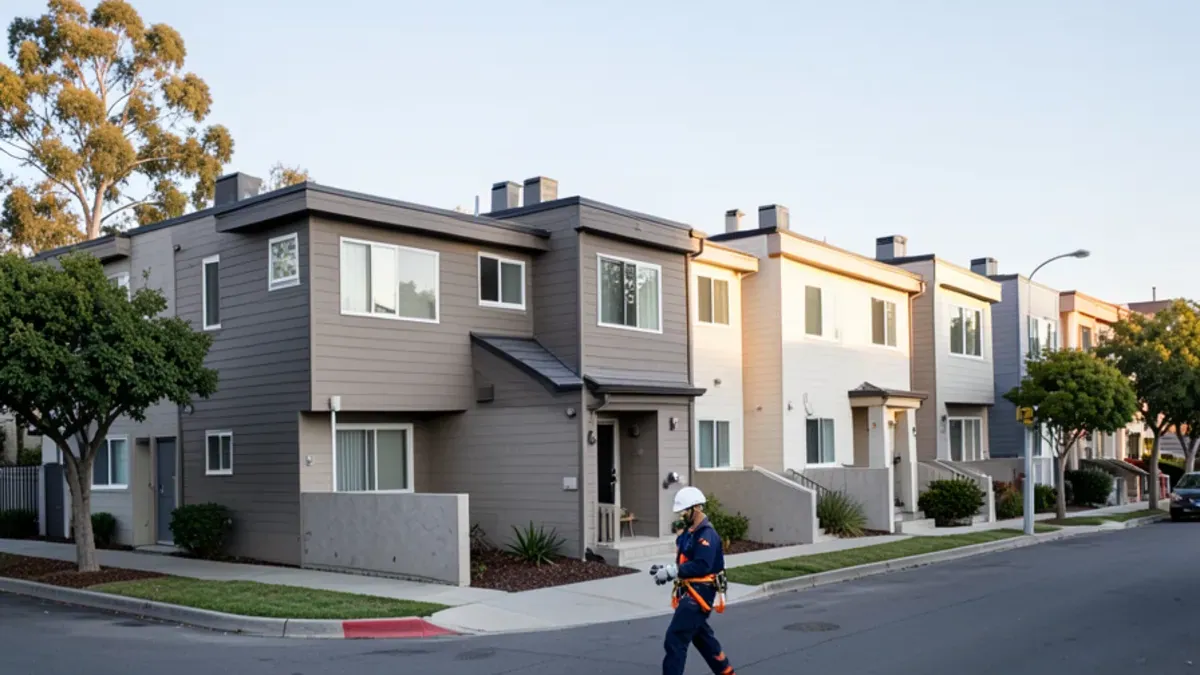
Who pays for a townhome flat roof depends on your governing documents. In many communities the association handles it, but only your CC&Rs can confirm that. Check them first, then call a roofer. Leaks on these roofs usually start at the bulkhead, the parapet flashing or a drain, not in the middle of the field.
Who is responsible for a townhome flat roof?
Start with the documents. If your townhome is in a common interest development, the declaration spells out what the association maintains and what the owner does. When the documents are silent, California Civil Code section 4775 sets the default: the association repairs and replaces common area, and each owner handles their own separate interest. Exclusive-use common areas, such as a private roof deck or balcony, are owner-maintained with association repair and replacement duties unless the documents say otherwise.
That leaves plenty of gray areas. A roof deck over your unit, a bulkhead that serves only your stair, and a skylight cut through a shared roof can each fall on either side. If you are in a managed community such as Harbor Bay, the association's rules may also set approved materials and who can hire contractors. Get the board's answer in writing before work starts.
What fails first on a flat roof?
Water is the enemy, and flat roofs hold it. The common failure points are:
- Seams where membrane sheets or bitumen laps meet, which open as the roof expands and contracts
- Flashing at walls, parapets and the base of a bulkhead
- Drains, scuppers and gutters that clog with leaves and grit
- Penetrations, such as vents, skylight curbs and exhaust stacks
- Ponding, where a low spot holds water for days after rain
Alameda gets about 22 inches of rain a year, almost all between October and April (BestPlaces). A roof that sheds water poorly in a dry season will show it by the second storm.
Why bulkheads leak
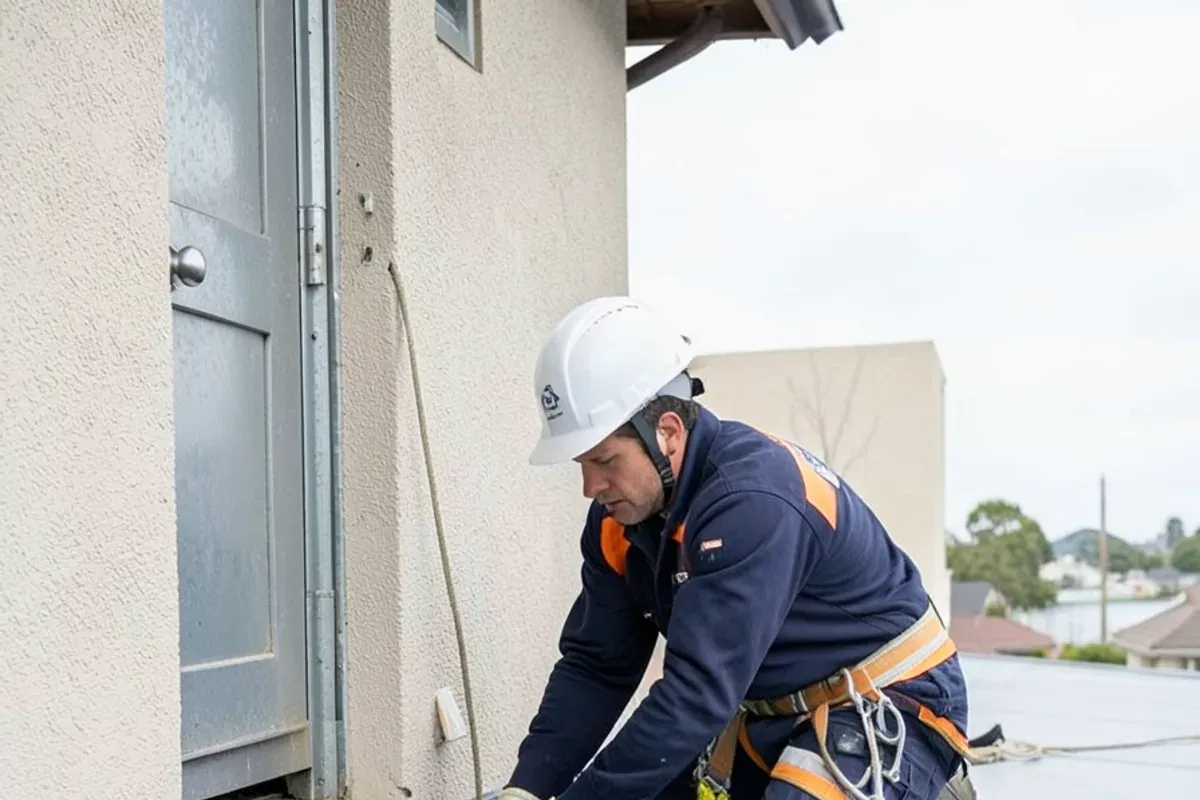
A bulkhead is the small enclosure that houses a stair or hatch to the roof. It has walls, a door, a threshold and a small roof of its own, so it multiplies the joints. Water gets in where wall flashing stops, where a stucco base stays wet or where the door threshold sits below the membrane. A past Alameda customer had a townhouse flat roof and bulkhead replaced together, which is the sensible pairing: replacing the membrane while leaving old bulkhead flashing in place tends to leave the weak spot behind.
What are the replacement options?
The systems below suit a low-slope townhome roof. The right choice depends on the deck, the drainage, the budget and how often people walk on the roof.
| System | How it goes on | Good fit |
|---|---|---|
| TPO or PVC single-ply | Sheets welded at the seams | Light-colored, low-maintenance roofs |
| EPDM rubber | Sheets adhered or ballasted | Simple roofs with few penetrations |
| Torch-applied or modified bitumen | Rolls heat-welded in layers | Roofs with foot traffic and detail work |
| Built-up roofing | Layers of bitumen and fabric on site | Older townhomes with a built-up roof already |
Low-slope areas under 2:12 also get different treatment under California's energy code than steep roofs. In Climate Zone 3, where Alameda sits, the reroof reflectance requirements for single-family homes apply only in other zones, so check with the building department if your building is classed differently. For the full detail on options, see the flat roof replacement page and the flat roofing overview.
How to coordinate with an HOA
HOA roofing jobs run smoother with early paperwork. Ask the board for the maintenance history, any warranty on the existing roof and the approval process for contractors. Get the estimate in writing, and ask who pulls the permit. The City of Alameda lists re-roofs as Express Building Permit work through its online Permit Portal, and the estimate should say who files.
How much ponding is too much?
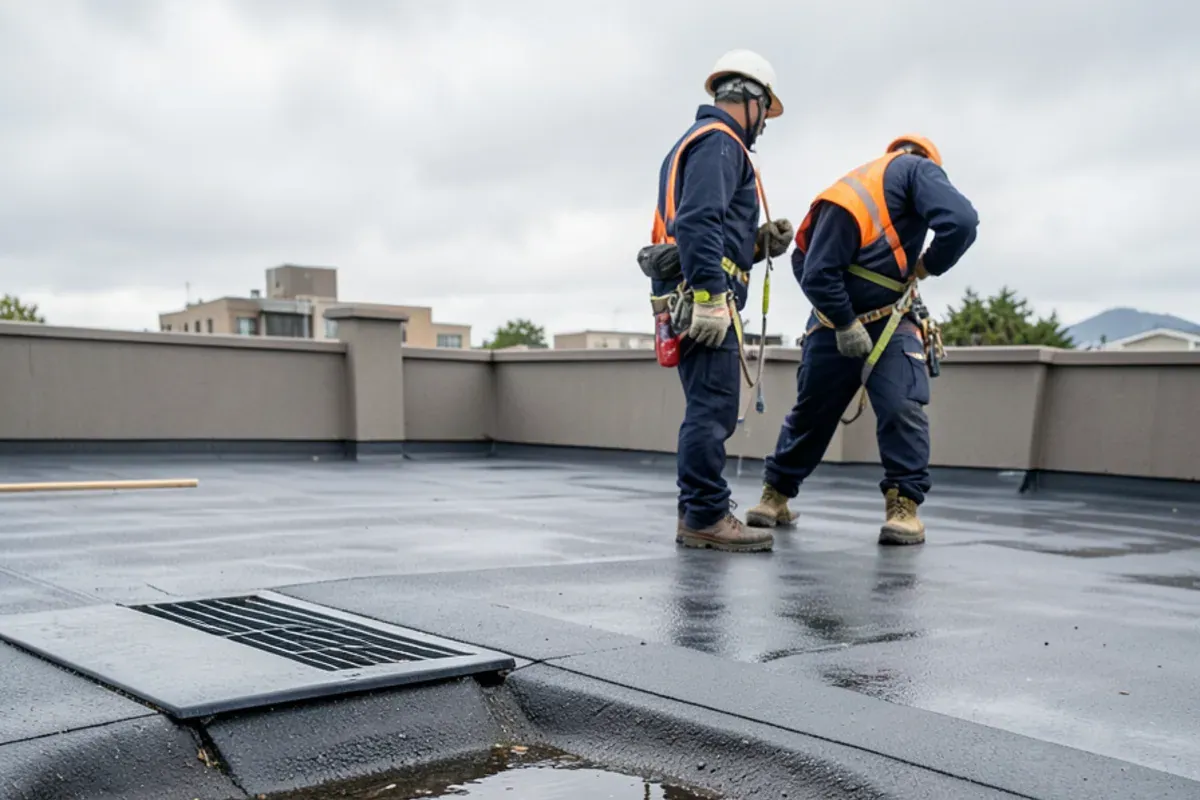
Some standing water after a storm is normal. The National Roofing Contractors Association defines ponding as water that stays at low spots more than 48 hours after rain, when conditions allow drying. Winter fog and shade slow drying around the bay, so a puddle can last longer here without the roof being at fault. A puddle that is still there three days after the last drop, or one that returns to the same spot after every storm, points to a low spot, a blocked drain or a deck that has sagged.
Ponding is not only a nuisance. Water that sits against a seam gets more chances to find it, and some membrane warranties limit coverage for ponding, so read yours. Check the roof on the morning after rain and again two days later, and take dated photos from the same spot. That record helps your board and your roofer decide between a drain fix and a tapered insulation correction.
Repair or replace a townhome flat roof?
Repair fits when the damage is local: one open seam, a cracked flashing joint, a clogged scupper. Replacement fits when the membrane is brittle across the whole field, when seams open in several places, or when water has reached the deck and the ceiling below has stained more than once. A patch over wet insulation traps the water and spreads the problem.
Ask for an inspection that includes the ceiling and attic below, plus a moisture check if the roofer has the tool. Then weigh the cost of repeated patches against one replacement. Our flat roof repair page explains when a patch is the honest answer, and roof deck waterproofing covers decks that are walked on.
How a townhome flat roof replacement runs
The order of work matters more than the product name.
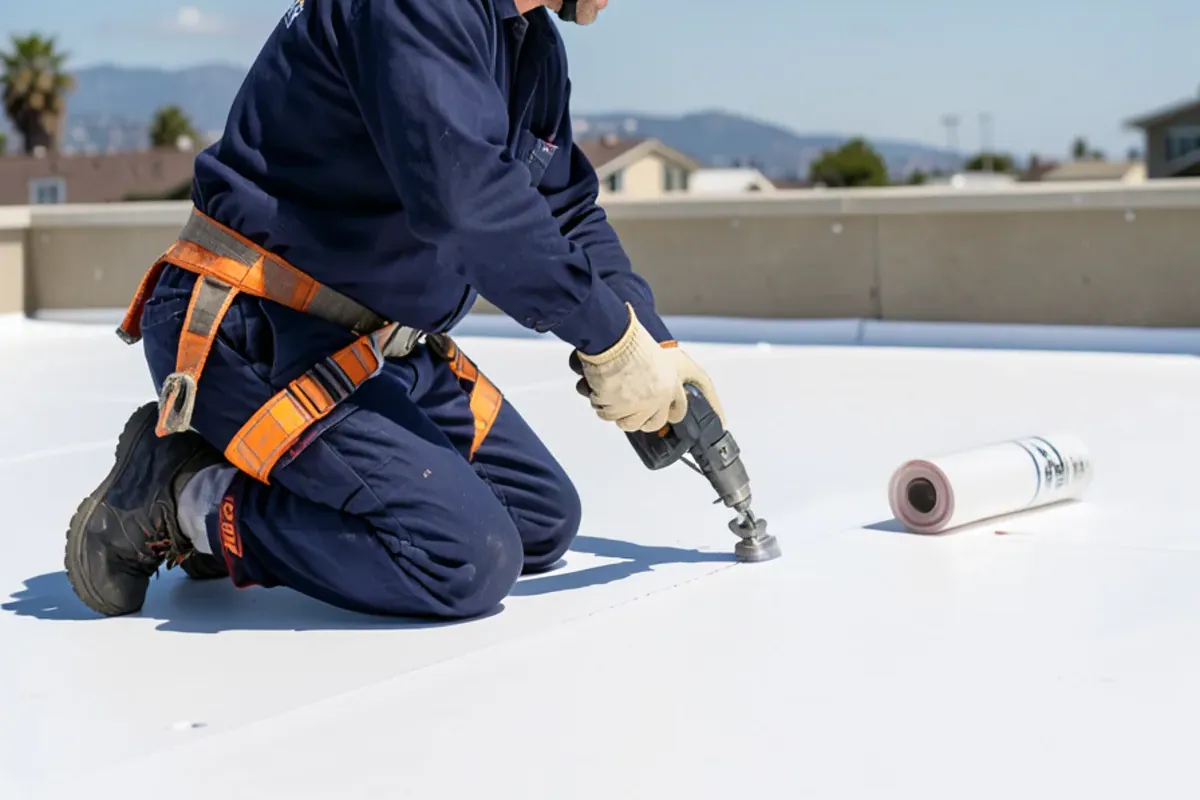
- Inspect the roof, the bulkhead and the attic or ceiling below, and photograph the problem areas.
- Agree the scope with the owner or the board, including who handles the permit.
- Tear off the old membrane, then check the deck and replace any soft or rotted boards.
- Fix slope with tapered insulation or cricket framing where water sits.
- Install the new system, flash walls, bulkhead and penetrations, and set new drains or scuppers.
- Complete the City inspection, clean up and hand over the paperwork.
Water that ponded for years often points to a drainage fix, not only a new surface. Adding slope costs more than a like-for-like swap, but it is the part that stops the same leak coming back. Ask any roofer how the new roof will drain, and ask for the answer in writing.
What to check twice a year
Walk the edges, not the field. Clear leaves from drains and scuppers before October. Look for open seams and cracked sealant at walls and the bulkhead base. After a storm, look for standing water that is still there two days later. Do not walk on a membrane roof without checking your association's rules and the roof's care instructions, since punctures cause leaks.
What we see on Alameda flat roofs
Flat roof work in Alameda has included a townhouse flat roof and bulkhead replacement. Past customers describe detailed written quotes, daily cleanup and a single point of contact through the job, which matters when residents above or beside the work are living there. Quiet worksites have been provided on request, and gutters cleared of junk during the job.
What does a flat roof replacement depend on?
Size, deck condition, the system chosen, drainage changes, the number of penetrations and access all drive the price. A 2026 Alameda pricing source puts flat or built-up work at $6,000 to $18,000. That is a third-party range, not a quote, and a building with several units is priced differently. The number in your written estimate is the one to hold the roofer to.
If your townhome roof is leaking
If a townhome roof is leaking or ponding, photograph it, check your CC&Rs and call us for an estimate. We work across Alameda, and the nearby cities are on the service areas page. We can look at the bulkhead, drains and seams in the same visit.