
Burnham's circles and what they mean for access
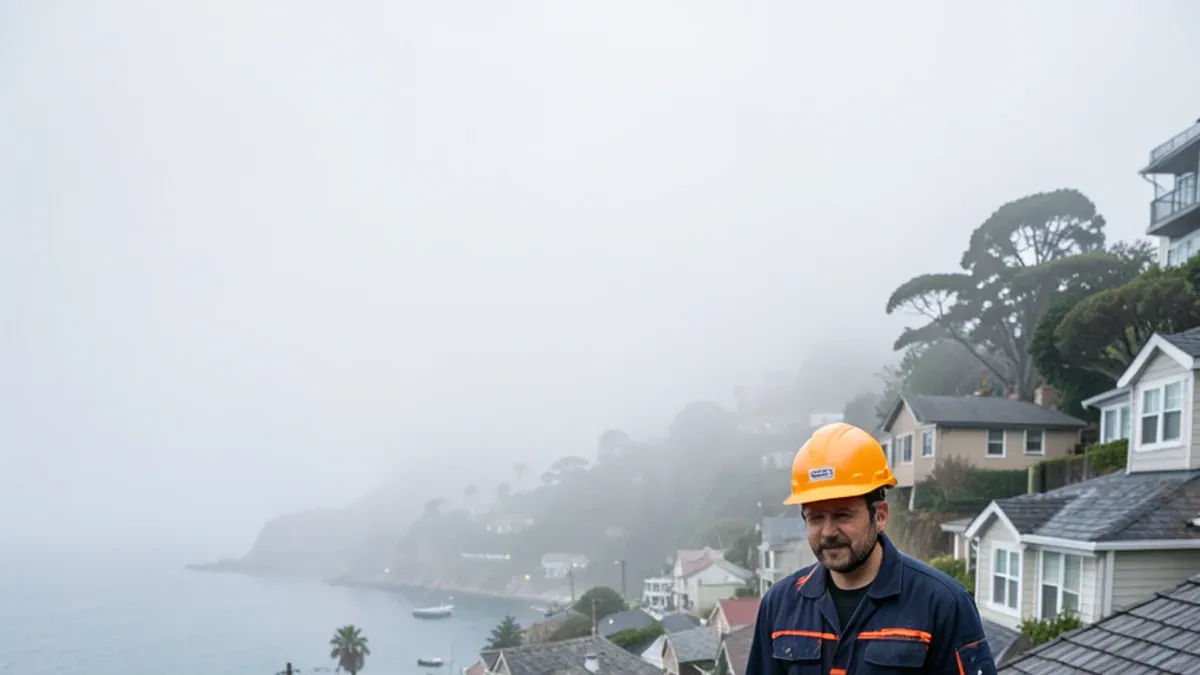
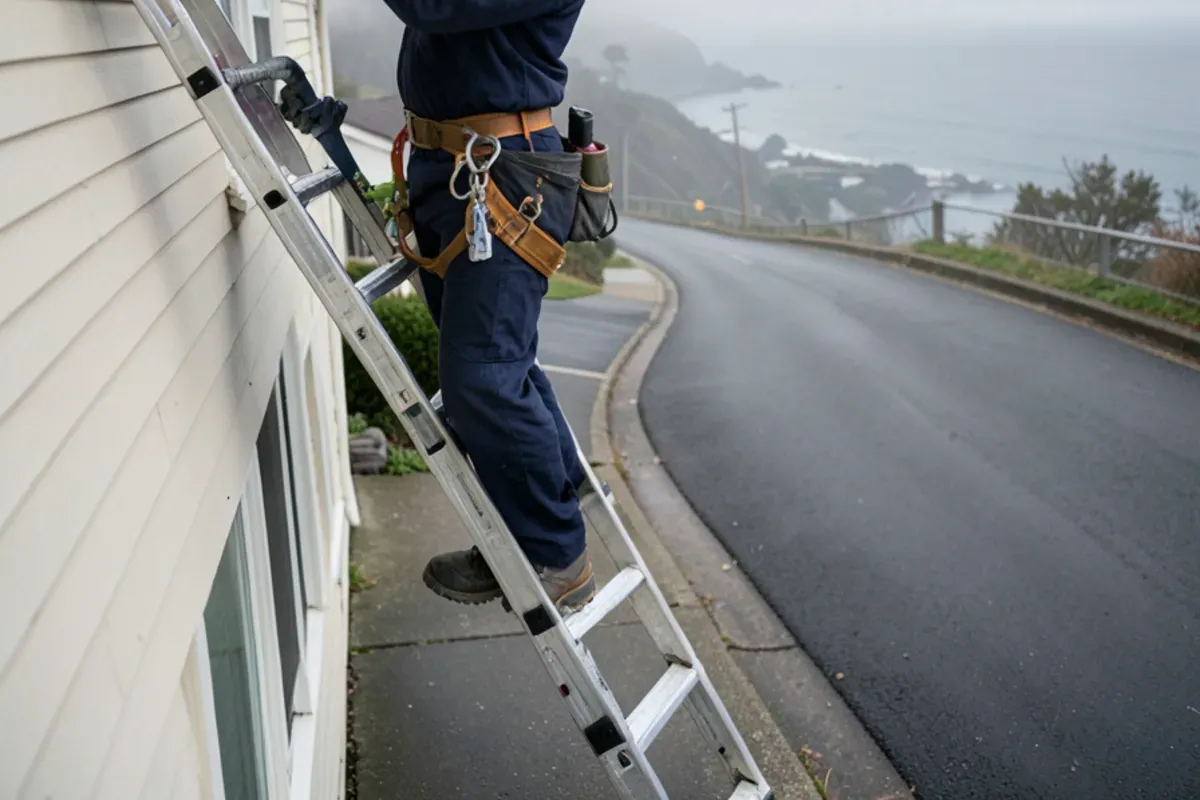
El Granada's streets follow a concentric-circular plan by architect Daniel Burnham, commissioned by the Ocean Shore Railroad for a seaside resort (Wikipedia, El Granada). The railroad dropped the plan, but the street layout stayed. Curving roads change where ladders, dumpsters and trucks can sit, and we scout that before we quote.
Fog on the Pacific edge
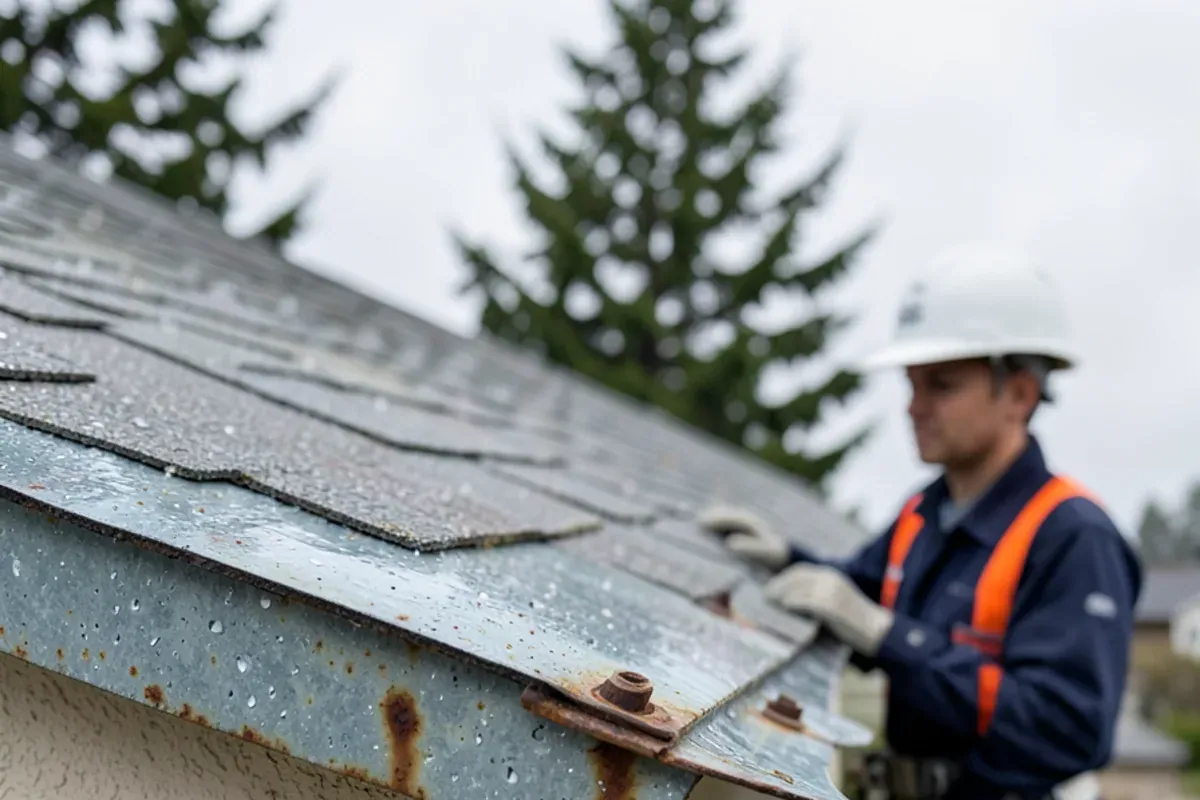
The Coastside is foggy and cool, with a July high near 65 F and about 26 inches of rain a year (Wikipedia, Half Moon Bay, the nearest city with climate data). Roofs rarely dry fully. The first things to fail are metal parts, so we check flashing, nails and vents before the shingles.
The 2020 census counted 2,283 housing units in El Granada, and 75.8% of occupied units were owner-occupied (Wikipedia, El Granada). Owners who stay put see the same roof through many winters, so the useful question is how fast corrosion is moving, not only whether the shingles are intact. We photograph nail heads, vent flashing and ridge caps in close-up, so that you can see rust or lifted metal for yourself and compare it with what other bidders report.
Princeton, Moss Beach and State Route 1
El Granada lies on the Pacific side of northern San Mateo County, with Princeton-by-the-Sea to the west, Moss Beach to the north and Half Moon Bay to the south (Wikipedia, El Granada). It is about 25 miles south of San Francisco, and State Route 1 is its main road. The community was first named Granada after the Spanish city, and the post office recorded El Granada in 1909 by mistake.
Because the community is unincorporated, San Mateo County handles building permits, and the county publishes guidance on Coastal Development Permit exemptions that tells owners to ask staff to confirm whether a project qualifies. Ask the county that question before the contract is signed, and have the estimate name who applies.
San Mateo County permits and Zone 3
El Granada is unincorporated, so permits come from San Mateo County. It sits in Climate Zone 3, the same as Alameda, so a cool-roof product is not required for a single-family reroof. The county has the final word, and exceptions exist.
Coastside roofing work
- Roof Repair
Fog and salt air corrode fasteners and flashing, and repairs start with finding which metal has failed. We check nail heads, vent flashing and ridge caps first, then photograph what we find.
- Roof Replacement
Zone 3 means cool roofs are optional, so material choice is driven by coastal exposure instead. With 75.8% of homes owner-occupied, the estimate lets owners weigh corrosion-resistant fasteners and flashing line by line.
- Storm Damage Roofing
Pacific winter storms drive wind and rain at roofs with nothing to slow them. We photograph lifted ridge caps and displaced shingles for your insurer, and a repair scope follows the photos.
- Gutters
Fog drip and winter rain keep gutters running, and moss collects in the troughs. We check slope and downspouts on a coastal home, since water that overflows lands on fascia that already stays damp.
- Emergency Roof Repair
Phone triage and tarp advice first; arrival over the hills depends on crew availability. Fog and Highway 92 traffic affect the trip, so we give you an honest window and temporary-cover steps.
- Roof Inspection
A fastener-by-fastener look at flashing, nails and vents tells you whether corrosion has reached the structure. The report gives you dated photos to compare against any other bid, before you commit to a repair or a reroof.
- Roof Maintenance
Where fog keeps a roof damp for most of the year, regular moss removal, gutter clean-outs and a check of exposed metal before winter storms help a roof last, and keep small corrosion from turning into leaks.
The trip over Highway 92
Call the Alameda office. We inspect first and send a written estimate after. The trip crosses a bay bridge and Highway 92, and fog or traffic can slow it. Urgent leaks begin with phone triage; arrival depends on crew availability.
Half Moon Bay and the rest of the Coastside
See Half Moon Bay, Pacifica and Millbrae.