
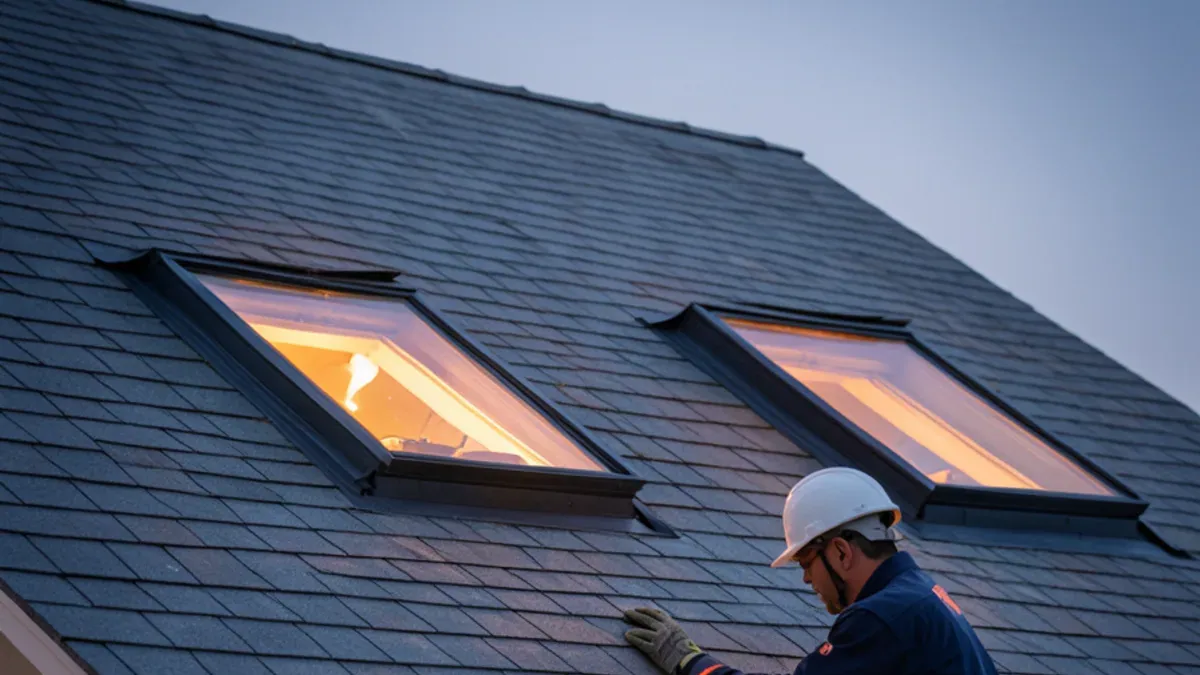
Why does a skylight leak after a new roof?
A skylight leaks after a reroof because its flashing was reused, mismatched or sealed with caulk instead of layered with the shingles. The skylight itself is rarely the cause. Water gets in at the edges where metal meets roofing, not through the glass.
If you have just paid for a new roof and a skylight stain appeared after the first rain, the likely culprit is the work around the unit. That is usually a repair of the flashing, not a replacement of the skylight.
What goes wrong at the skylight during a reroof?
A reroof puts new shingles right up against the skylight, and the order of layers is what keeps water out. These are the usual faults:
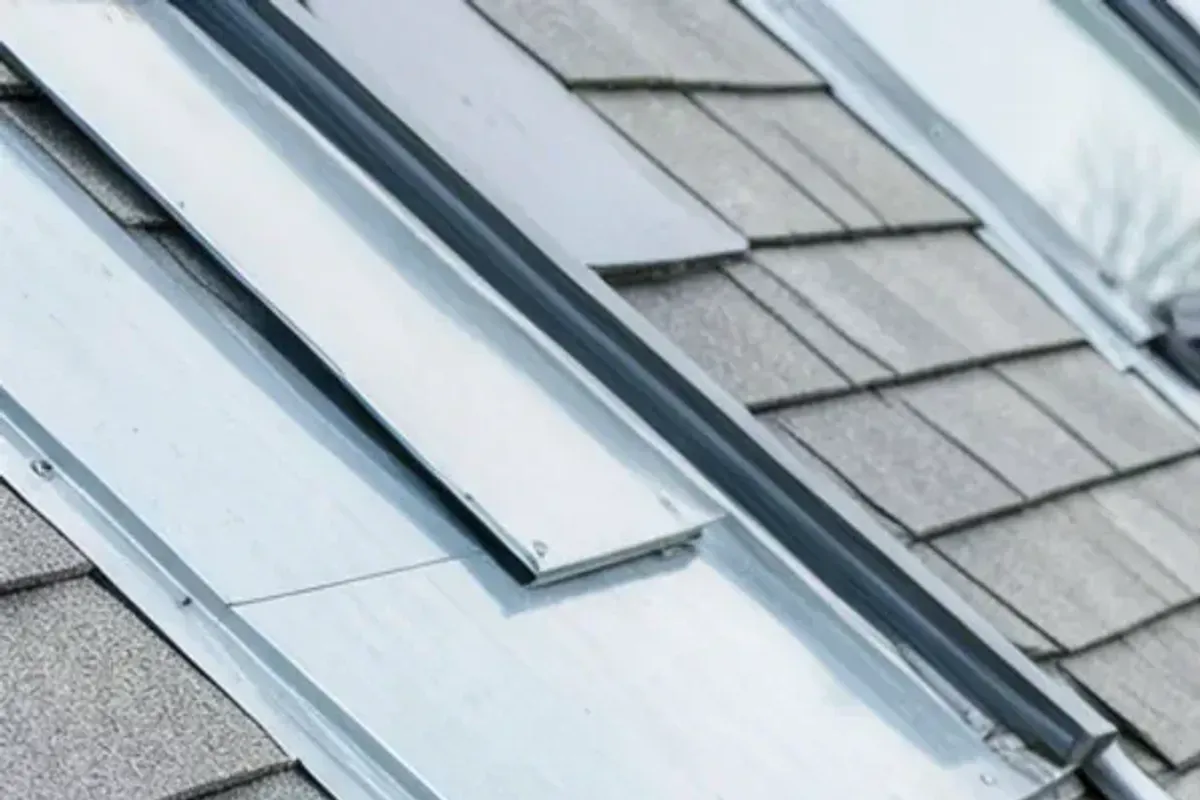
- Old flashing reused. It may no longer fit new shingle thickness or may be corroded or bent.
- Wrong kit. Flashing kits are made for specific skylight models and roof types.
- Sealant instead of layering. Roofing cement or caulk at the joints dries and cracks. Layering sheds water without relying on it.
- Step flashing missed. The side pieces must weave into each shingle course.
- Underlayment gaps. The membrane that backs up the flashing was not lapped or sealed to the curb.
- Head flashing short. Water runs down behind the top of the unit and into the curb.
A home-improvement guide on leakproofing skylights makes the same point: layer the flashing so water runs over each piece, and do not lean on roofing cement.
Do different skylight types leak in different ways?
Yes, the mounting style decides which details matter. Use this table to tell your roofer what you have, because the two types fail in different places:
| Type | How it mounts | Where reroof leaks usually start |
|---|---|---|
| Curb-mounted | Sits on a raised wood frame built above the roof | Curb base, side step flashing and the head flashing |
| Deck-mounted | Frame sits flat on the roof deck | Factory flashing kit not matched to the shingle thickness |
| Tubular or sun tunnel | Small dome over a round pipe | Collar seal and the flange under the shingles |
| Old site-built unit | Custom frame and flashing | Reused or hand-bent metal that no longer fits |
The first question for any leak is which type you have, since a kit made for one will not seal the other. A model label on the frame or an original receipt narrows it fast.
What should you ask for before a reroof?
Raise the skylight before the reroof starts, not after the leak. Ask the roofer to state in the estimate:
- Whether the skylight flashing is replaced or reused
- Whether a manufacturer-matched kit is used
- How the underlayment is tied into the curb
- Whether the skylight itself is inspected for seal or glass issues
- What the workmanship warranty says about the skylight area
A skylight replaced with a reroof is a clean slate, with a new unit and a new kit. If the unit stays, ask for a new flashing kit anyway. One Alameda reroof included a skylight replacement, and that is the cleanest way to handle an aging unit.
Terms go in your contract in writing; ask us before you sign, and ask any roofer.
How is a leaking skylight fixed?
The repair follows the layers. The steps:
- Find the leak. Check the attic first. Confirm it is flashing, not condensation or a failed seal on the glass.
- Lift the shingles around the unit.
- Inspect the flashing and underlayment. Replace anything bent, rusted or short.
- Rebuild the layers from the bottom: sill, sides, head, in the right order.
- Re-shingle and seal the nail heads, not the joints.
- Test with a controlled water test where conditions allow.
If the diagnosis points to the unit, such as a cracked pane or failed glass seal, replacement is the answer. Otherwise a reflash is the proportionate repair. See skylight repair for what a visit includes, and the skylights section for replacement and installation.
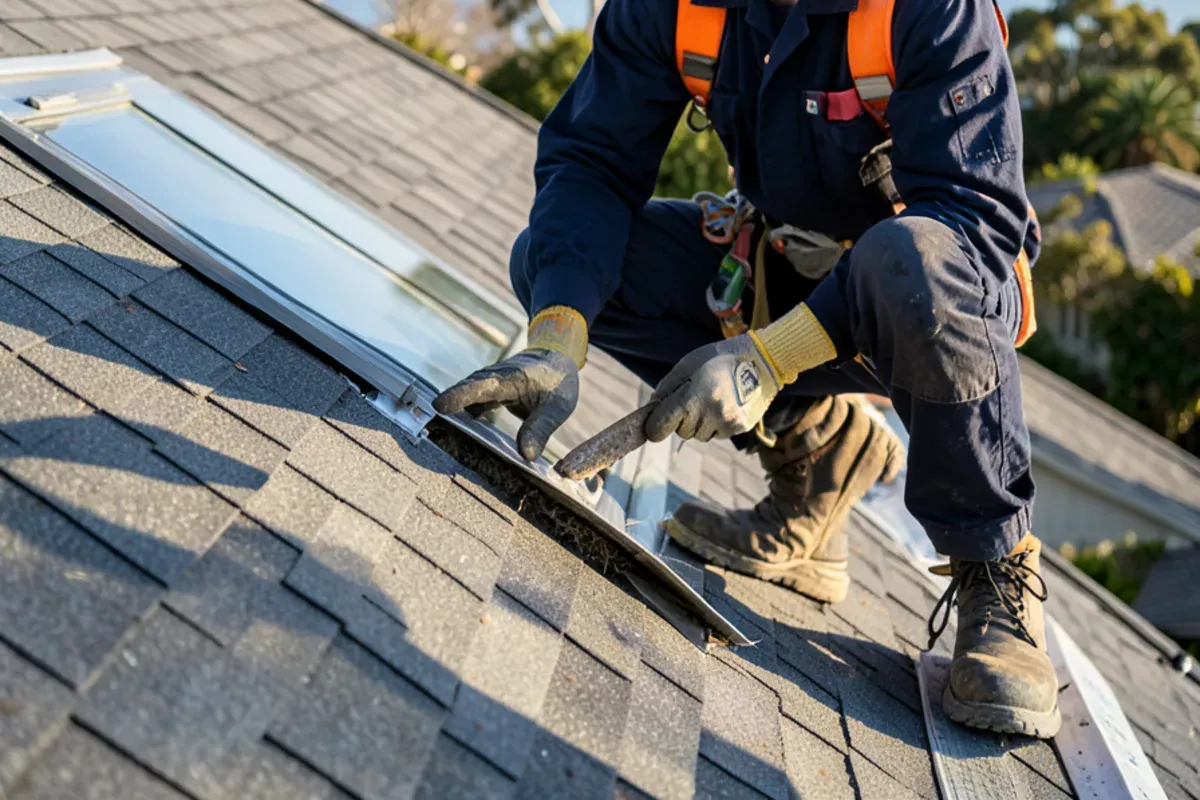
What do roofers weigh before reflashing a skylight?
A roofer weighs how much of the roof around the unit is sound before deciding between a reseal and a full reflash. The decision rests on three checks:
- Condition of the metal. Flat, clean, correctly layered flashing can sometimes be resealed. Bent or corroded pieces cannot.
- Condition of the shingles around it. Brittle shingles crack when lifted, so a small repair can grow into a bigger patch.
- Condition of the curb and underlayment. If the membrane behind the flashing was never tied into the curb, resealing the top will not stop water.
The trade-off is scope against durability. A reseal is faster and cheaper and fits a unit with sound metal, which is the repair that saved three skylights on one Alameda job. A full reflash with a matched kit takes longer and costs more, and it is the repair that tends to last when the original work was wrong. If a roofer proposes caulk alone on a leaking head flashing, ask what is under it.
If you are weighing a new unit, see skylight replacement for what that involves.
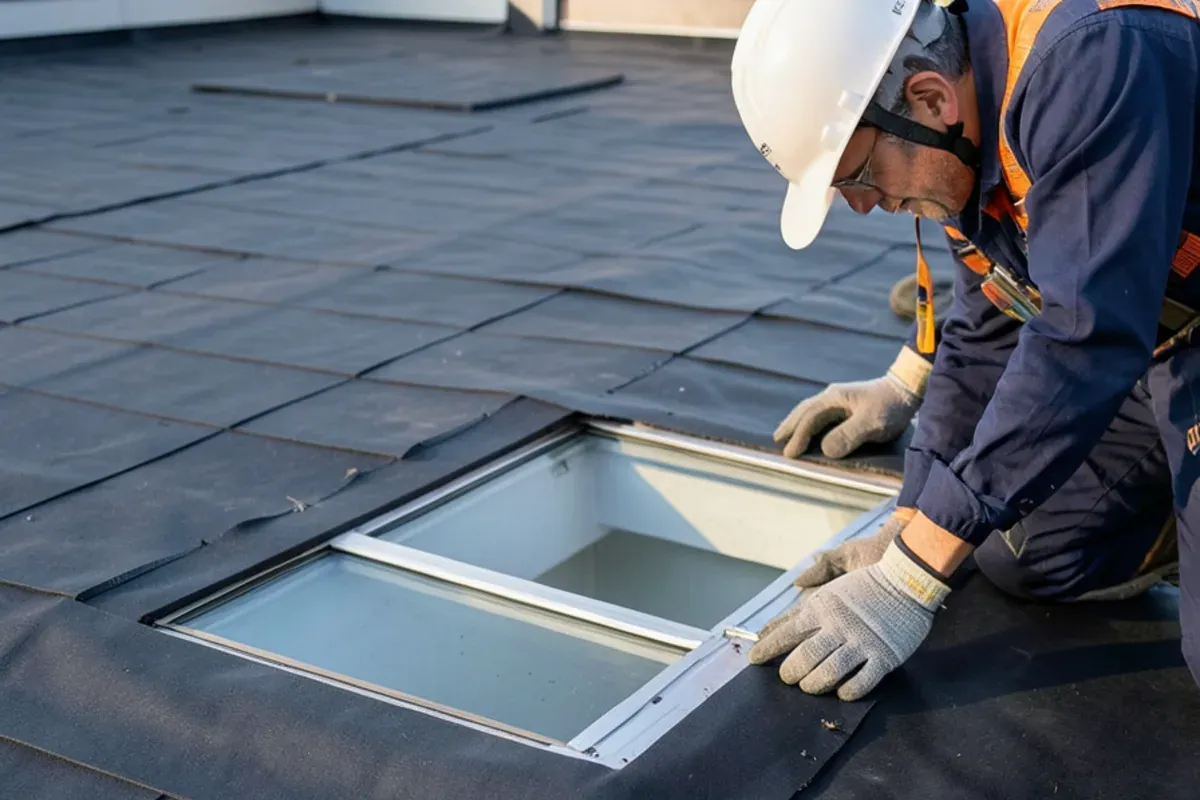
What we have seen on skylight leaks in Alameda
Skylight leaks are common enough to have their own pattern in our Alameda work. A skylight started leaking after a different roofer's reroof. A leaking garage skylight was patched within a day. Three skylights were resealed and reflashed instead of replaced.
Repair first is the usual advice when the unit is sound. Replacing a good skylight to fix a flashing fault spends money on the wrong part.
Is it the flashing, the seal or condensation?
Not every skylight stain is a roof leak. Three different problems look alike from below, and the fix differs for each.
Flashing leak. Water enters at the edge of the unit, runs down the shaft and stains the finish at the frame. It shows up in rain, often wind-driven rain, and not on dry days.
Failed glass seal. Moisture or fog appears between the panes of a double-glazed unit. The roof is dry, but the unit has lost its seal. That calls for a replacement glass unit or skylight, not new flashing.
Condensation. Water beads on the glass or frame on cold mornings, then drips onto the sill. It tracks humidity, not rain. Better ventilation inside the room and a warmer interior surface help.
To tell them apart, note when the water appears. Rain-only points to flashing. Cold mornings with no rain point to condensation. Fog between panes points to the seal. Photos with dates make the roofer's first visit much quicker.
If the stain follows rain, mark the edge of the wet area with a pencil and note the date after each storm. A growing mark after hard rain confirms an active leak.
Where to start
If your skylight leaked after a reroof, photograph the stain and the roof around the unit, and write to the roofer with the date and details. Alameda homeowners can begin on the home page and ask for a free inspection.
Call the office, say "skylight leak after reroof", and the visit will focus on the flashing.