
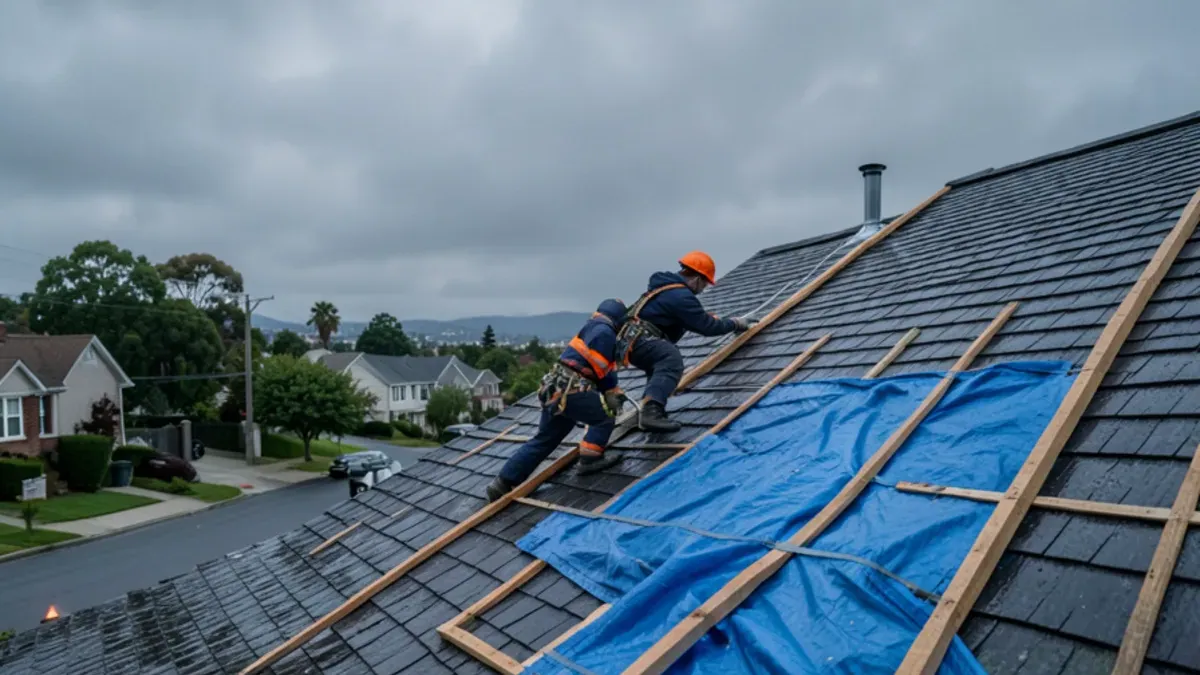
When a roof needs a tarp
A tarp is for a roof that is open or likely to leak before it can be repaired. These cases call for one:
- Ridge cap or shingles blown off in wind
- Torn shingles and bare underlayment where a limb landed
- A section of roof covering missing after a failed repair
- Flashing pulled loose near a chimney or wall
- A job left unfinished with underlayment or bare deck exposed
- A damaged skylight or vent curb that cannot be fixed that day
A small, dry stain does not need a tarp. A tarp is also the wrong tool for a slow leak you cannot locate; our emergency roof leak repair page covers sealing and tracing.
Do this before the tarp goes on
Move belongings from under the damage, catch drips with buckets, and photograph the roof from the ground and the damage inside. Do not climb up. Wet shingles and wind put you at real risk of a fall.
Call your insurer if you plan to claim. Do not remove debris or cut up a fallen limb until it has been photographed, unless it is a safety risk. Then call us. We will ask where the damage is, what happened and whether water is coming in now.
Roof tarp service: where and how fast, honestly
Our base is the office at 1910 Webster St, on the West End of the island. Arrival depends on the day and the weather, so ask on the phone. What customers have reported: we stopped by the same day after a windstorm and tarped lost ridge shingles, another visit came within 24 hours to waterproof, and the office has scheduled visits within hours of a call.
Those are past events. If we cannot reach you that day, we say so and talk you through protecting the inside until we can.
How a tarp over a roof is installed
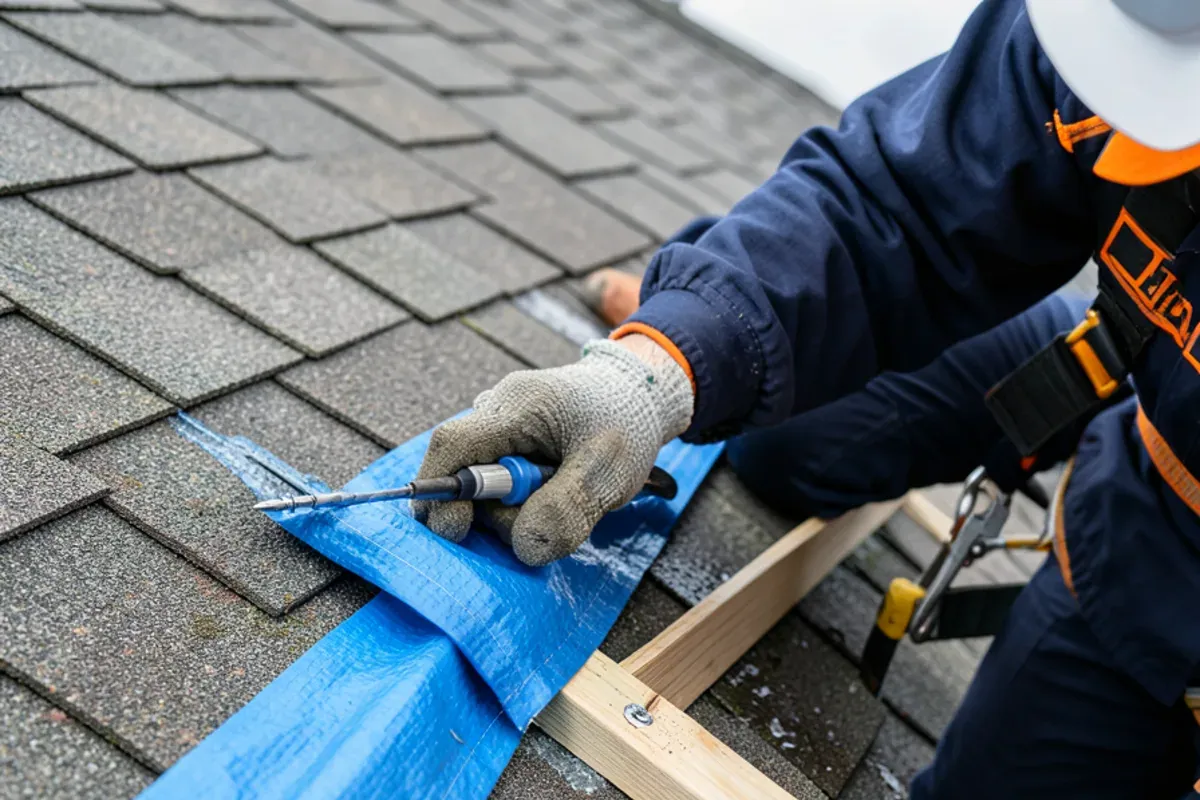
A proper tarp is anchored on wood, not just nailed through fabric.
- Inspect from the ladder or the safe edge. We find the extent of the damage.
- Clear sharp debris. Loose shingle pieces and nails come off so they do not cut the fabric.
- Cut the tarp oversize. It runs well past the damage on all sides.
- Lay it from the ridge down. The upper edge goes over the ridge so water cannot run under it.
- Fasten on wood strips. The edges are folded over strips of lumber and screwed down, so the wind cannot get under the tarp.
- Weight or secure the lower edge. It stays flat and does not flap.
- Photograph the finished cover. You get photos for the insurance file.
The tarp is not a repair. It is a roof for the weeks you need to plan and pay for one.
Temporary roof cover: what a tarp cannot do
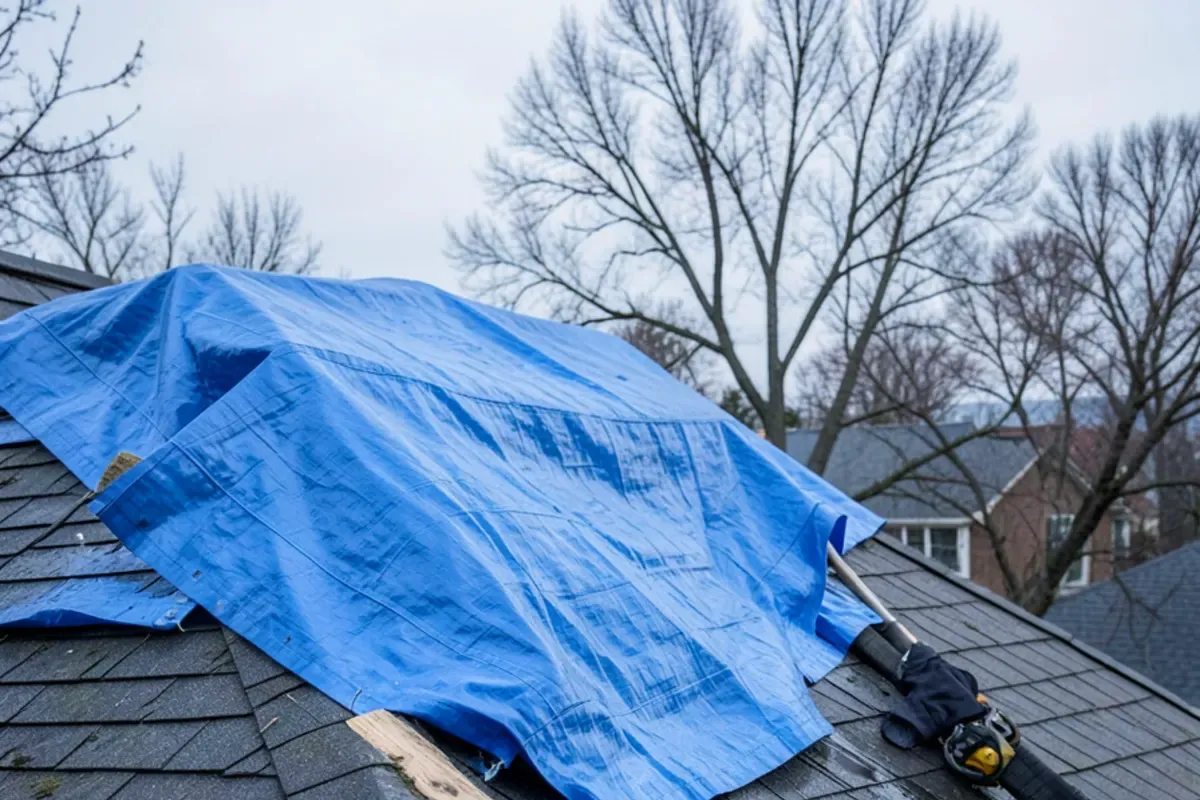
A tarp stops most rain. It does not stop wind-driven water that gets under an edge, and it does not dry out a wet deck. It does not last through a season. Sunlight weakens the fabric, and every storm tests the fasteners.
Inside, wet insulation and wet ceilings will not dry just because the roof is covered. Open windows, run fans, and watch for mold. We fix the roof, and we document interior damage for the claim.
Roofing contractor guides commonly put a heavy-duty tarp at roughly 30 to 90 days, and they cite FEMA's Blue Roof sheeting as designed for about 30 days. Those are general figures; sun, wind and pooled water shorten them, so have the cover checked after every storm.
Storm tarp: wind damage and fallen limbs
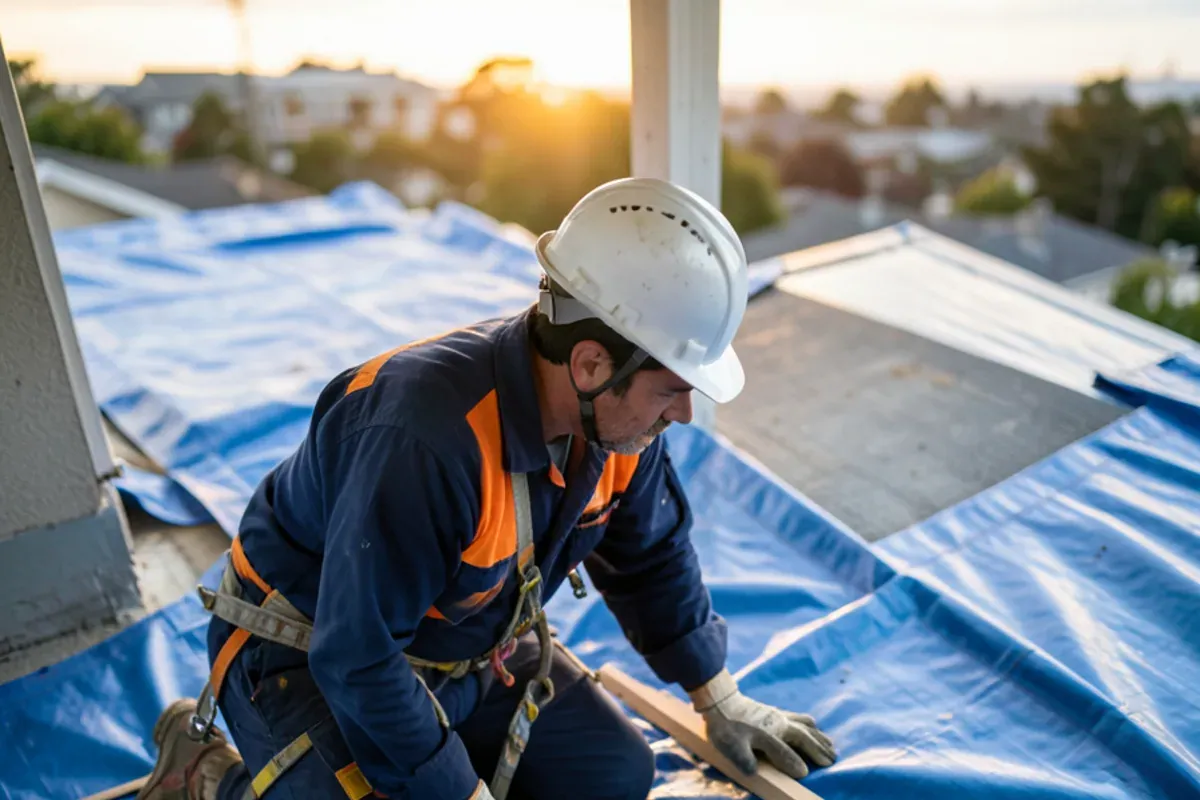
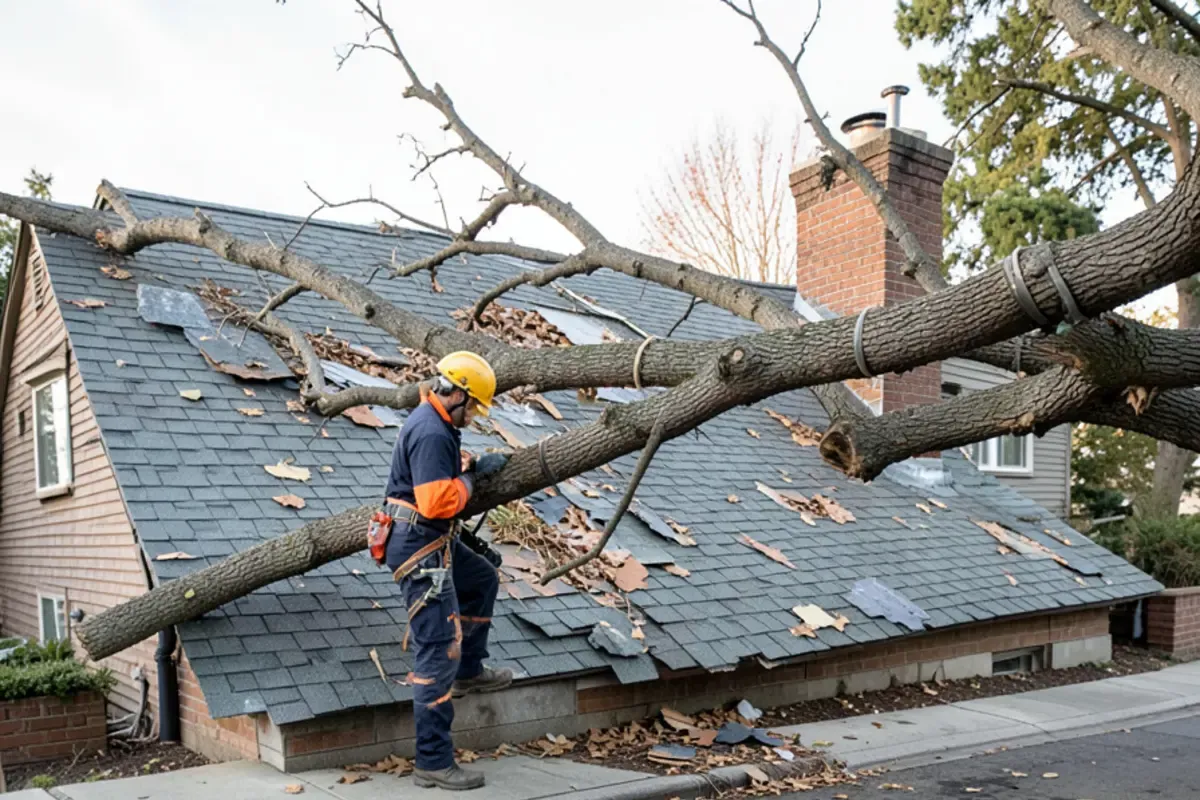
Wind removes ridge cap first, then loose shingles, and tears flashing off walls and chimneys. A limb can puncture the deck. Check the spot from the ground for daylight at the ridge or torn felt.
One Alameda customer had a tree-damage claim covering roof, gutters and siding, and another had a wind-damaged roof claim. For claims, we write the scope and meet the adjuster on site to walk the damage. We do not negotiate your claim; only the policyholder, the insurer or a licensed public adjuster does that in California. Never offer to inflate an invoice to cover a deductible; that is insurance fraud (Penal Code §550).
Roof tarping cost: what sets the price
We do not publish a price. The factors:
- Size of the area to cover, and how far the tarp must reach past it
- Roof pitch and height
- Access to the roof edge
- Weather and the time of day
- Number of fasteners and strips needed
- Debris removal before the cover goes on
The price is explained before work starts. Whatever is on paper before the work begins is the price, and tarping is priced apart from the permanent repair.
Rules and paperwork for a tarp job
The City of Alameda's permit page says an emergency repair application is due the next working business day, so ask who files it and confirm with the Permit Center. Roof work over about 200 square feet generally needs a permit (PermitFlow, a third-party guide). On any home improvement contract the down payment is capped at $1,000 or 10%, whichever is less (B&P §7159.5), and an emergency repair you request yourself is an exception to the cancellation window. Check any roofer's license at cslb.ca.gov before paying.
After the tarp: the permanent repair
The permanent repair is its own estimate. It could be replacing shingles, rebuilding a section of deck or a full replacement. One Alameda customer had aged decking found at tear-off, with a change order explained before work continued. If you have an insurance claim, the scope we write follows the damage.
If the previous crew left the roof open, see unfinished roof job rescue.
Emergency roof tarping across the East Bay
We tarp roofs in Alameda and cover Oakland, Hayward, Berkeley and San Leandro. Getting off the island takes longer in commute traffic, so ask for an honest arrival window.