
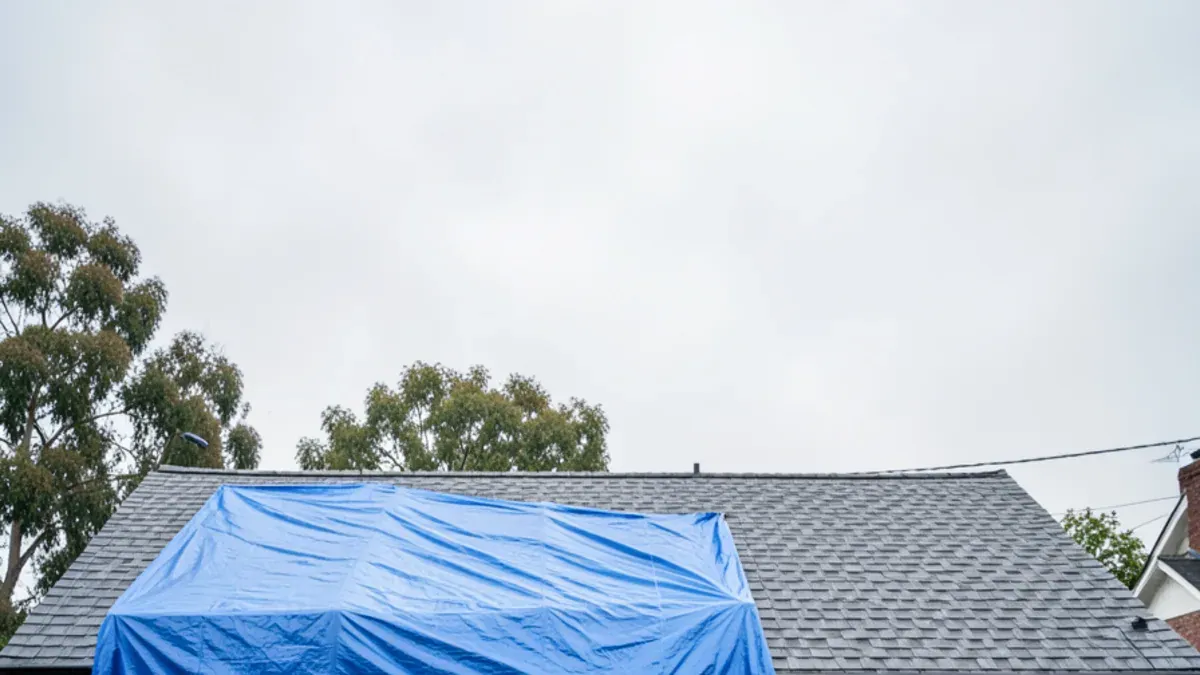
Whether you should tarp a leaking roof yourself depends on the roof, not on your handiness. If the roof is low, dry and walkable, two adults can cover a small opening. If it is wet, steep, two stories or covered with moss, leave it to a roofer, because a fall costs more than any ceiling.
When is it safe to learn how to tarp a roof yourself?
It is safe only under narrow conditions: one story, a gentle pitch, a dry surface, no wind, daylight and a second person on the ground. Remove any one of those and the answer changes to no.
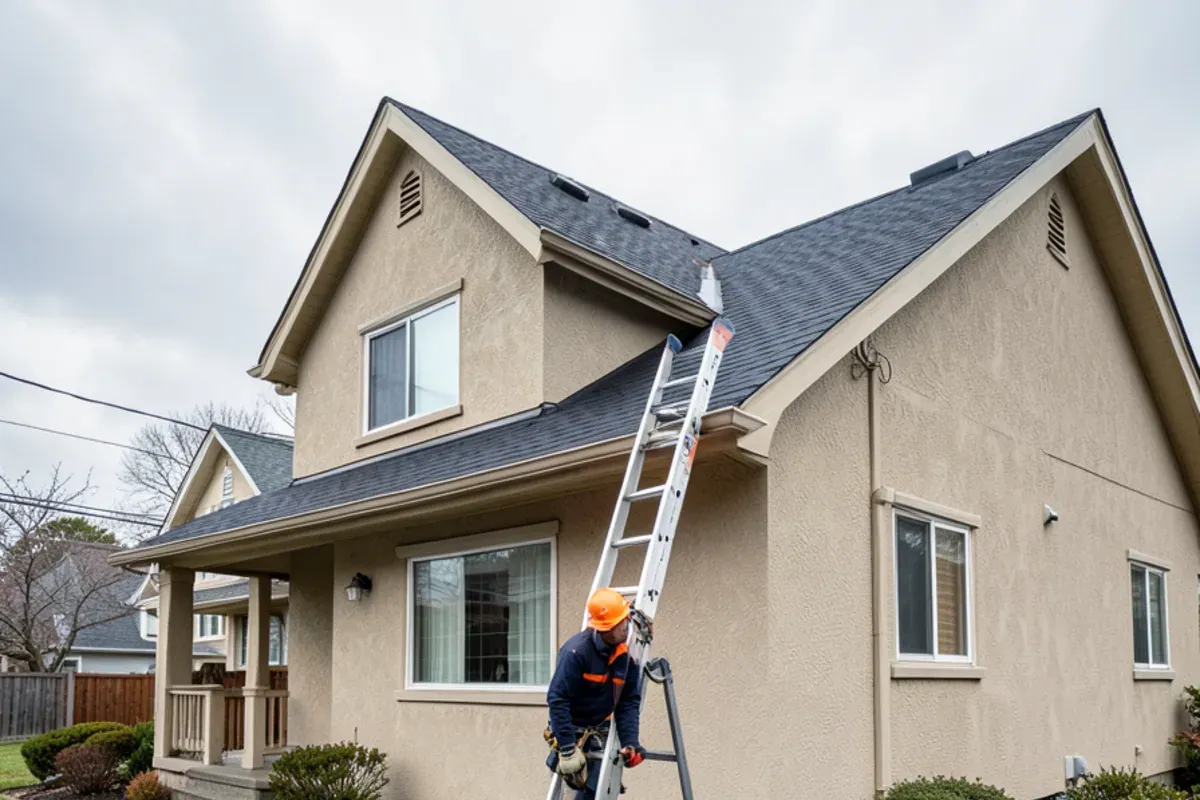
OSHA's residential guidance sets six feet above a lower level as the point where workers need conventional fall protection. A single-story eave in Alameda already reaches that height once you add a pitched surface above it. Professional crews use harnesses and anchors for this reason. A homeowner on a ladder with a wet tarp in one hand has neither.
Ladders add their own risk. Set the feet on level ground, extend the rails above the eave, and keep both hands free while climbing. If you are not sure, wait.
What does a proper tarp include?
A proper tarp covers the damage and extends past it, ties into solid framing and sheds water downhill. A tarp that is tacked down at the corners will flap loose in the next gust.
Here is how a professional install usually goes:
- Remove loose debris and broken pieces from the damaged area.
- Cut the tarp large enough to run over the ridge, if the damage is near the top, and several feet past the damage on every side.
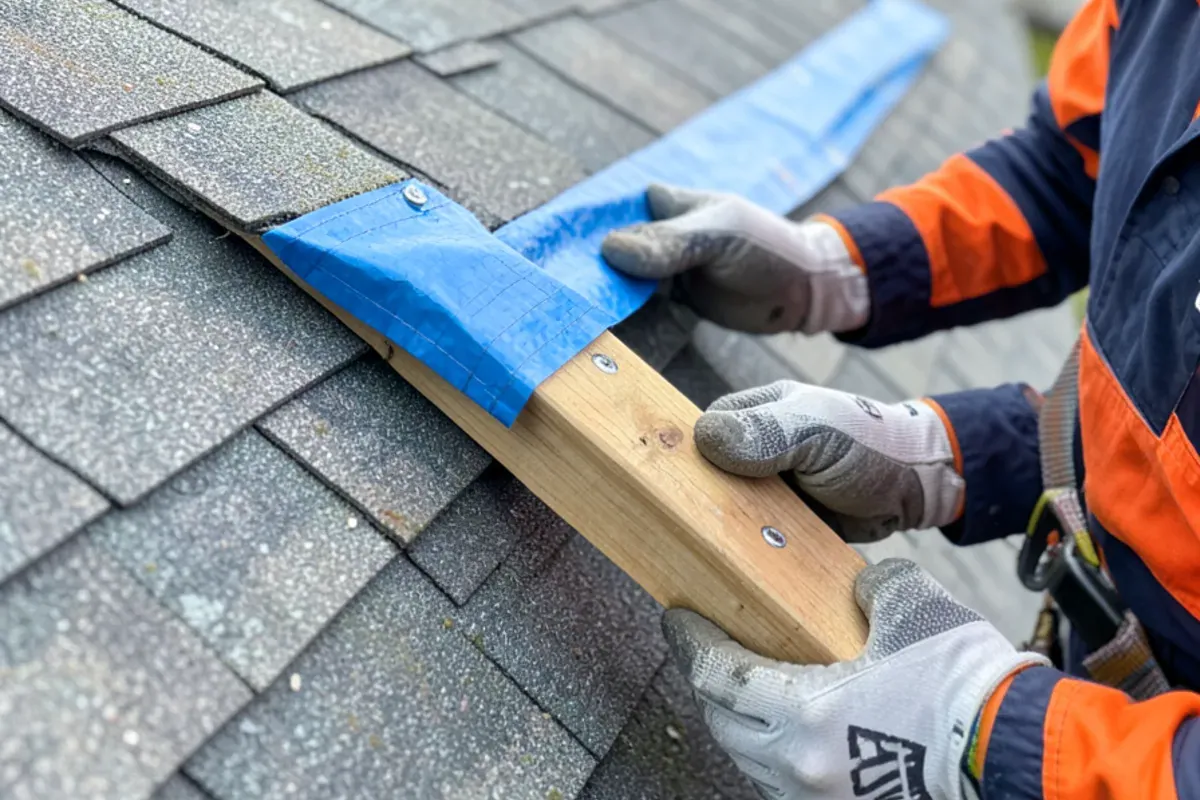
- Fold the edges around wood battens so the fasteners hold the batten, not the tarp.
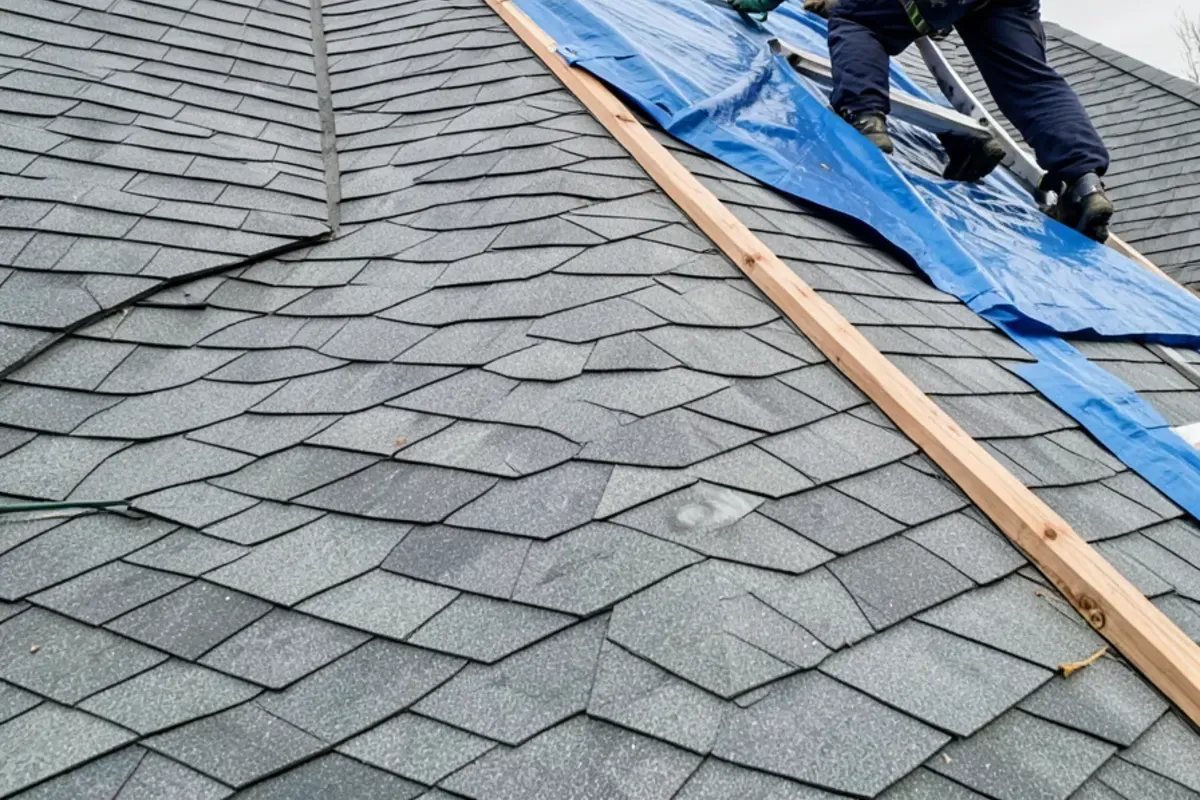
- Screw the battens into rafters or sound decking, pulling the tarp taut.
- Lay the lower edge over the lower roof or gutter line so water runs off and not under.
- Photograph the finished cover from the ground.
What goes wrong when a tarp is installed badly?
Most failed tarps fail in the first windy night. The causes repeat, and they are why a hurried homeowner tarp often needs redoing:
- Nails or screws through the tarp field instead of battens, which tear out and leave new holes
- A tarp that stops short of the ridge or the eave, so water runs under the top edge or behind the bottom edge
- Slack in the middle, which flaps, chafes the shingles and collects a pool of water
- Edges left loose at a hip or valley, where wind gets underneath
- Sandbags or bricks used instead of fasteners, which slide off a pitched roof
A tarp is also not a long-term cover. Left for weeks, it can rub granules off the shingles beneath and hold moisture against damp decking. Plan a permanent repair, and treat the tarp as a bridge.
DIY or professional: how do the options compare?
Roof shape and height decide it. This table separates the common situations.
| Situation | DIY tarp reasonable? | Why |
|---|---|---|
| Small hole, low single-story roof, dry | Possibly, with a helper | Reachable, gentle slope |
| Steep pitch or two stories | No | Fall risk, hard to anchor |
| Wet or windy | No | Slick surface, tarp acts like a sail |
| Tree or large debris on roof | No | Structure may be compromised |
| Missing ridge shingles | No | Ridge work is the most exposed |
Plastic sheeting or a bucket inside the attic is a different measure. It does not replace a cover on the roof, but it can direct water away from the ceiling until a roofer arrives.
How does a tarp affect your insurance claim?
A tarp helps the claim, because insurers expect you to prevent further damage. The California Department of Insurance tells owners to make temporary repairs such as covering damage with plastic sheeting or plywood, keep receipts, and hold off on extensive permanent repairs until the adjuster has inspected. Reasonable protection costs are reimbursed and count toward the settlement.
Photograph the damage before you cover it. A tarp hides what the adjuster needs to see, so take clear pictures of the opening, the shingles around it and any interior water stains first. Keep the tarp receipt and any invoice from a roofer who installs one.
A roofer cannot negotiate your claim for you. Only the policyholder, the insurer or a licensed public adjuster can. We document the damage, write the scope and meet the adjuster on site to walk the roof.
What we have seen on tarp calls around the East Bay
Tarps come up after wind more than after rain alone. One Alameda customer reported that a crew stopped by the same day after a windstorm and tarped lost ridge shingles. Another reported waterproofing within 24 hours of a windstorm. On a small skylight leak, Pedro sealed the problem from the truck before the owner had even hired anyone, so a full tarp was never needed.
Those are past customer experiences, not a guarantee of timing. When many roofs are damaged at once, every roofer is stretched, which is why a quick temporary measure inside the house matters.
We cover neighboring cities too. Oakland is roughly 12 minutes from the Webster St office, though tunnel and bridge traffic can change that.
What should you ask a roofer before the tarp goes on?
Five questions settle most disputes before they start:
- Is the tarp price a flat amount or time and materials, and is that in writing?
- Will the tarp be fastened to battens screwed into framing, with the damage photographed first?
- Who will do the permanent repair, and does the tarp charge go toward it or stand alone?
- Will you send photos of the tarp once it is on?
- What is your license number, and when can I check it at cslb.ca.gov?
Photos of progress sent the same day are something past Alameda customers report receiving, and they double as insurance records.
What should you do after the tarp goes on?
Treat it as a countdown. Check it from the ground after each wind event, look for pooling, and keep your claim photos organized. Then book the permanent repair. Our emergency roof tarping page explains what we do, emergency roof leak repair covers the dry-in and permanent fix, and the broader emergency roof repair hub covers leaks and rescue jobs. Alameda homeowners can also start from our home page.
Be wary of door-to-door offers after a storm. CSLB advises getting at least three bids, a written contract that details the work, and no cash payments, and says not to hire the first contractor who comes along. California caps a home improvement down payment at 10 percent of the contract or $1,000, whichever is less, and CSLB warns not to let payments get ahead of the work. Check any roofer's C-39 license at cslb.ca.gov before the tarp goes on.
If water is entering and you would rather not climb up there, call the office and describe the roof. A free estimate for the permanent repair can be scheduled once the opening is covered.