
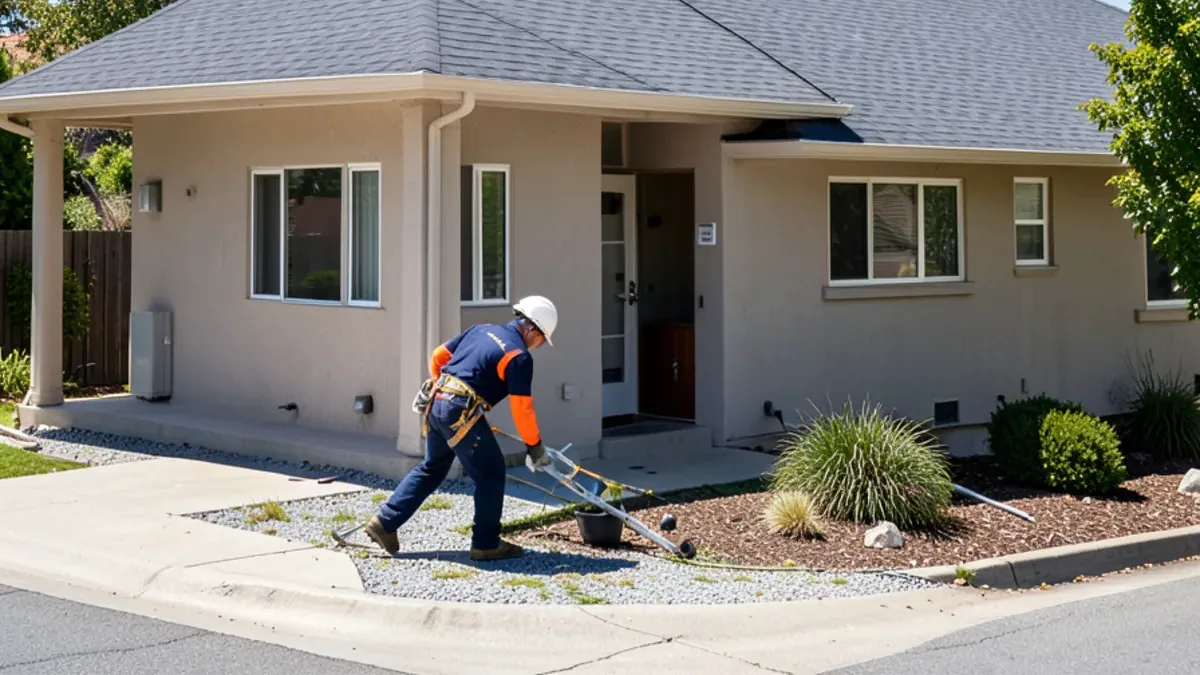
Check the roof before you sign a solar contract. Panels typically carry long warranties and sit on the roof for decades, so a roof near the end of its life should be replaced first. If it is not, you pay twice: once for the roof and again for your solar company to detach and reset the array.
Who supplies power in Alameda?
Alameda is served by Alameda Municipal Power (AMP), not PG&E. That matters for solar because the utility sets the interconnection process, the rebate programs and the billing credits. AMP's rebates page lists solar only as an income-qualified rebate for customers installing it at home, and it states that rebates are offered until approved funds are exhausted. Programs change, so confirm the current status and the terms with AMP directly before you count on any incentive. We quote no amounts here.
The City of Alameda's permit page also describes SolarAPP+, an automated process for qualifying residential rooftop solar installations. The solar permit and the reroof permit are separate. Ask both contractors who handles each one.
How old is too old for a roof under solar?
There is no single age. What matters is the remaining service life compared to the solar warranty. As a general industry range, many asphalt shingle roofs last roughly 15 to 30 years depending on the product and conditions. If your roof has fewer remaining years than the panels are expected to operate, replace it first. A roof with plenty of life left can stay.
Check these signs before deciding:
- Curling, cracking or bare patches on the shingles
- Soft spots underfoot or sagging along rafters
- Stains on ceilings or in the attic, especially around vents and valleys
- Rusted or lifted flashing at vents, chimneys and skylights
- A history of repairs in the area where panels would go
A roof inspection gives a straight answer on all of these, with photos you can show your solar installer.
What is the right order of work?
Roof first, then panels. The steps run like this:
- Inspect the roof and decide whether it needs replacing.
- If it does, tear off the old roofing and replace any bad decking.
- Install new underlayment, flashing and roofing.
- Pass the City's final inspection for the roof.
- Your solar company installs mounts, flashing and panels.
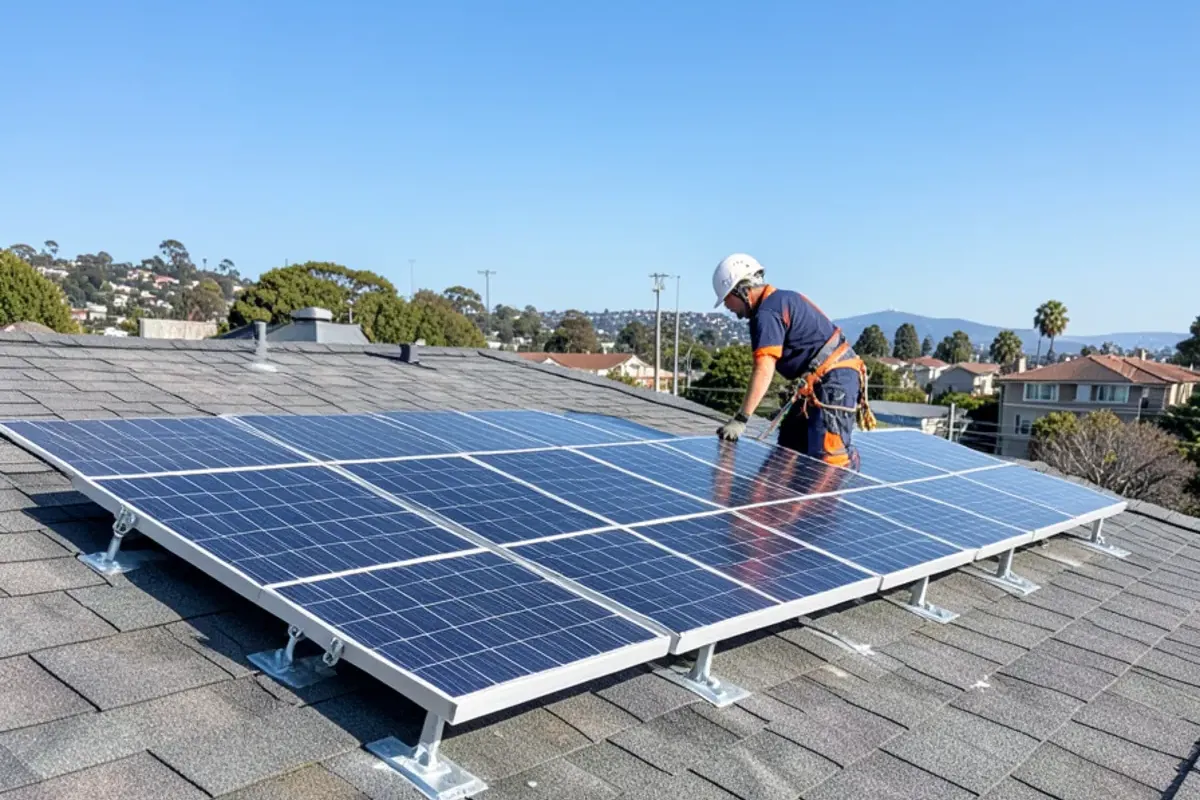
Your solar company handles the panels. We time the roof work around their schedule, and the two crews agree on who flashes the mount points. If the panels are already up and the roof needs work, the solar company detaches them, we reroof, and they reset the array afterward.
Which comes first in your situation?
| Your roof today | Sensible order |
|---|---|
| Newer, no leaks, sound decking | Solar now, with flashing at the mounts checked |
| Mid-life, minor repairs needed | Repair first, then solar, and recheck the plan |
| Near end of life or leaking | Reroof first, then solar |
| Panels already installed, roof failing | Solar company detaches, reroof, solar company resets |
Mid-life roofs are the hard call. A roofer's inspection should give a written view of how many years remain, and the answer feeds the decision. If the gap between the roof's remaining life and the panel warranty is large, reroofing first is cheaper than reroofing later.
What does solar-ready roofing mean?
It means the roof is ready to carry panels without surprises: sound decking, new flashing, a clear plane and a roofing product that will last as long as the array. For a reroof ahead of solar, that includes replacing aging vent boots and flashing now, while access is easy, and keeping penetrations away from where rails will sit. The solar-ready roofing page covers the details, and the broader roof replacement overview shows what a reroof includes.
If solar is only a possibility in the next few years, tell the roofer at the estimate. It can change how plumbing vents and flashing are placed.
Does the roof type change how panels are mounted?
Yes, and it changes what the roofer and the solar crew must agree on.
- Composition shingle: mounts bolt through the shingles into the rafters, and each one needs flashing sealed under the course above. The roofer's flashing and the solar crew's mounts have to be a matched pair.
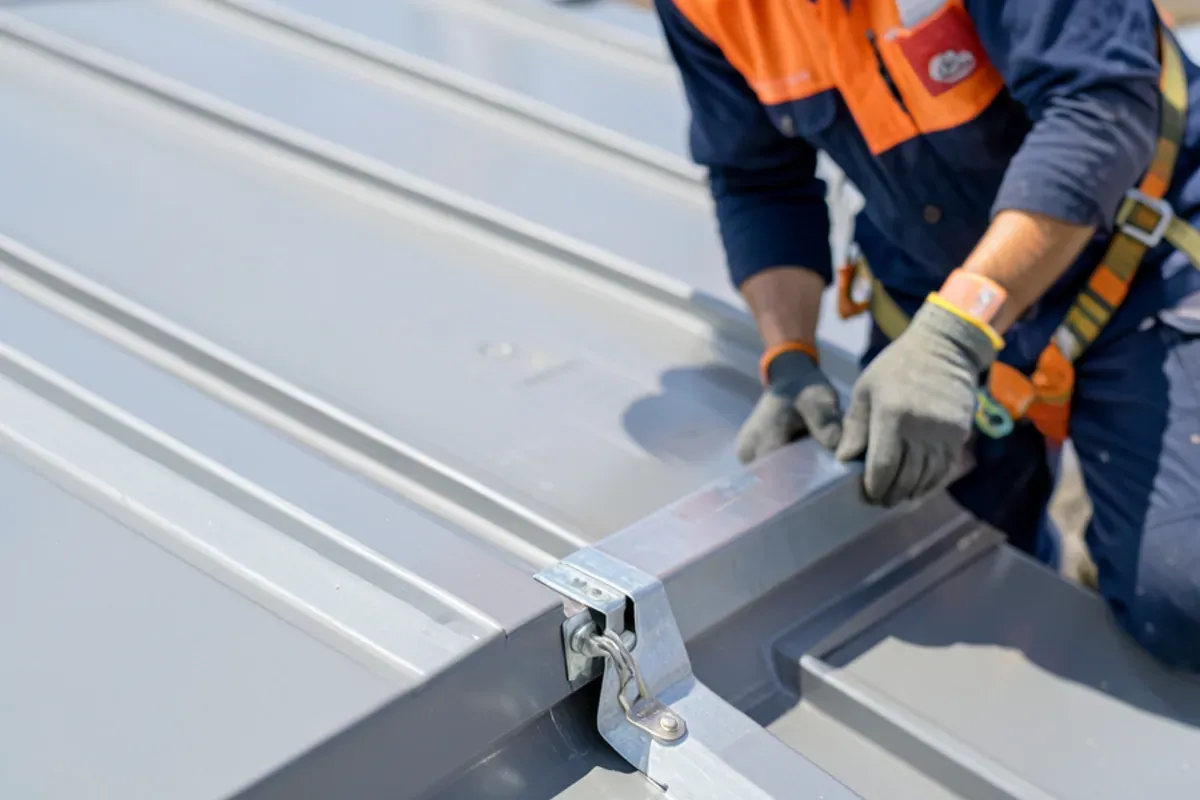
- Standing seam metal: many systems clamp to the raised seam, so the panel is not drilled. That avoids new holes but depends on the panel profile and the installer's hardware.
- Tile: mounts replace or lift individual tiles, and tiles can crack. Extra tiles and a plan for breakage matter.
- Flat or low-slope: ballasted racks or attached frames need a membrane protected from foot traffic, so ask for walk pads and keep the drains clear.
The trade-off is cost against holes. Clamp mounting on metal leaves fewer leak paths, but a metal reroof costs more than shingles. Ask both companies to explain the attachment method in plain words before anyone signs.
Where should vents and skylights go before panels?
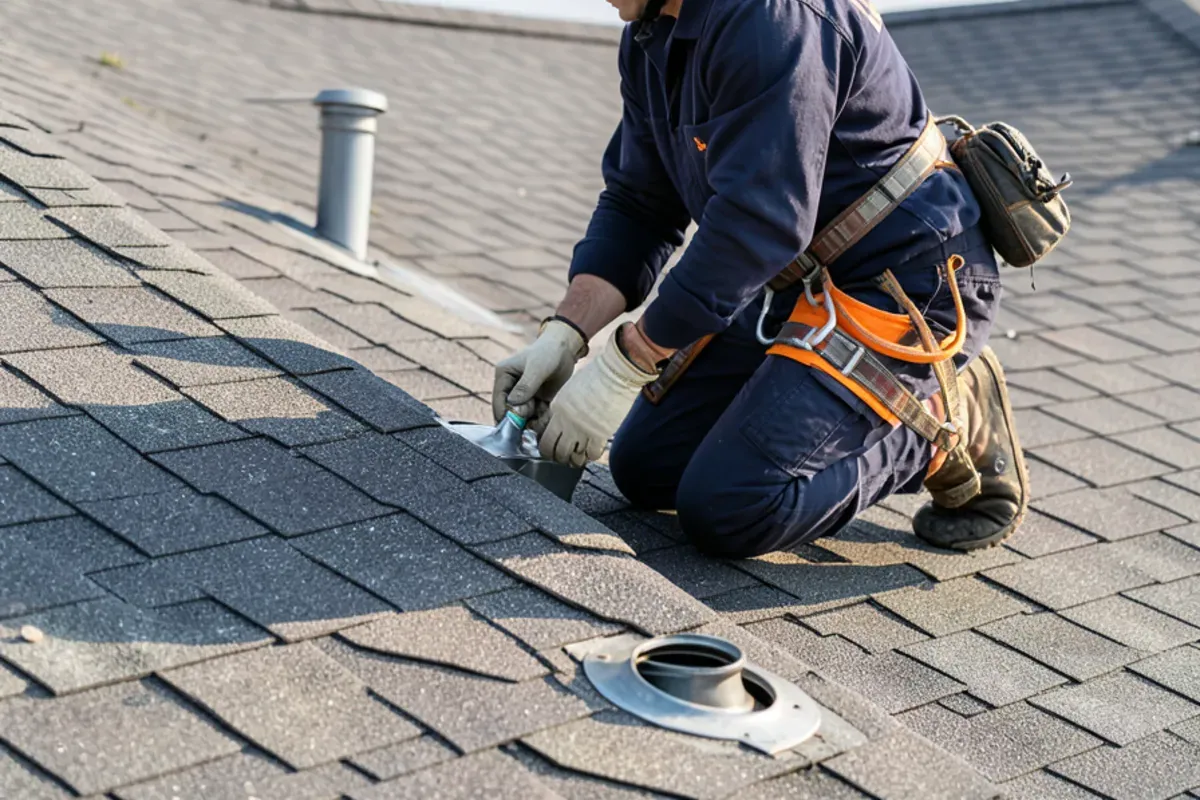
Plan them before the array layout is drawn. Plumbing vents, attic vents and skylights sit where panels want to sit, and moving them later means flashing work around live equipment. During a reroof the crew can replace worn vent boots and flash a skylight curb while the roof is open. Moving a plumbing vent pipe itself usually needs a plumber, so raise it early. Ask the solar designer for a sketch of the planned array, then mark the penetrations on the same drawing.
If the panels are going on a skylit roof, remember that a skylight under or beside an array is harder to service. Our new roof installation page covers how a reroof is staged, and asphalt shingle roofing covers the covering choices.
What it costs to get the order wrong
Detaching and resetting an array is a separate charge from your solar company, and the price varies by system size, so get it in writing. A tear-off cannot happen under panels, so they come off first. That timing means two scheduling windows, and a gap between them can leave the roof open to rain. Alameda gets about 22 inches of rain a year, nearly all of it from October to April (BestPlaces), so plan the reroof and the reset for the dry months where you can.
What we have seen on Alameda roofs
Field experience on Alameda jobs includes reroofs finished in one day on several homes and about 10 hours on one, which matters when a solar crew is waiting to start. Skylights have been replaced with the reroof, and attic vents replaced as well. One Alameda customer reroofed partly to save on homeowners insurance, and another had insurance cancelled over an aging roof without an inspection. An old roof can affect more than the panels.
Questions to ask your solar company about the roof
- Who is responsible if a mount leaks, and for how long?
- What flashing do you use at each attachment point?
- What do you charge to detach and reset the array for a reroof?
- Will you walk the roof with my roofer before the install?
- Does your install change the roof's workmanship warranty?
The terms of any roof warranty go in your contract in writing, and so do the solar company's. Put the two side by side before you sign either.
Check the roof before the solar quotes
Before you collect solar quotes, get the roof looked at. Call or request an estimate, tell us the roof's age and where you want the panels, and we will give you a written view on whether to reroof first. We work across Alameda, with the nearby cities on the service areas page, and will coordinate with your solar company on timing. Your written estimate is the number that counts, so get the solar company's removal and reset price in writing too.