
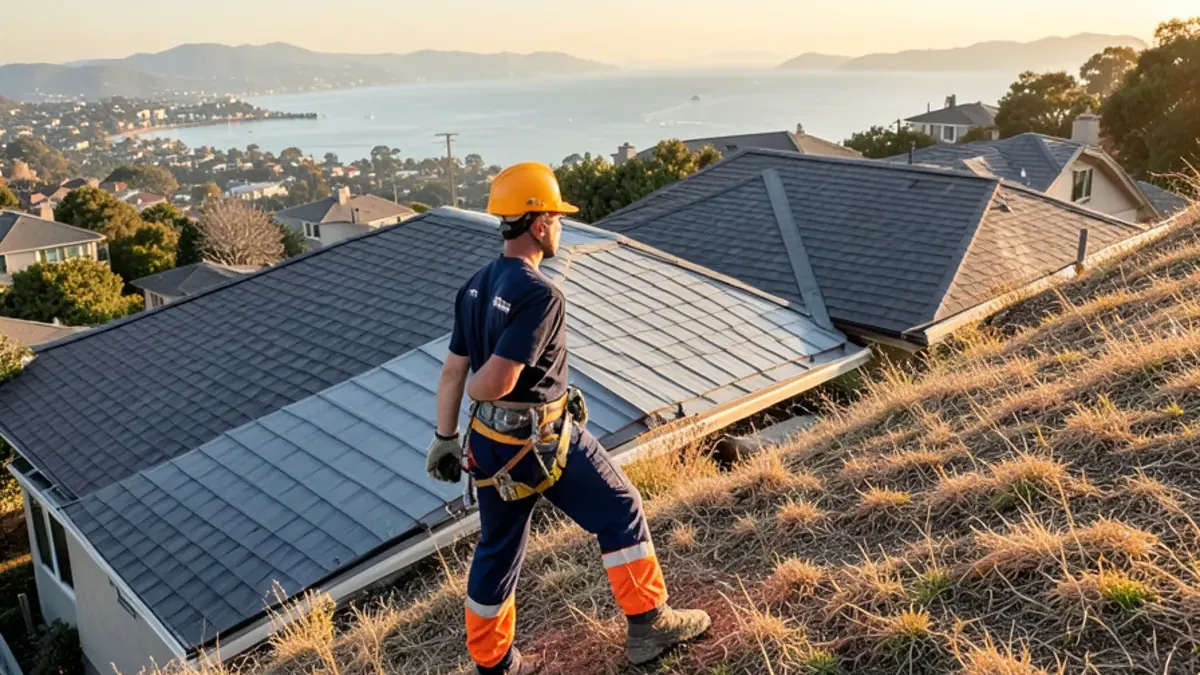
A wildfire-ready roof has four parts: a Class A roof covering, ember-resistant vents, noncombustible gutters and a roofline kept free of leaves and needles. In the Oakland and Berkeley hills, a reroof is the right time to fix all four, because the roof is open and the cost of each upgrade is lowest.
What is a Class A roof?
Class A is the highest fire rating for roof coverings. Under the California Wildland-Urban Interface Code, roofs in Fire Hazard Severity Zones must meet a Class A classification, tested under ASTM E108 or UL 790, and some coverings such as masonry, certain metal and tile on noncombustible decks are treated as equivalent. Class A is a rating for the whole assembly as listed, not just the top surface, so the underlayment and installation method have to match the listing.
Oakland requires a Class A roof for new construction in its Wildland-Urban Interface Fire Area. For existing homes it recommends hardening and calls the other upgrades strongly encouraged, not required. Berkeley recommends a Class A fire-rated roof and notes that wood shake or shingle roofs can catch fire easily. Berkeley also runs a transfer rebate for qualifying homes in its High and Very High Fire Hazard Severity Zones, where the cost of installing a Class A roof can qualify. Ask the City for the current terms.
Which materials meet Class A?
Many fiberglass-based asphalt shingles carry a Class A listing, and so do metal roofs, concrete and clay tile and slate. Wood shake and shingle are the weak choice in these zones. Check the product's listing and the manufacturer's installation requirements, since the rating depends on installing it as listed. A metal roof with a noncombustible underlayment is a strong choice on a hillside house, and the roof replacement page covers the other options.
Material choice also changes the rest of the job. Heavy tile needs the framing checked. Metal needs the right coating and fasteners. Both are easier to plan when the full scope is on the table at the start.
Why vents and eaves matter
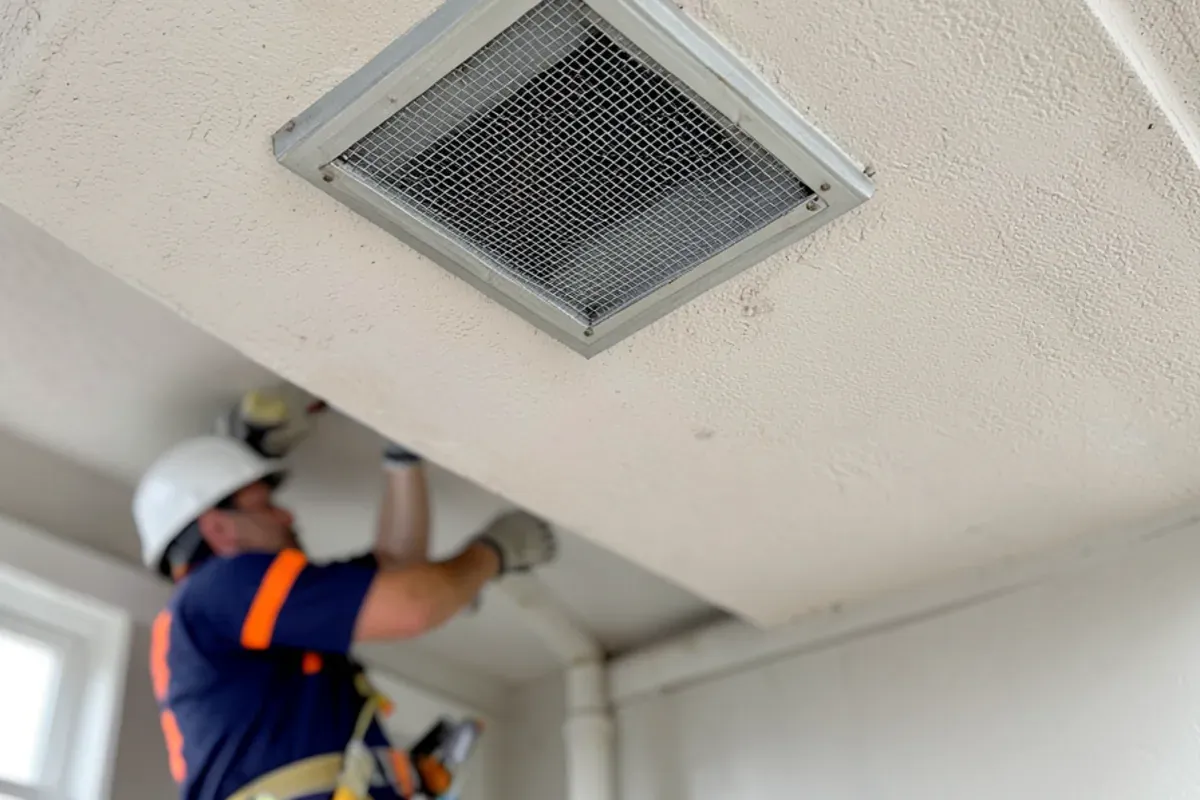
Embers drift on the wind and enter wherever air can. According to the City of Oakland, vents are one of the most common ways embers get into a home, and standard quarter-inch screens have openings large enough for embers to pass through. Oakland lists three levels:
- Inspect every vent and repair damage, gaps and melt-prone plastic or fiberglass mesh
- Replace quarter-inch screens with fine 1/8 or 1/16 inch metal mesh that will not burn
- Replace vents with CAL FIRE-approved ember-resistant models, which still let the home breathe
Open soffits trap heat and embers beneath the roof. Oakland suggests sealing exposed rafter ends and, when replacing, enclosing open eaves with a flat soffit of a noncombustible material such as fiber cement or stucco.
What about gutters and the roofline?
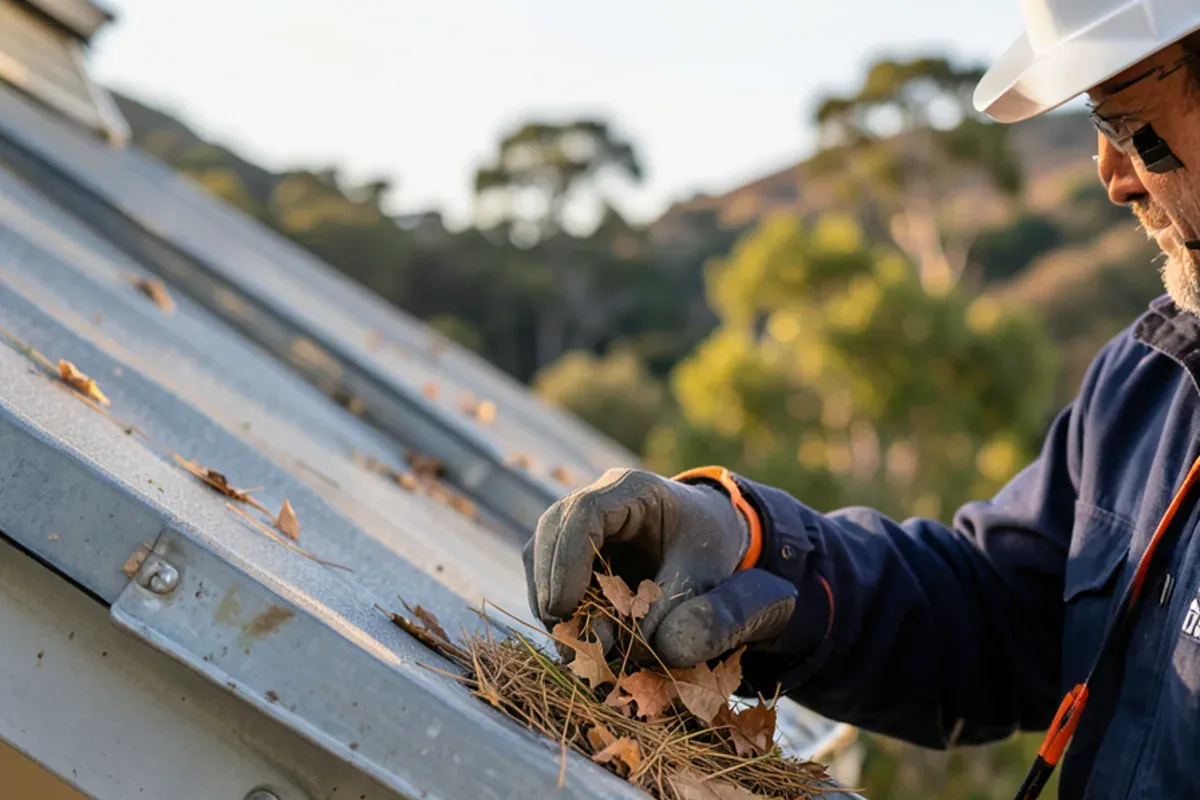
Gutters collect the debris embers like best. Oakland notes that vinyl gutters can melt or catch fire directly, exposing the roof edge, and that leaf buildup gives embers a place to catch along the roofline. The City suggests cleaning gutters before fire season and repeating that every spring and fall. When gutters are replaced, choose aluminum or steel and add a metal drip edge. Metal mesh guards resist embers far better than plastic covers.
Berkeley says covering vents with metal mesh is critical and runs a Home Hardening Mesh Program that offers free mesh. Berkeley also notes that enclosing gutters lowers the chance of embers entering these areas.
Oakland's Defensible Space page adds that Zone 1, five to 30 feet from structures, should have dead plants, leaves and pine needles cleared from the yard, roof and gutters. The City describes Zone 0, the five feet around the home, as the most crucial area for stopping embers, and said draft Zone 0 regulations were released in late April 2026. Check the City's page for the current status.
Does a reroof trigger the Class A rule?
Where the code applies, it can. Los Angeles County's published notes for its fire zones say the whole roof covering must be Class A when more than 50% of the roof area is replaced in a one-year period, and that wood shingles and shakes are prohibited in any Fire Hazard Severity Zone. That is one county's reading, not Oakland's or Berkeley's, so ask the building department how it applies the rule to your parcel and ask it in writing.
The practical takeaway is not to phase a reroof to stay under a threshold. A roof half done in March and half in October gives you two sets of seams, two inspections and a mixed fire rating. If you are replacing the covering anyway, specify Class A for the whole assembly.
What do hillside reroofs involve that flatland jobs do not?
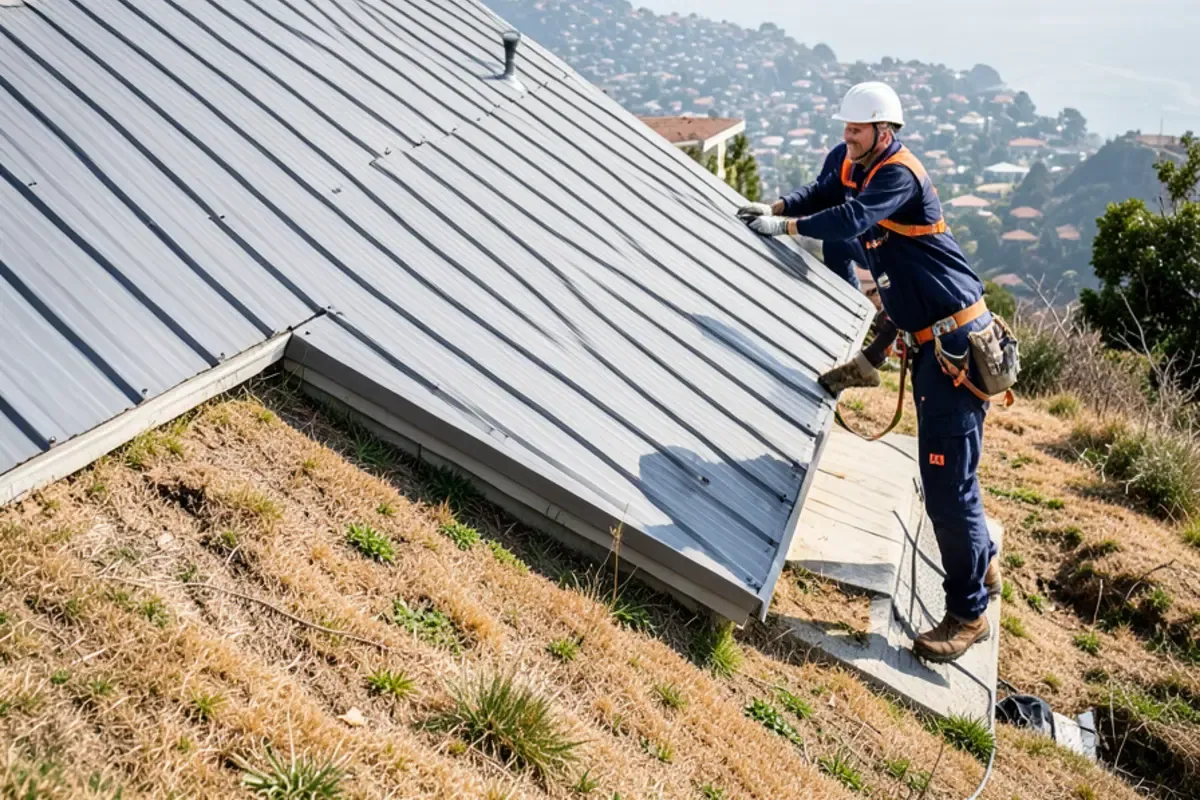
Access and handling drive most of the difference. Narrow, steep streets limit where a dumpster and a delivery can sit. Roofs on slopes often sit well above street level, so material moves by hand or conveyor. The crew works at a steeper pitch with more fall protection, and a debris plan matters when dry vegetation sits below the eaves.
Here is how to prioritize the hardening work if the budget is tight.
| Upgrade | Best time | Why |
|---|---|---|
| Class A covering | At reroof | The roof is open and the rating applies to the assembly |
| Metal mesh on vents | Any time | Low cost, quick, and Berkeley runs a free mesh program |
| Enclosed eaves | At reroof or fascia work | The soffit is already exposed |
| Metal gutters and drip edge | At reroof | Ties into the new edge detail |
| Gutter cleaning | Spring and fall | Zero cost and repeats |
Do the cheap items first, but plan the covering and eaves as one project. Tile roofing is another noncombustible option, and the framing needs a check before you commit.
A fire-season roof checklist
- Clear leaves, needles and debris from the roof, valleys and gutters
- Inspect every vent and cover it with fine noncombustible mesh
- Check eaves and soffits for gaps and seal them
- Replace any vinyl gutters with aluminum or steel
- Check the ridge and hip caps for missing pieces
- Look at the roof covering and confirm it carries a Class A listing
- Keep trees trimmed back from the roof edge
Oakland inspects every parcel in its Wildland-Urban Interface Fire Area for vegetation each year and gives owners 45 days to correct problems, so the roof-adjacent items are not only good practice.
What we can offer from Alameda
Attic venting repairs are on our Google listing, and vents have been replaced as part of reroofs. Past Alameda jobs have included roofline trim, soffits, fascia and gutters replaced on a ranch home, gutters installed after a reroof, and a metal roof installed after a shingle tear-off. We cover Oakland and Berkeley. The drive from our Webster St office depends on tube and bridge traffic, and hillside access can add labor, so expect that on the estimate.
Your written estimate is the number that counts, and it should list vents, soffits, gutters and drip edge as separate lines. The wider list of cities is on the service areas page. To plan a hardening reroof before next fire season, call or request an estimate and tell us your address zone and roof age.