

Do these checks in September or early October: clear gutters and downspouts, look at the shingles from the ground, check flashing and vents, clear valleys and look at the attic on a dry day. Fix small problems before the first storm, because Bay Area rain arrives in a block. Alameda gets about 22 inches a year, nearly all between October and April, on about 66 days (BestPlaces).
What should be on a fall roof checklist?
The list below is ordered by how often each item causes a leak. Most of it can be done from the ground or a ladder.
| Check | Where | Do it yourself? |
|---|---|---|
| Gutters and downspouts clear and draining | Eaves | Yes, from a stable ladder |
| Missing, cracked or lifted shingles | Roof surface | Look from the ground |
| Valleys free of leaves and needles | Where two slopes meet | Roofer if hard to reach |
| Flashing and sealant at walls, chimneys, skylights | Roof joints | Look, but leave repair to a roofer |
| Plumbing vent boots and exhaust vents | Roof penetrations | Look from ground, roofer repairs |
| Attic stains, daylight or damp insulation | Underside | Yes, on a dry day |
| Branches touching or overhanging the roof | Yard | Trim small ones |
Gutters and downspouts first
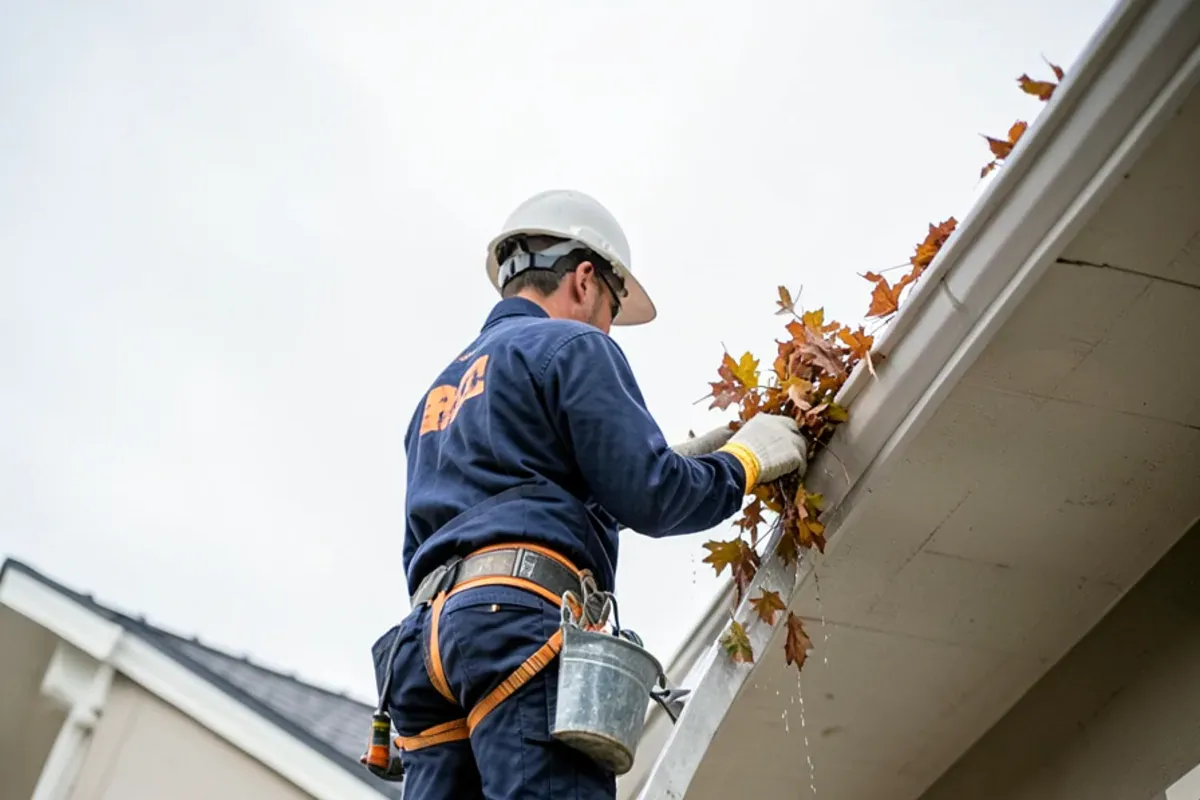
Clear them before the first rain, run a hose to confirm the water leaves the downspouts and check that the gutter slopes toward them. A clogged gutter sends water over the edge onto the fascia and wall, and the stain is often mistaken for a roof leak. Look for sagging runs, loose hangers and rust at seams.
Gutters under big trees need cleaning more than once. If you do not want to climb a ladder, hire it out, since a ladder fall is a bigger risk than a dirty gutter.
What to look at on the roof
Use binoculars from the yard. Look for shingles that are curled, cracked or missing, bare areas where granules have worn, and a ridge line that looks wavy. Streaks of exposed black felt or bright metal mean something is out of place. Compare to photos from last year if you have them.
Then move to the places where leaks begin. Flashing around chimneys and where a roof meets a wall is the most common. Next are plumbing vent boots, whose rubber collars crack in the sun, and skylight curbs. Past Alameda customers include resealed flashing on three skylights instead of replacing them, which is the kind of repair a fall check can head off.
How to check the attic
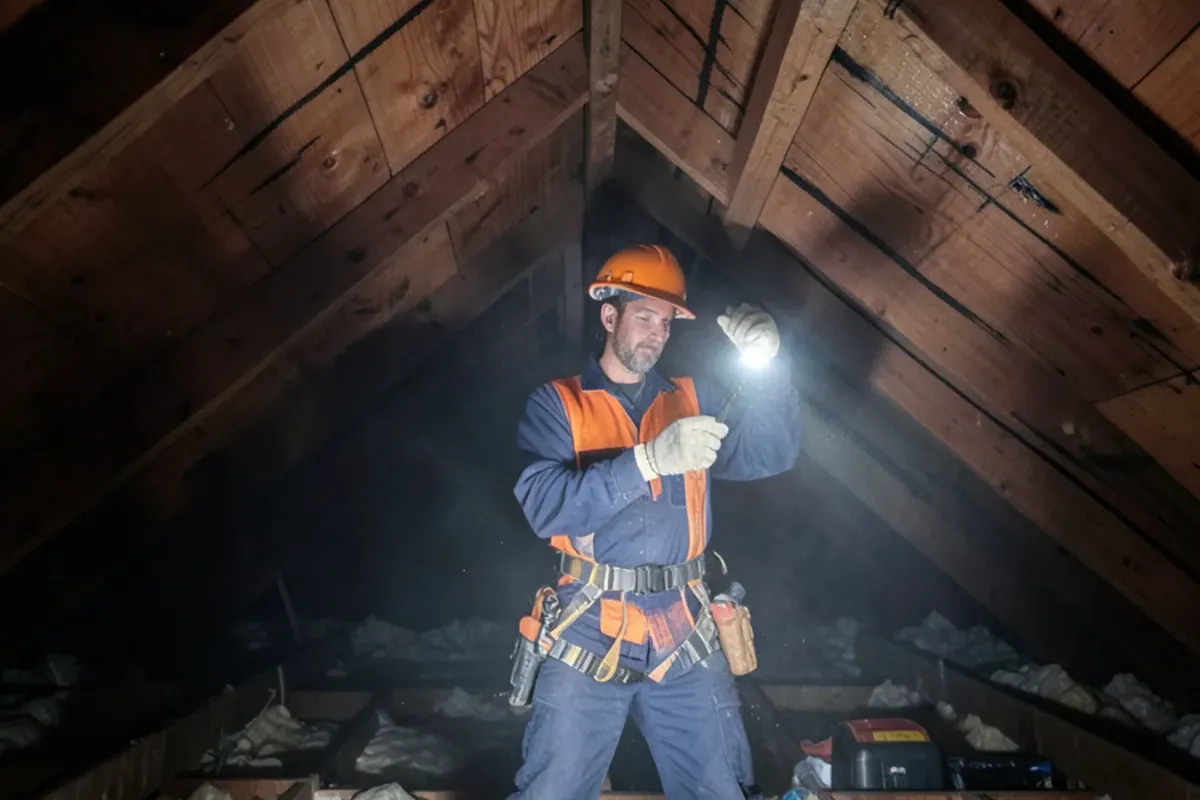
Go up on a dry day with a flashlight. Look at the underside of the decking, especially near vents, chimneys and valleys. Dark stains, daylight through boards, damp or compressed insulation, rusted nail tips and a musty smell all point to water or poor ventilation. Photograph anything you find and mark it with chalk or tape so a roofer can find it.
Moss, trees and shaded slopes
Shaded north slopes and roofs under trees stay damp through winter, and damp roofs grow moss and algae. A little algae is cosmetic. Thick moss lifts shingle edges and holds water against the roof, so note where it is growing and mention it to a roofer. Do not scrape it off with a hard tool or aim a pressure washer at shingles, because both strip granules. Trim branches back so the roof gets sun and wind, and keep leaves from piling up in valleys.
A one-hour fall routine
If you only have an hour, do it in this order:
- Walk the property and look at all roof slopes with binoculars.
- Clear the gutters and test the downspouts with a hose.
- Check the attic with a flashlight.
- Photograph anything odd with a date on the file name.
- Call a roofer about anything above the gutter line.
A season plan from September to March
Spread the work so nothing waits for the first storm. Alameda's rain falls mostly between October and April (BestPlaces), so the dry months are the working window.
| When | Task | Who |
|---|---|---|
| September | Gutters, downspouts, valleys, attic check | You, or hire out the ladder work |
| Late September | Photograph the roof and book repairs found | You, then a roofer |
| After the first heavy rain | Ceilings, attic and downspout outlets | You |
| After any strong wind | Ridge, edges and loose shingles from the ground | You |
| December to January | Quick look in the middle of the wet season | You |
| March or April | Spring check of storm damage and moss | You, then a roofer if needed |
Keep each round's photos in one folder with the date in the file name. A short run of dated photos shows a roofer, a buyer or an insurer what changed.
How do I use a ladder safely at the gutter line?
Falls are the biggest risk in this checklist, so treat the ladder as the job. OSHA's guidance for extension ladders sets the base one foot out from the wall for every four feet of height, and says the ladder should reach at least three feet above the landing or be secured at the top. Keep three points of contact, which means two hands and a foot, or two feet and a hand, on the ladder at all times.
Add three habits. Set the feet on firm, level ground, not on wet leaves. Never carry a bucket in one hand while climbing, and hoist it with a rope instead. Skip the ladder in rain, wind or when you feel unsteady. If the gutters are on a second story, hire a roofer or gutter cleaner. Gutter cleaning is the ladder part of this list.

Which small repairs are worth doing before October?
Not every finding needs a full replacement. These are the items past customers and typical inspections tend to turn up, in the order a roofer would fix them.
- Reseal or replace a cracked vent boot.
- Re-secure a loose ridge cap or hip piece.
- Replace individual cracked or missing shingles.
- Reseal exposed nail heads and flashing joints with the right sealant.
- Clear a clogged valley or downspout.
- Schedule a deeper look at the attic if stains show.
A roof inspection before the rains costs one visit and gives you a ranked list, which is easier to act on than a vague worry. For houses where the covering is near the end of its life, residential roofing explains what replacement involves.
What to leave to a roofer
Leave anything that needs you on the roof: resealing or replacing flashing, replacing a vent boot, re-securing a ridge cap, valley repair and shingle replacement. Roofers work with harnesses and roof jacks, and they know which fasteners and sealants suit your roof. A small repair now costs far less than the water damage it prevents. The roof maintenance page explains what a maintenance visit covers.
What we see before the rains
Past Alameda customers describe honest advice before the season: one was told to wait rather than replace, and another got advice on keeping old shingles going. Gutters have been cleared of junk during a roofing job. After strong winds, one customer had a roofer stop by the same day and tarp lost ridge shingles. A fall check reduces the odds that you need that kind of visit.
After the first storm
Walk the property the morning after the first heavy rain. Look at the ceiling, the attic and the walls under the eaves for new stains. Check the downspout outlets for pooling and the ground near the foundation. If something shows, photograph it, put a bucket under any drip and call. Water that finds its way in once will do it again.
Getting a fall check done for you
If you want a fall roof check done for you, call or request an estimate. Tell us the roof's age and anything you noticed last winter. Our base is in Alameda, and the full list of towns we visit is on the service areas page. We will give you a written list of what needs fixing before the rains and what can wait.