
Should you choose a skylight or a solar tube?
Choose a skylight for a view, a lot of light and, in some models, ventilation. Choose a solar tube for a small, interior room such as a hallway, closet or bathroom that needs light through a smaller opening. Both bring daylight, and both can leak if the flashing is poor.
Solar tube here means a tubular daylighting device, sometimes called a sun tunnel. It is unrelated to solar panels and makes no electricity. ENERGY STAR treats skylights and tubular daylighting devices as related products, rated for heat loss and solar heat gain by certified labs.
| Skylight | Solar tube | |
|---|---|---|
| Opening in roof | Larger | Small, round |
| Light | Broad, with a view of the sky | Soft, diffused, no view |
| Ventilation | Available on venting models | None |
| Framing | May need rafters cut and a shaft | Often fits between rafters |
| Heat gain and loss | Depends on glass rating | Smaller area, depends on dome and diffuser |
| Leak points | Curb, flashing, seal | One flashing collar |
What does each one need from the roof?
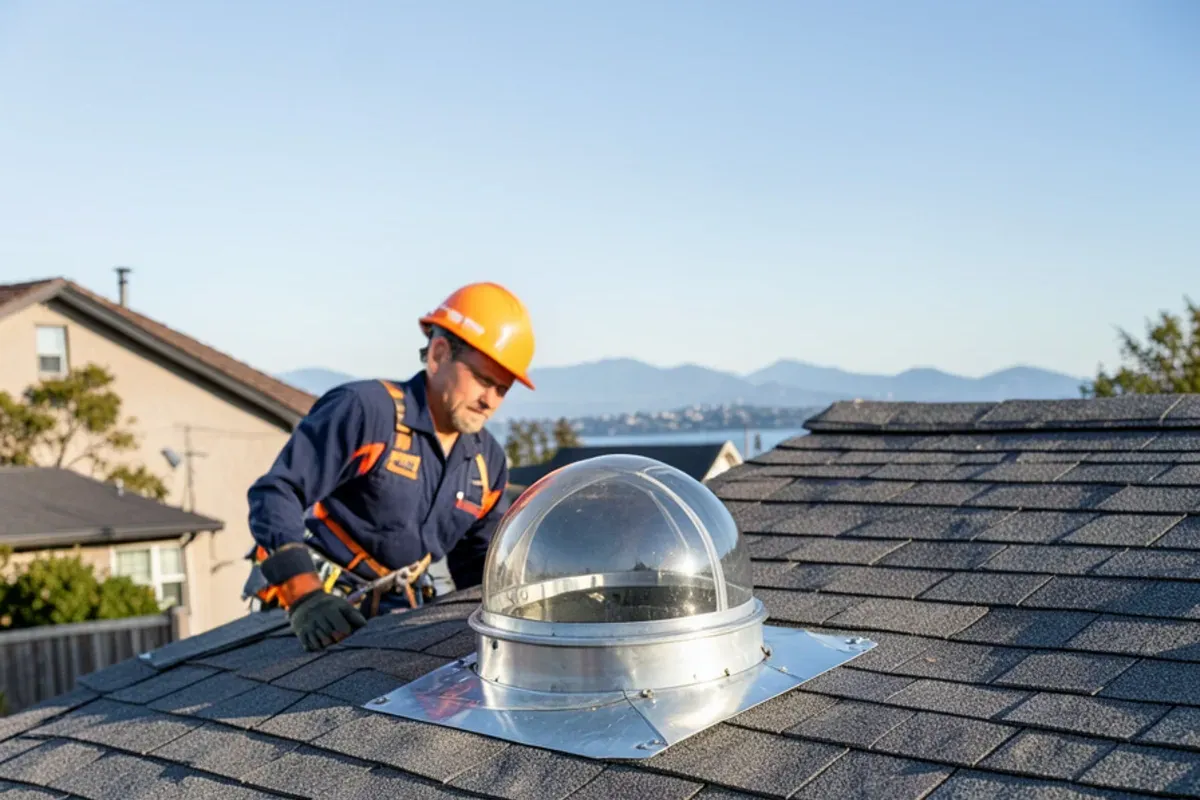
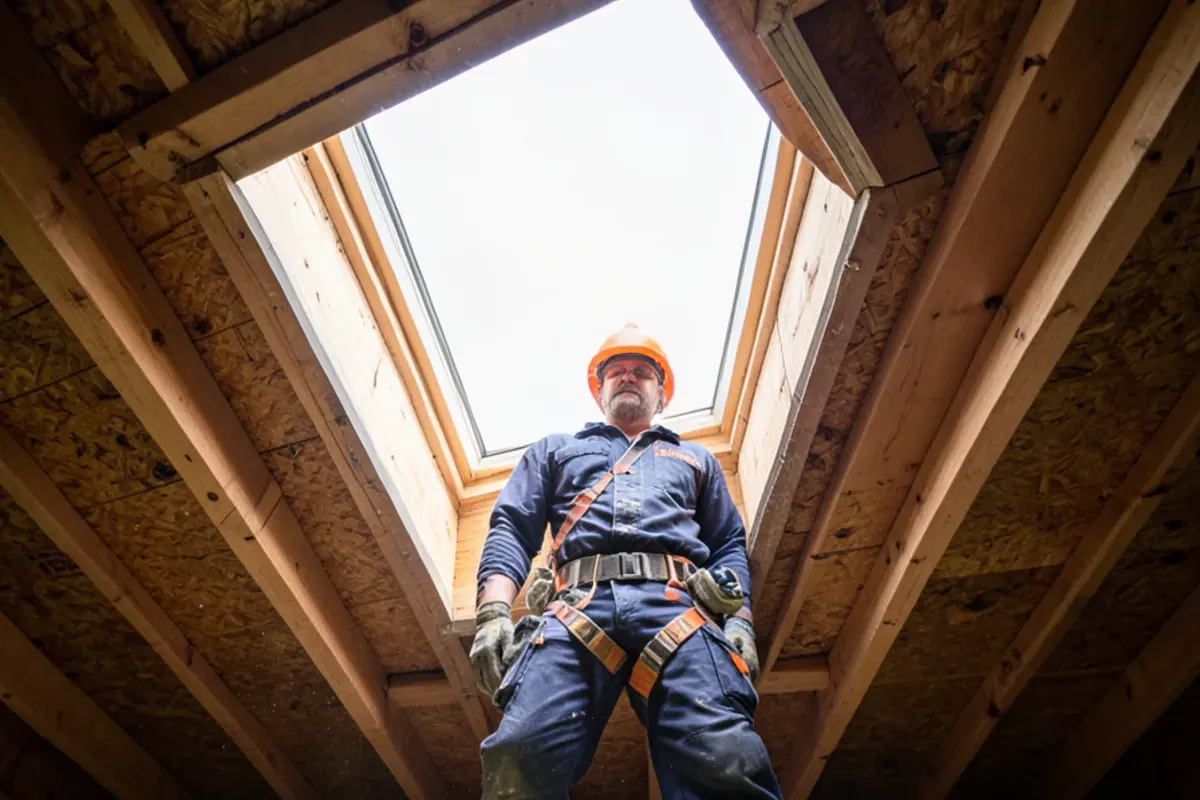
A skylight is a bigger cut. It may need framing changes, a curb or flashing kit, and a finished shaft inside, so it touches the roof structure, the attic and the ceiling. A solar tube needs a round hole, a flashing collar and a tube run, usually between rafters.
Both need a dry attic path and a plan for insulation and air sealing where the unit passes through. Ask the estimate to state the unit model, the flashing kit and who pulls any permit. Roofs where shingles are old are better handled with a reroof first or at the same time, so the flashing is new.
Which fits which room?
Match the unit to the room before you match it to the price. This table is a starting point for a walk through the house with the estimator.
| Room | Usual lean |
|---|---|
| Windowless hallway or closet | Solar tube, since a small opening is enough |
| Small bathroom | Either; a tube avoids steam on large glass, a skylight adds a view |
| Kitchen or living room with a high ceiling | Skylight, for broad light and sky views |
| Bedroom | Skylight with a shade, or a tube, depending on early morning light |
| Room under a deep attic run | Tube, but a long run loses light, so the length matters |
| Room you want ventilated | Venting skylight |
A tube's light drops as the tube gets longer and as it bends, so ask for the run length in the estimate and tell the estimator if there are turns. Whichever unit you choose, put it where the roof can take it: a clear patch of sound shingles away from valleys, chimneys and other penetrations.
What does an installation visit involve?
The work runs from the inside out. A roofer locates the spot from inside the attic, marks it on the roof, and cuts the opening. Framing is added if rafters are cut, the curb or flashing kit goes in, the shingles are lapped over the flashing, and the shaft or tube is connected below.
- Walk the attic and the room with the estimator and agree the position
- Mark and cut the roof opening, adding framing where rafters are cut
- Set the curb or collar and flash it into the shingles, working from the downslope edge
- Seal the unit and check the surrounding shingles
- Install the shaft or tube and diffuser from the attic side
- Finish the ceiling opening and clean up
Interior finishing is a separate scope from the roof work, so ask who handles the shaft walls and paint. We fix the roof and document any interior damage; the estimate should say what is and is not included.
What should the estimate state?
Get every one of these in writing, because they decide how the unit performs and who pays when it does not:
- The unit model and its U-factor and solar heat gain ratings, which ENERGY STAR requires to be certified for qualifying products
- The flashing kit and how it ties into the shingles
- Who pulls the permit, since work that changes the exterior of a home in Alameda can need Planning review as well
- What happens to shingles near the opening
- The warranty terms, in the contract and not by phone
Which brings in more daylight?
A skylight does, per unit. A solar tube delivers a steady, diffused glow that helps a room without windows but does not provide a view. A skylight lights a larger space and shows the sky.
The glass matters. A skylight's rating for heat loss and solar heat gain affects comfort, and both skylights and tubes carry labels you can compare. If a room gets too warm in summer, ask about coatings, shades or a smaller unit.
Which is better for a bathroom?
Both work. A bathroom skylight with a good vent fan gives light and a view, while a solar tube gives light with less glass overhead and less worry about steam on glass. Whichever you pick, run a fan that vents outdoors. Moisture from showers condenses on cold glass and on a tube's diffuser, and a stain below the unit can look like a leak when it is only humidity. If a stain appears, ask a roofer to check whether it is humidity or water from outside before assuming either.
What drives the cost of each?
The unit is only part of the bill. These factors move the price for both types:
- Unit size, model and glass or dome type
- Whether rafters must be cut and framed
- Length and shape of the shaft or tube run
- Ceiling finish, trim and paint inside
- Roof pitch, access and shingle condition
- Whether the work happens with a reroof or on its own
Doing the work during a reroof saves duplicate flashing and avoids cutting into a roof that is about to be replaced. A skylight added to an old, worn roof can leave you paying for the roof twice. Ask what happens to the surrounding shingles and the warranty terms in writing before you sign.
Do skylights and solar tubes change heating and cooling?
Yes, a little, and mostly through the glazing. A large skylight gains heat in summer and loses it in winter more than a small tube does. Ratings for heat loss and solar heat gain are on the label, and they decide how much a unit helps or hurts. Pick the smallest unit that gets the light you need, and put shades or coatings on any skylight that faces a hot afternoon.
How do the leak risks compare?
Leaks come from flashing, not glass. The California contractors' board says interior water damage is commonly caused by leaks from a weathered area of the roof or by poorly installed flashing around chimneys and skylights. A tube has fewer joints and one round collar, so it has less exposure. A skylight has a curb or frame on four sides, plus the flashing that ties into the shingles.
What counts is how the unit is flashed into the roof, the condition of the shingles around it and how it ages.
What we see on skylight work in Alameda
An Alameda customer had a skylight replaced during a reroof, which meant the new flashing and the new shingles went on together. Another had three skylights resealed rather than replaced, and a third came to us with a skylight leak that began after another roofer's reroof. The lesson is the same for both types: watch the flashing and the surrounding roof.
For options and process, see the skylight installation page, the wider skylights overview and the skylight repair page. Prices depend on the roof, the framing and the finish, so we do not publish a figure for either type. If you want a written estimate for one, call us or ask for a free estimate.