
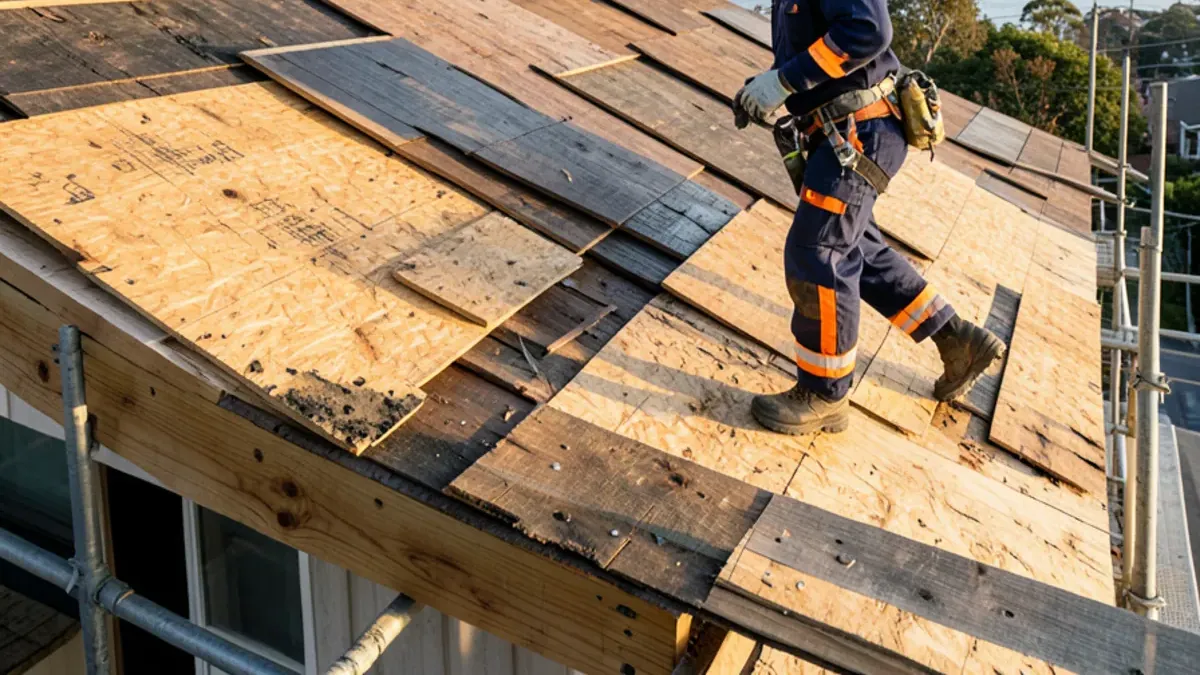
How do you know if roof decking is rotted?
Rotted decking announces itself with sag, soft spots and stains on the attic side of the roof. If the roof bounces or dips between rafters, if shingles look wavy over a stretch, or if the sheathing above a ceiling stain is dark and crumbly, the decking is likely compromised. Stand in the attic with a flashlight and press the wood with a screwdriver. Healthy wood resists. Rotted wood pushes in.
Decking is the plywood or board layer under the shingles that nails and holds the roof together. When it fails, new shingles over it will fail too.
What causes decking to rot?
Rot needs sustained moisture. USDA Forest Products Laboratory research puts the threshold for decay fungi at roughly 20% wood moisture content. A roof gets there through three paths:
- Repeated leaks. A slow flashing or vent leak wets one patch for years.
- Condensation. Poor attic ventilation, plus warm air from the house, wets the underside of the sheathing.
- Water at the eaves. Overflowing gutters and missing drip edge push water into the edge of the deck.
Alameda gets most of its rain between October and April, so a small leak has months of wet weather each year to work on a single spot. The damage is usually concentrated along eaves, around chimneys and vents, and below skylights.
What does each decking condition mean for the repair?
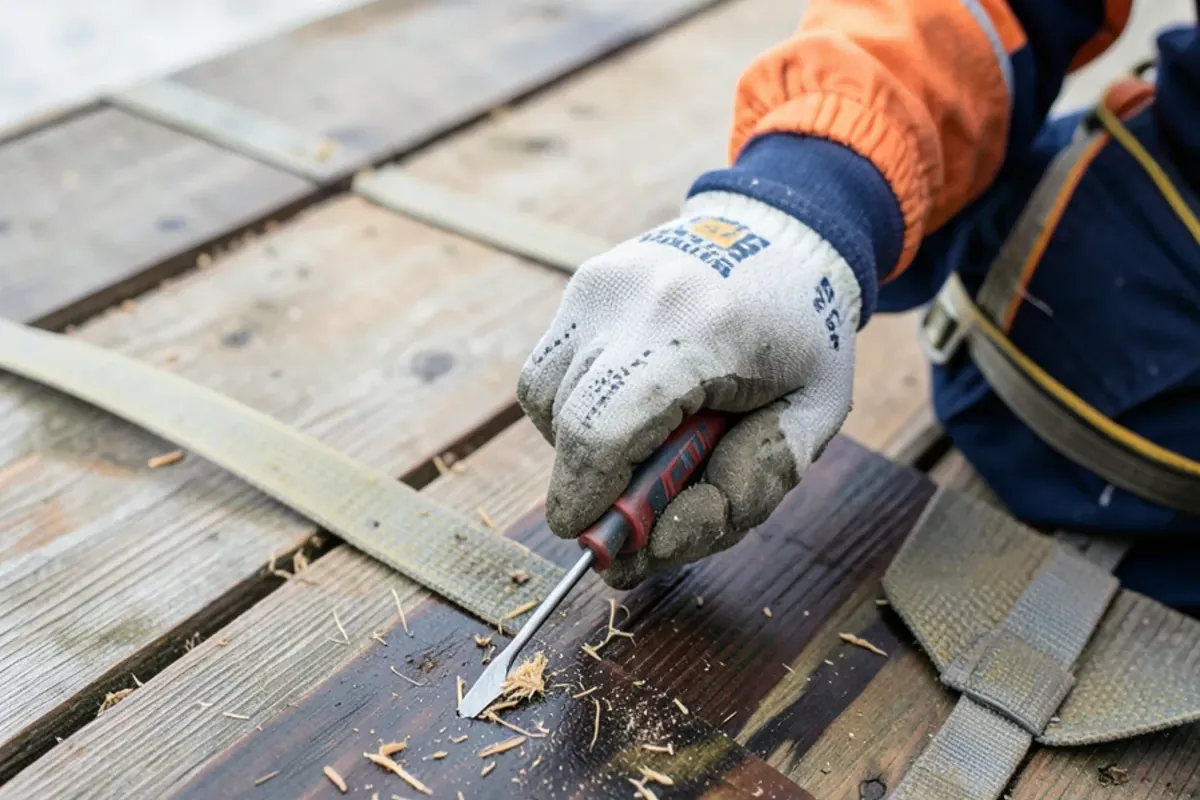
Not every dark board needs replacing. The decision turns on whether the wood still holds a nail and carries load. This table shows how a roofer typically sorts what is found:
| What the deck looks like | What it usually means | Usual action |
|---|---|---|
| Dry stain, wood firm under a screwdriver | Old, dried leak | Leave it, fix the cause |
| Damp, dark, firm wood | Active moisture, not yet decayed | Dry out, fix the source, monitor |
| Delaminated or flaking plywood face | Water exposure, strength reduced | Replace the sheet |
| Soft, crumbling or spongy wood | Active decay | Cut back to solid wood and replace |
| Soft rafters or ceiling joists | Decay has reached the framing | Stop and repair framing first |
A firm stain is common on older roofs and is not a reason to add cost. The question that matters is whether a fastener will hold, and a screwdriver test settles most of it.
Why is decking rot found during tear-off?
You cannot see the whole deck until the old roofing is off. Shingles and underlayment hide stains, and a roofer on top can only feel for soft spots. At tear-off every sheet is in view, and the crew can mark and replace what has failed. That is why a solid estimate treats decking as a variable.
A reroof estimate should state three things up front:
- A price per sheet, or per square foot, for replacing decking
- How the crew will tell you about rotted decking before covering it
- Whether the material is plywood or OSB, and the thickness
How should a decking change order work?
California law requires that changes to a home improvement contract be in writing and signed by the parties before the changed work starts. Business and Professions Code section 7159 sets this out for change-order forms and for any change to the contract. So if the crew finds rotted decking, you should receive:
- A description of what was found, with photos
- The number of sheets or the area to be replaced
- The price, based on the unit price in your contract
- Your signature before that work goes on
On one Alameda job a change order for aged decking was explained before work continued, with unexpected issues raised before moving forward. That is how it should go: stop, show, price, sign, proceed. If a contractor wants to bury the cost in the final invoice, ask for the change order.
Rain adds a wrinkle. If the deck is open and the sky is turning, the crew should dry-in the roof the same day, and any temporary protection should be written into the plan.
How is rotted decking repaired?
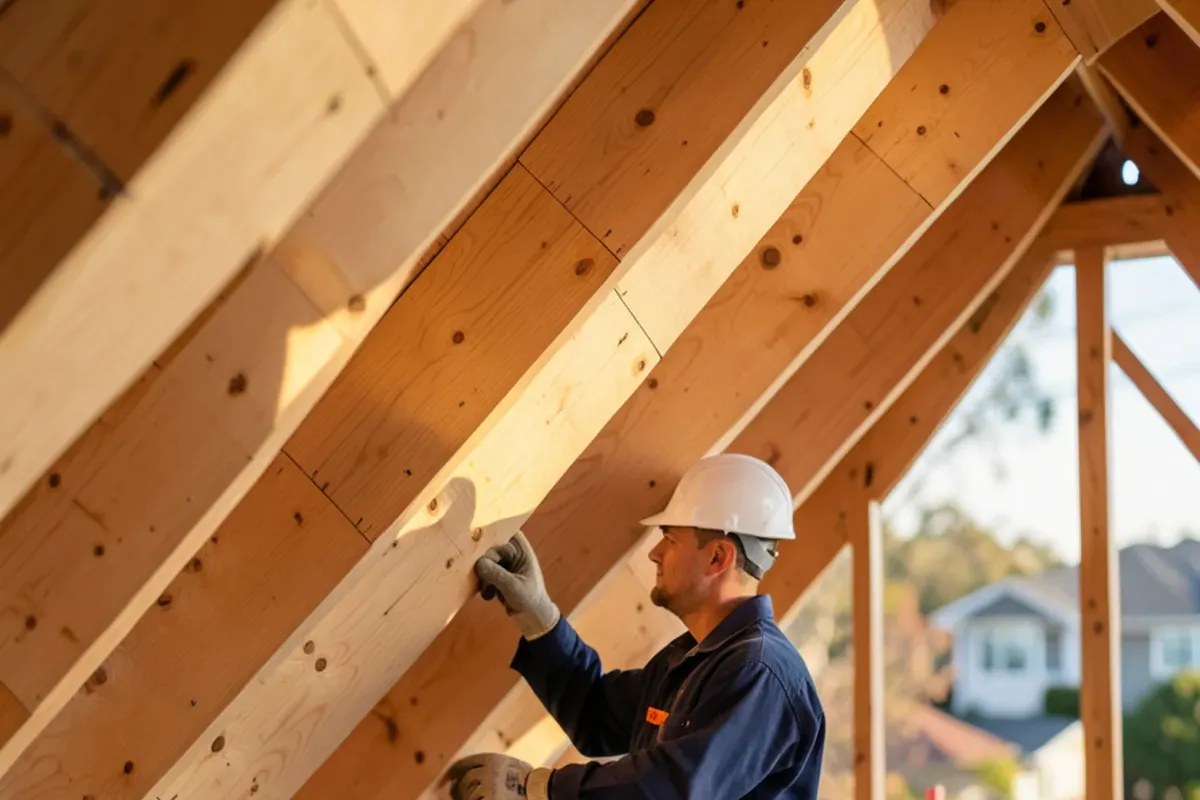
Small areas are cut out and replaced in place. Large areas get new sheathing across rafters. The repair steps:
- Mark the rotted area and cut back to solid wood
- Check the rafters beneath. If they are soft, they need attention before any sheathing goes on
- Fit new panels of the same or greater thickness, staggering joints
- Nail on the rafters with the proper pattern, with edge support where required
- Fix the cause: flashing, gutters, venting or condensation
The panel thickness and span rating have to suit your rafter spacing under the adopted California code. Ask the roofer which panel is going in and why. Panels exposed to rain before the roofing goes on can swell, so staging matters.
If the cause is not fixed, the new wood is just the next victim. Alameda homeowners can read about roof replacement to see how decking fits into a full tear-off, and about new roof installation for what happens after the deck is sound.
What do roofers weigh on older Alameda decks?
Older houses often have plank sheathing instead of plywood, and that changes the decision. 31.9% of Alameda homes were built in 1939 or earlier (Point2Homes), and many of those roofs sit on narrow boards laid in the original construction. Plank decking tolerates age well, but the boards move, split at the ends and can leave gaps that a nail head falls through.
Here is how the judgment calls usually go:
- Gaps in the planks. Shingles need a solid base, so spaced boards are typically filled or overlaid with panels. This is common when an old wood-shake roof is replaced with shingles.
- Split or cupped boards. One bad plank is replaced. A whole slope of them may be easier to overlay.
- Overlay versus replace. An overlay with new panels is faster, but it adds weight and raises the roof edge. Replacing the boards costs more labor and gives a clean deck.
- Rafter tails and eaves. Water collects here first, so check them before the fascia and gutters go back on.
The California Residential Code says asphalt shingles are fastened to wood structural panels or solid lumber sheathing, which is why a loose, gapped deck is fixed rather than shingled over. Ask which method is proposed and why. The honest answer sometimes depends on what the crew finds when the boards are exposed, which is another reason the change-order process matters.
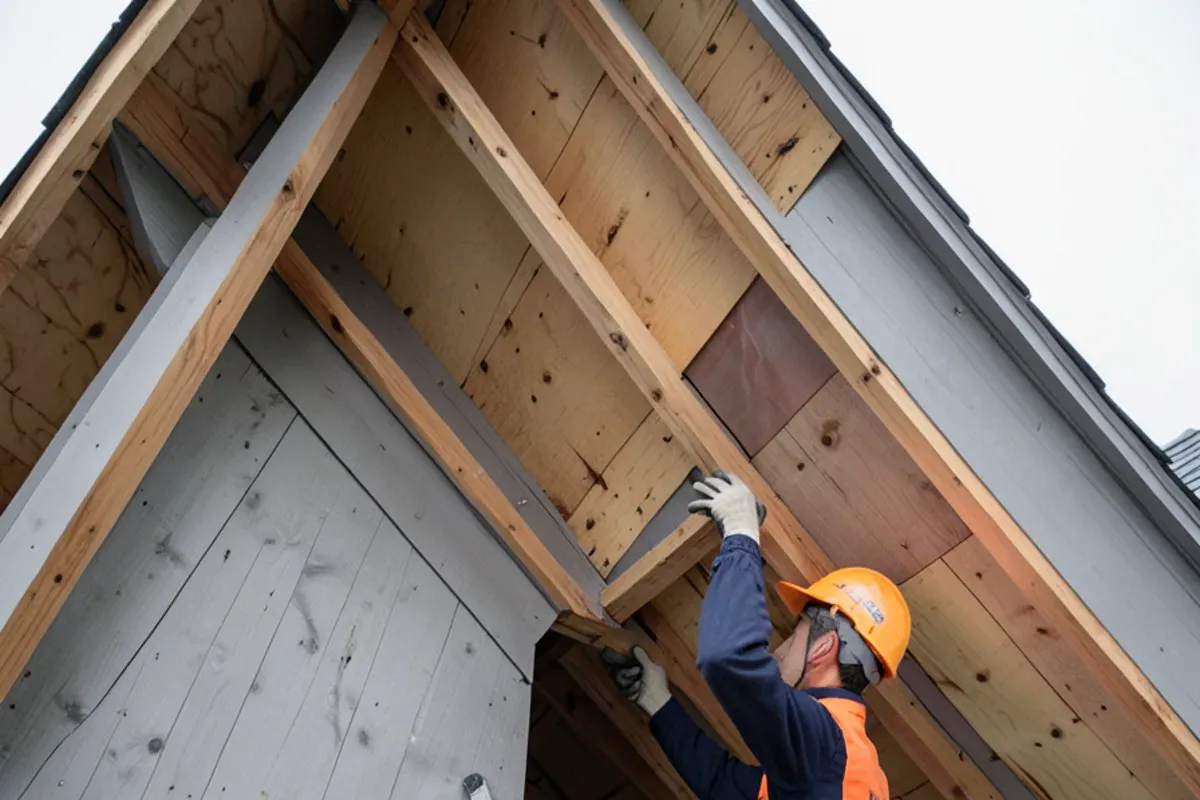
What should you ask about decking before the job starts?
Raise these questions before you sign, because they are easy to answer now and awkward to argue about with the roof open:
- What is the unit price for replacing decking, per sheet or per square foot?
- Who decides what counts as rotted, and how will you be shown?
- Will the crew send photos of any bad sections before replacing them?
- What is the plan for rain while the deck is exposed?
- Is the price for plywood or for OSB?
Decking surprises are normal, not a sign of a bad contractor. The test is how the surprise is handled. A contractor who stops, documents and prices it is doing it right. A contractor who says nothing and adds a charge at the end is not.
If you are watching the budget, ask whether the estimate includes an allowance for a set number of sheets, and how overages are billed.
What we see on Alameda tear-offs
Aged decking was found at tear-off on past Alameda jobs. The finding is not always bad news, because the affected area can be small. The honest sequence is to stop, show the problem and price it before moving on.
Oakland, about 12 minutes from our Webster St office in Alameda, has many older homes where the same pattern applies. See Oakland for coverage, and the home page for Alameda.
Call the office to book a free inspection, and ask for a decking line in the written estimate.